How students helped make dining greener by reducing and composting food waste.
If you enter Dana Dining Hall this semester, you might notice a few changes. First, the plates are smaller. Gone are the days of shield-like plates piled to the sky with leaning towers of food (and the trays are absent too). You might also notice the new assortment of composting bins near the dish receptacle, where everyone is encouraged to compost leftovers, rather than toss them in the trash. These changes are part of a new initiative led by students, faculty, and staff to help make the campus—and particularly Dining Services—greener and more sustainable.
How Campus Came Together to Make Change
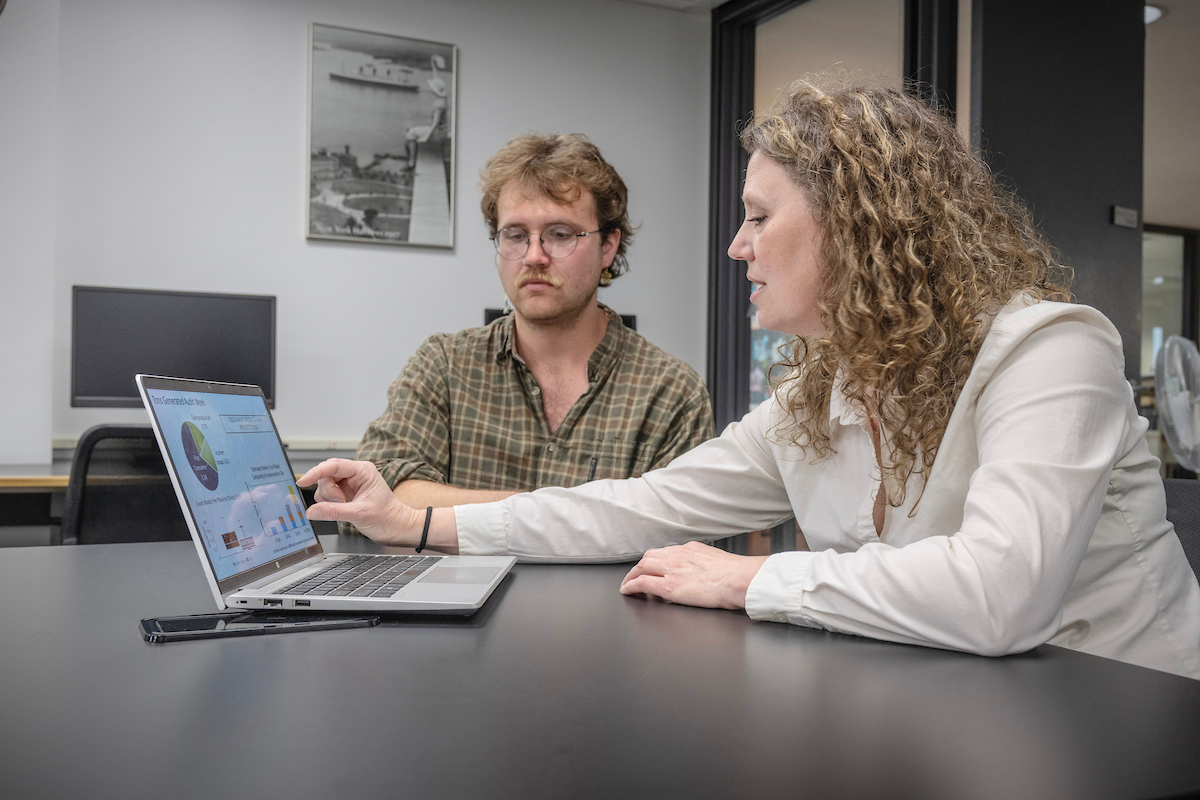
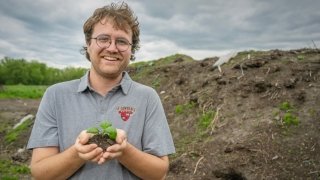
It all started in January 2023 when Assistant Professor of Environmental Studies and Public Health Lori Clark conducted an audit with some of her students. One of those students, Sam Voter ’25, pursued his Senior Year Experience (SYE) project with Clark on food waste diversion. Together, they found that campus was generating just under 5 tons of food waste per week.
“Almost all of it was going into a landfill,” Clark says. That was a problem because, she explains, food waste is primarily responsible for generating methane gas in landfills—a powerful greenhouse gas that traps heat in the atmosphere and contributes to climate change.
Only about a quarter of Dining Services’ food waste at the time was being composted, and that was all pre-consumer waste, like vegetable scraps and other excess from food prep—basically all the stuff that gets thrown out before it’s served up on a student’s plate.
So, last fall, Clark and her students—including Voter and Lucy Albrecht ’27 of the Green House, St. Lawrence’s sustainability-focused theme house—approached Erik Perry in Dining Services to explore expanding composting efforts to include post-consumer waste. “Food scraps are such a valuable compost resource, and we were just throwing them away,” says Voter. He came up with the idea to put new composting bins in Dana Dining Hall that would capture these leftover food scraps.
Marijo Haggett, director of Dining Services, thought they could even take things a step further. “We wanted to reduce the compostable waste going to landfill, but we also wanted to reduce food waste in general,” she says.
That’s when the idea to switch to smaller plates came into play. The move this semester from 10-inch plates to 8-inch ones, she says, makes students think: What do I really want to eat? What do I really need on my plate? Dana is a buffet, of course, so students can have as many plates as they want, but the more they pile on, the more unintentional food waste they produce in the process.
“I used to be a hater at first of the smaller plates,” says Azaa Regmi ’28, “but I have seen how much food goes to waste, and for a greater cause I’m willing to suck it up.”
Mariam Dodd ’28 says she isn’t yet feeling the love for smaller plates but agrees, “The compost bins are a good idea because they can help you be more mindful of your waste.”
Making a Lasting Impact
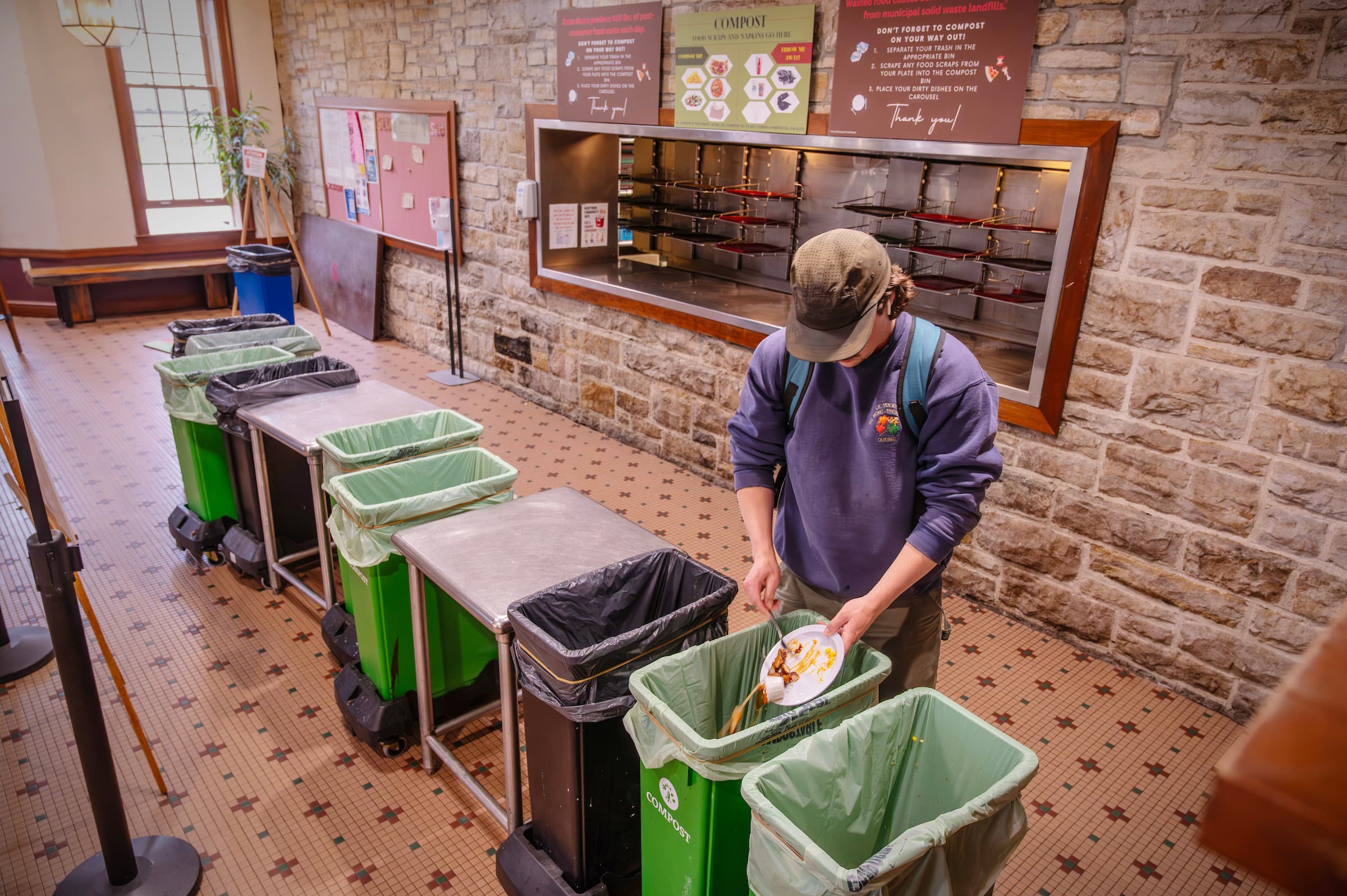
Still, it’s undeniable that these changes are making a positive impact. According to Voter’s SYE research, which included a 2025 audit of Dining Services after the new composting measures were implemented, there was a nearly 40 percent reduction in post-consumer food waste per-meal on average. That’s about 0.14 pounds per-person per-meal of food waste that otherwise would have gone to the landfill.
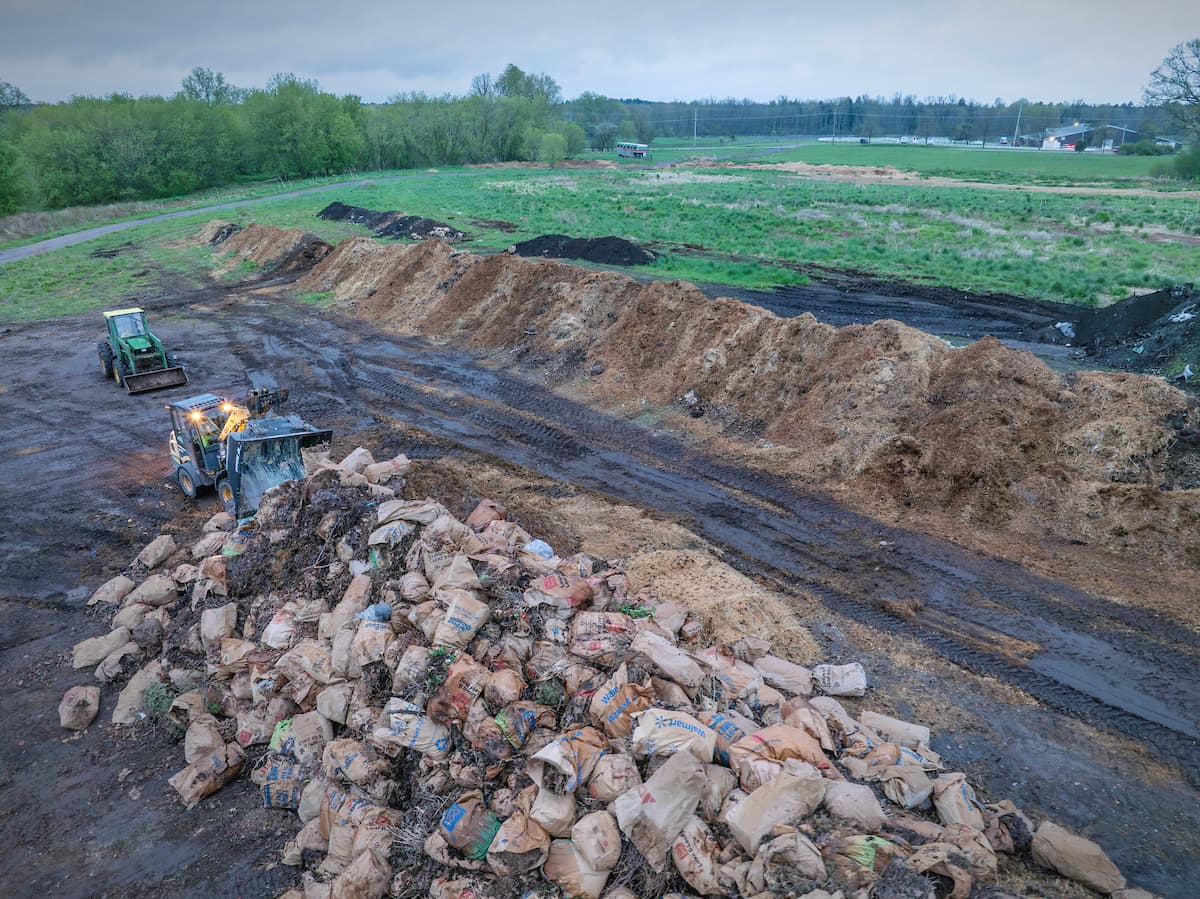
Now, that all goes instead to a composting facility across from the Elsa Gunnison Appleton Riding Hall. Voter’s research also found that the quality of St. Lawrence’s compost has improved due to the addition of post-consumer food waste, and contains much more good bacteria, fungi, and actinobacteria.
Marcus Sherburne, director of Grounds, Event Management and Custodial Services, says his team now composts around 550 pounds of food scraps per day. He recently incorporated a recommendation from Voter’s research to “turn” the compost more frequently, which helps it decompose faster.
Much of the compost, Sherburne says, gets hauled to a village barn in Canton on Lincoln Street, where the public can use it for free. Some of it also gets used in local apple orchards and vegetable farms, while the campus uses some of it to plant sunflowers, pumpkins, squash, and gourds for campus celebrations.
“The key to this whole operation is that we need to maintain an education around composting and sustainability awareness for at least four years, because once we do this for four years, there will be no students on campus who remember a time before composting,” Sherburne says.
The Laurentian Spirit of Sustainability
Keeping up that awareness and education won’t be a challenge, given the climate-conscious spirit permeating St. Lawrence’s student population. “Every semester, students who want to help make a difference approach us wanting to know what we’re doing to address food waste,” Haggett says. “So we know these issues are important to our student body.”
Diane White Husic, the Richard ’64 and Gail Stradling Executive Director of the Center for the Environment, agrees that students are arriving at St. Lawrence with a desire to address contemporary environmental and social challenges. “Having them engage in projects that make the campus more sustainable, like this food waste reduction project, allows students to address a problem and gain skills that will be transferable to benefit the communities where they will live and work after graduation,” she observes. “I am thrilled that our staff from different areas on campus are willing to work collaboratively with students and faculty on initiatives that have benefits for the students and the institution.”
Lucy Albrecht ’27, who also helped organize the push for new composting bins, says she wanted to be a part of measurable change. “Everyone in our house felt similarly: We wanted to make a tangible, real impact with regard to campus sustainability, and we wanted to help St. Lawrence live up to the green reputation it has,” she says.
For Voter, the desire to help bring about change felt urgent and necessary—especially in his senior year: “I wanted to make sure I left this campus better than I found it.”