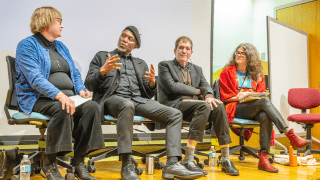
St. Lawrence Celebrates 25 Years of Viebranz Visiting Professors of Creative Writing
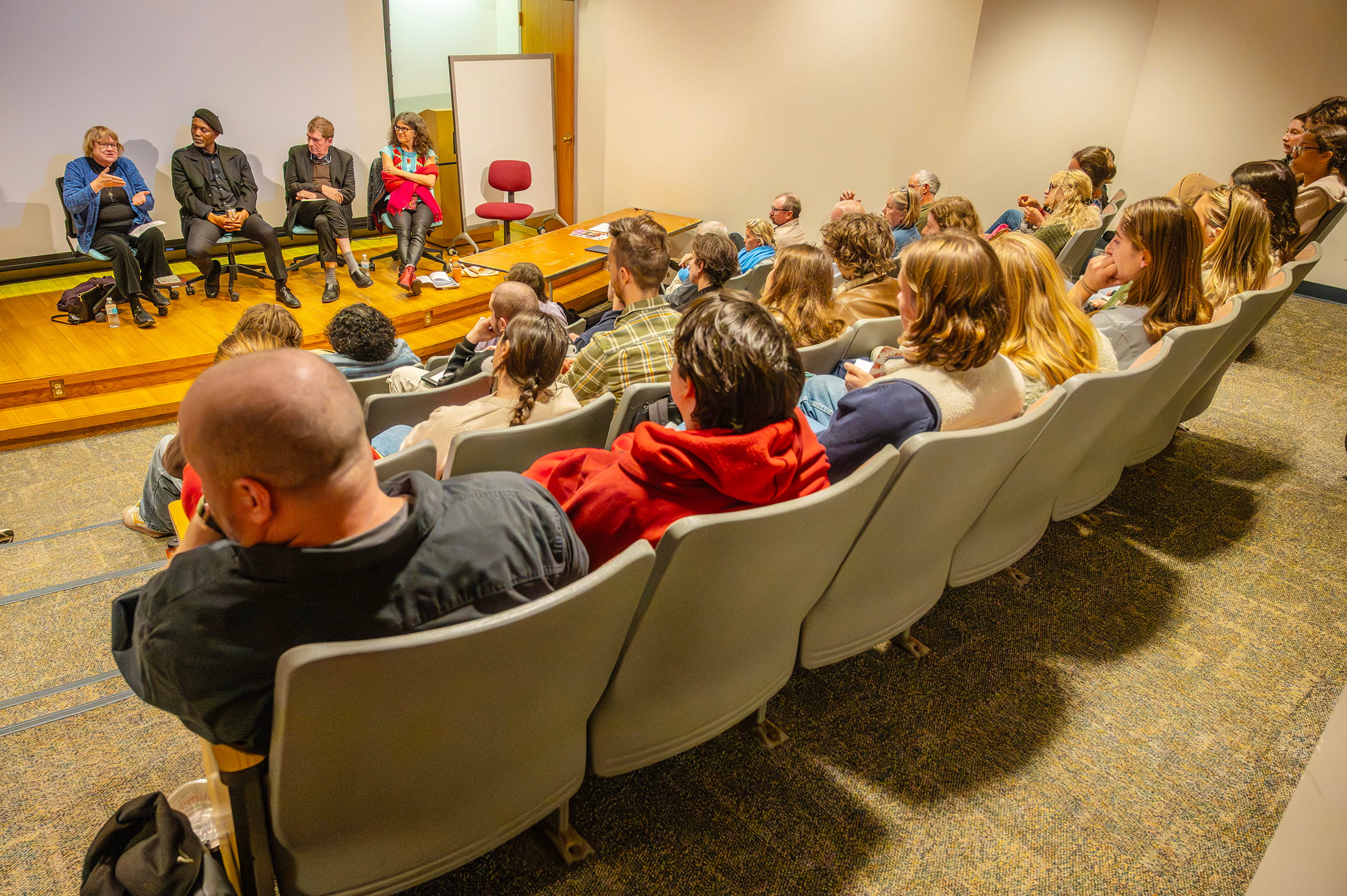
Carnegie 10 was standing-room-only last Thursday morning as students, faculty, staff, and local residents filled every seat—and even the aisles—to hear from four returning literary stars.
The crowd came for Stephanie Elizondo Griest, Robin Hemley, Trudy Lewis, and Okey Ndibe—all former Viebranz Visiting Professors of Creative Writing who returned to campus Thursday to talk about their craft and, later that evening, to read from their work in an equally packed Sykes Common Room.
The event kicked off a yearlong celebration marking 25 years of the Viebranz Visiting Professorship, an endowed position that brings a nationally recognized writer to campus each year to teach, host readings, and become part of the St. Lawrence and local communities.
“They can write fiction, non-fiction, poetry, or hybrid genres, but they always offer two courses per semester as well as public readings and faculty and staff gatherings,” says Professor of English and Department Chair Paul Graham '99. “Every Viebranz writer seems to go about the professorship their own way,” he adds, but notes that all of them connect meaningfully with students who become exposed to professional writers with distinct styles and philosophies.
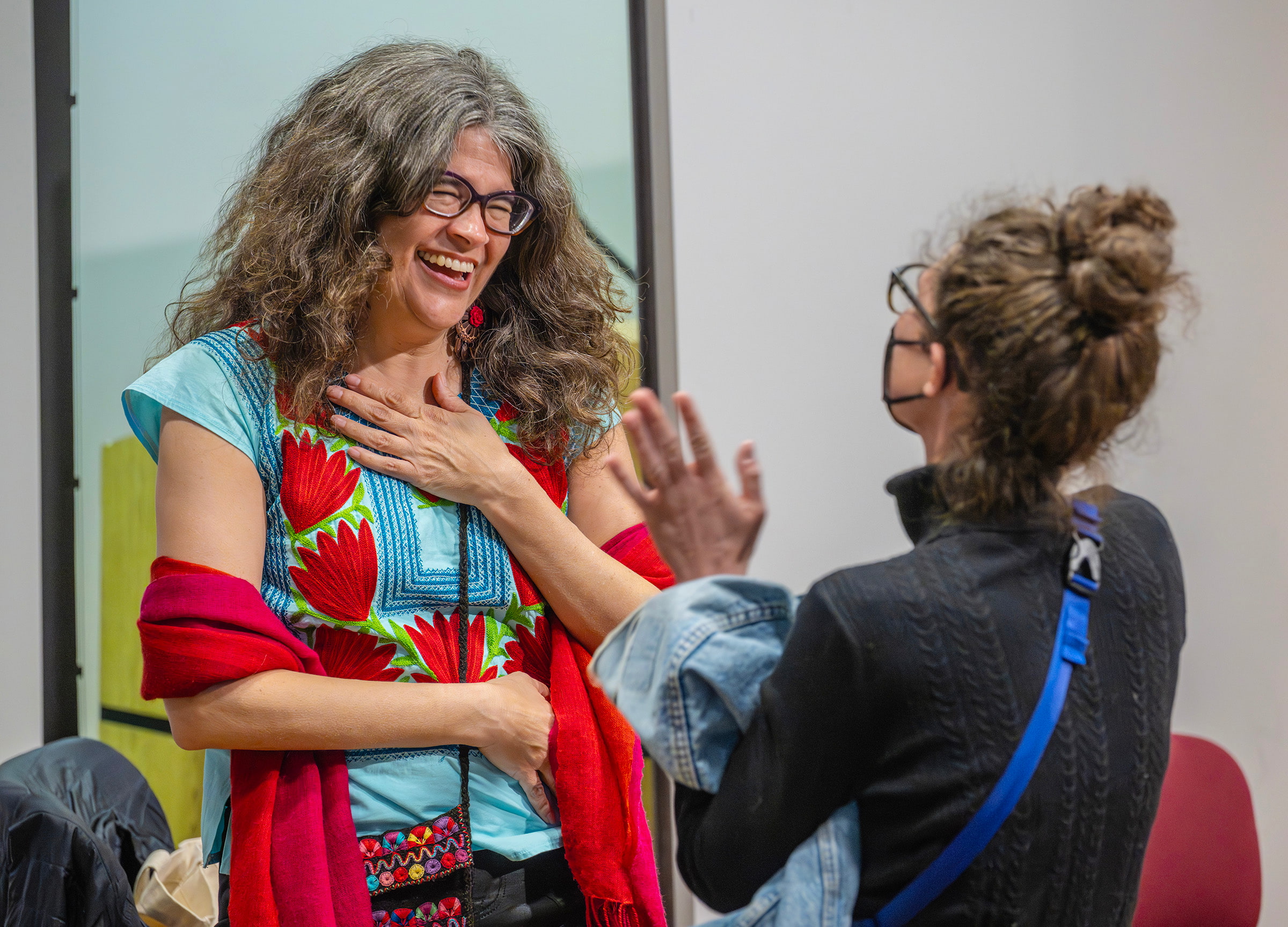
Skylar White ’26, an English major who attended the talk on Thursday, agreed, saying the course she took her sophomore year with former Viebranz professor Santee Frazier was among her all-time favorites, adding that these Writers Series events encourage her own artistic inclinations.
“Being able to look up to these writers who are doing what they love and think that maybe I could do that someday is really meaningful to me,” she says.
As part of the 25th year celebration, Graham says St. Lawrence is bringing back as many former Viebranz professors as possible—often in groups whose works have a common through-line, such as the environment or social justice.
Professor of English and Coordinator of the Writers Series Bob Cowser agrees that the events, and the year-long endowed professorship, allow students to glimpse what life is like as a professional writer, and to interact and connect with one.
“The connection between the Writers Series and the Viebranz professorship is that the professorship extends the residency of that visiting writer for an entire year, rather than just one night, and allows them to become part of the campus and indeed the local community,” Cowser says.
Trudy Lewis, a Viebranz professor from 2006-2007 who spoke at last Thursday’s Writers Series, couldn’t be a better embodiment of that.
“I came here with my husband, my two sons and dog. My husband also taught at St. Lawrence while I was here, and my sons played sports at the local high school,” she says.
“The people here at St. Lawrence and in Canton were so warm and welcoming, and I just prospered here.”
Robin Hemley, the inaugural Viebranz professor who taught fiction writing at St. Lawrence in 2001 and was also part of the latest Writers Series panel, says the professorship was as valuable to him as it was to his students.
“It was a wonderful opportunity for me to focus on my writing but also on my teaching,” says Hemley, who worked on his acclaimed book, Invented Eden: The Elusive, Disputed History of the Tasaday, while he was at St. Lawrence.
Hemley says he made many powerful connections with students and kept in touch with them for a long time.
Indeed, Skylar is far from the only student to cite their learning with a Viebranz professor as a highlight of their St. Lawrence experience. Both Paul Graham and Bob Cowser relayed how, at last year’s English Honorary Society induction ceremony, the seniors were asked to share some of their favorite memories as English majors.
“Almost all of them talked about the Viebranz writers they worked with,” Cowser says.
For a university of St. Lawrence’s size and location, Graham adds, the Writers Series and Viebranz professorship “really make us standout as a literary destination.”
“We bring stellar writers here every year who are doing important and engaging work that our students get to experience first-hand,” he says.
“At a time when most of our lives are digitally-mediated and the written-word is under threat,” Graham says, “these programs are more important now than ever.”