Faculty Focus-March 10, 2026
Faculty members put their knowledge into action so students and others are able to benefit from it. Recently, faculty published in prestigious outlets, published groundbreaking books, and hosted and presented at international conferences.
Eloise Brezault
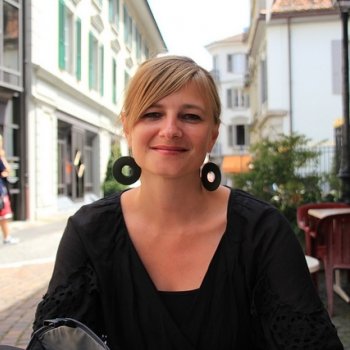
Professor and Chair of World Languages, Cultures, and Media and Coordinator of African Studies Eloise Brezault recently organized and moderated a panel at the 2026 North East Modern Literature Association conference in Pittsburgh titled “Repair, Resilience, and Care: Health and Environment in Francophone Literatures and Arts.”
The panel explored how Francophone literatures and arts engage with themes of care, resilience, and environmental responsibility in response to social, political, and ecological crises. Presentations examined topics such as a Māori writer in Tahiti addressing the legacy of French nuclear testing in the Pacific, cinematic representations of the French hospital as a living body, alongside reflections on how some postwar modernist buildings of Le Corbusier can be interpreted as an architectural expression of resilience.
Together, the panel contributed to broader conversations in global medical and environmental humanities by highlighting how literature, film, and architecture confront histories of environmental injustice and imagine new forms of care.
Gisele El Khoury
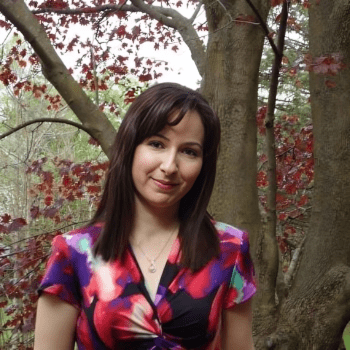
Director of the Language Resource Center and Arabic Instructor Gisele El Khoury recently presented at the Northeast Modern Language Association conference in Pittsburgh.
Her talk, titled “Enhancing Language & Culture Courses with AI,” explored how artificial intelligence tools can be thoughtfully integrated into language and culture courses to enrich student learning and engagement.
A central theme of the presentation was how AI is making the creation of authentic instructional materials more accessible than ever, from videos and audio recordings to flashcards, songs, and visual aids, allowing instructors to develop rich, culturally relevant content tailored to their students' needs.
Mert Kartal
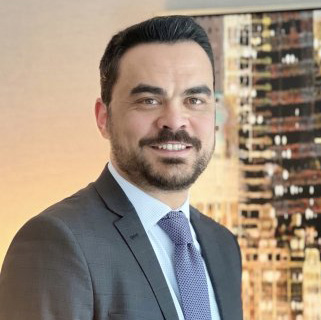
Associate Professor of Political Science Mert Kartal’s latest piece for Good Authority examines a basic but overlooked question: how do we actually measure corruption?
Scholars and policymakers frequently rely on corruption indices to compare countries and track trends, yet corruption is inherently difficult to observe directly. As a result, most widely used measures rely on perceptionsrather than direct evidence.
The article explains why these measures remain useful despite their limitations. Perception-based indices can capture broad patterns and help identify countries where corruption is likely to be a serious concern. At the same time, they may miss important variation or reinforce stereotypes about certain regions. Understanding both the value and the limits of these indicators is therefore essential for researchers, policymakers, and journalists who rely on them to evaluate governance and accountability.
Kartal serves as a Fellow at Good Authority, which translates academic research for a broader public audience.
Martha Chew Sánchez
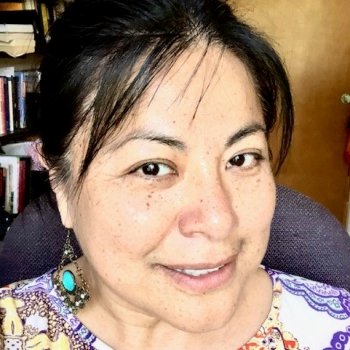
Professor and Co-Coordinator of Caribbean, Latin American and Latino Studies Martha Chew Sánchez edited the recently-published book Migration, Dislocation, and Place Making in Mexican Popular Music.
The essays in the book explore a convoluted musical landscape through personal testimonial, cultural history, and musical ethnography.
Interdisciplinary in scope, this anthology is sensitive to the nuances of the struggles over identities represented through Mexican musical expressions. It defines the imagined communities and identity formation of Mexican immigrants across class and regional differences as reflected in the music they choose to listen to. It examines the cultural economy of fans and followers and the reciprocal influence of musical consumers and producers, analyzing the impact Mexican musicians have on second-generation Chicanos in California and the Borderlands who are coming of age and redefining their place within the social fabric of the United States. Contributors to this volume detail the ways in which fans and musicians alike use Mexican music to challenge cultural expectations to re-create a world of communion, hope, defiance, and self-recognition.
Submit News
St. Lawrence’s Faculty Focus is a regular roundup of noteworthy faculty news.