

Senior Research Projects 2025 - 2026
Seniors present to the physics department the results of their Phys 489/490: SYE Advanced Laboratory and Phys 499: Honors SYE research projects at the end of each semester. The abstracts for their research are below and photos of the student presenters follow afterwards:
Spring 2026
Investigation of Path Integral Usage in Modeling Financial Derivatives - Mohmedmhdi Alkhaqani '26
A grain of pollen suspended in a fluid undergoes random motion because of the unpredictable collisions it experiences with the surrounding particles. If the initial position of the grain is known, one can calculate the probability that it reaches some final position by summing over the probabilities associated with every possible path connecting the two points. These sums are known as path integrals, and they are widely used in quantum mechanics and in the study of random motion.
This paper applies the same framework to the pricing of financial derivatives. In the same way that the position of a pollen grain evolves randomly, the price of a stock evolves in response to unpredictable events that affect its value. I begin by developing the connection between random walks, Brownian motion, and the path integral formulation. I then show how this structure appears in option pricing, where the value of a derivative depends on the possible future paths of the underlying asset.
The paper first studies the Black Scholes model and compares its closed form price with Monte Carlo simulations based on randomly generated stock paths. It then extends the discussion to Heston type models, where the volatility of the stock is allowed to vary randomly rather than remain constant. Through the study of kernels, probability densities, convergence behavior, Greeks, and price sensitivities, this investigation shows how path integrals provide a useful way of organizing and interpreting the pricing of financial derivatives.
For more information, contact Dr. Cristian Armendariz-Picon
Is 3D Printing the Future of Automotive Engineering? - Owen Beebe '26
Over the past decade, 3D printing technology has experienced significant advancements in every aspect, leading to a shift in how it is utilized in manufacturing. With companies such as Nike, Boeing, Ford, and Hasbro investing millions of dollars into their 3D printing capabilities, it is evident that this technology will play a critical role in the future of manufacturing. To evaluate the limitations and effectiveness of 3D printing, I will compare current research with findings from a personal engineering project, analyzing the advantages and disadvantages of 3D printing relative to traditional manufacturing techniques.
For more information, contact Dr. Aileen O'Donoghue or Dr. Kevin Angstadt
Why the Last Set Feels Hardest: A Biophysical Look at Muscle Effort and Fatigue - Connor Meigher '26
Muscle fatigue influences how efficiently we perform repeated movements, which has implications for both training and injury prevention. At the cellular level, it arises from changes in force generation within muscle fibers, including increased motor unit recruitment, reduced cross-bridge efficiency, and limitations in ion regulation. This process does not develop uniformly and depends on how an exercise is structured, making it important to quantify how fatigue builds across repetitions. In this study, muscle effort and fatigue were investigated using wearable biosensors during repeated biceps brachii contractions. Arm curls were performed with low-weight dumbbells (5 lb and 9 lb) across five sets of 15 repetitions over multiple days. Muscle activation was quantified using electromyography (EMG), while joint angle and torque were obtained using a gyroscope to capture mechanical output. Results showed a progressive increase across repetitions and sets, reflected in rising EMG values and changes in movement patterns. This trend suggests that even at low loads, repeated contractions lead to decreased efficiency in force production over time, likely due to increased motor unit recruitment, altered firing patterns, and limitations in cross-bridge cycling and ion regulation. Future work will compare endurance-based training (lower weight, higher repetitions) with strength-based training (heavier weight, fewer repetitions) to examine how different exercise structures influence fatigue.
For more information, contact Dr. Massooma Pirbhai or Dr. Joe Erlichman
Presenters
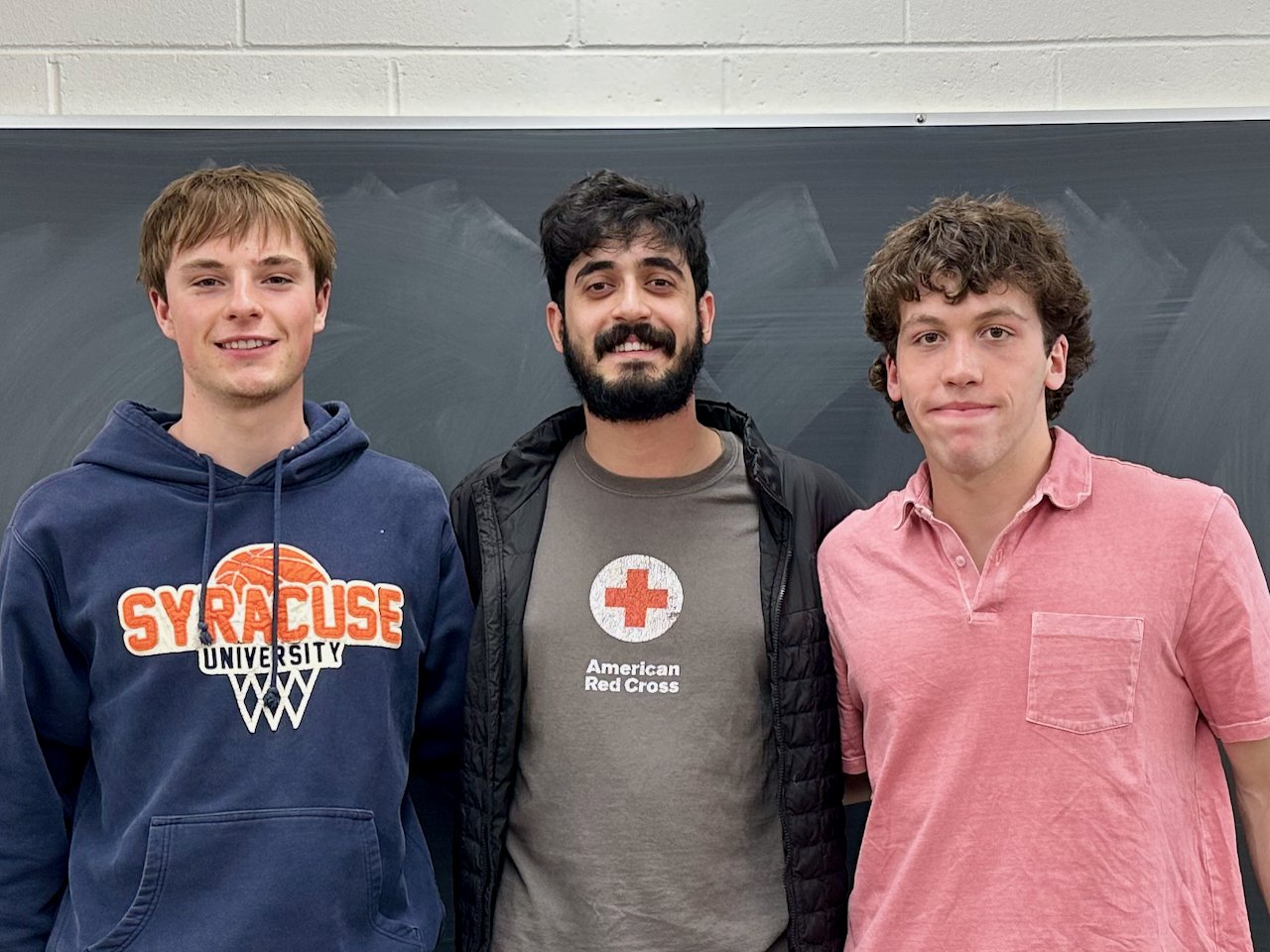
Our seniors (L-R): Owen Beebe, Mohmedmhdi Alkhaqani, Connor Meigher
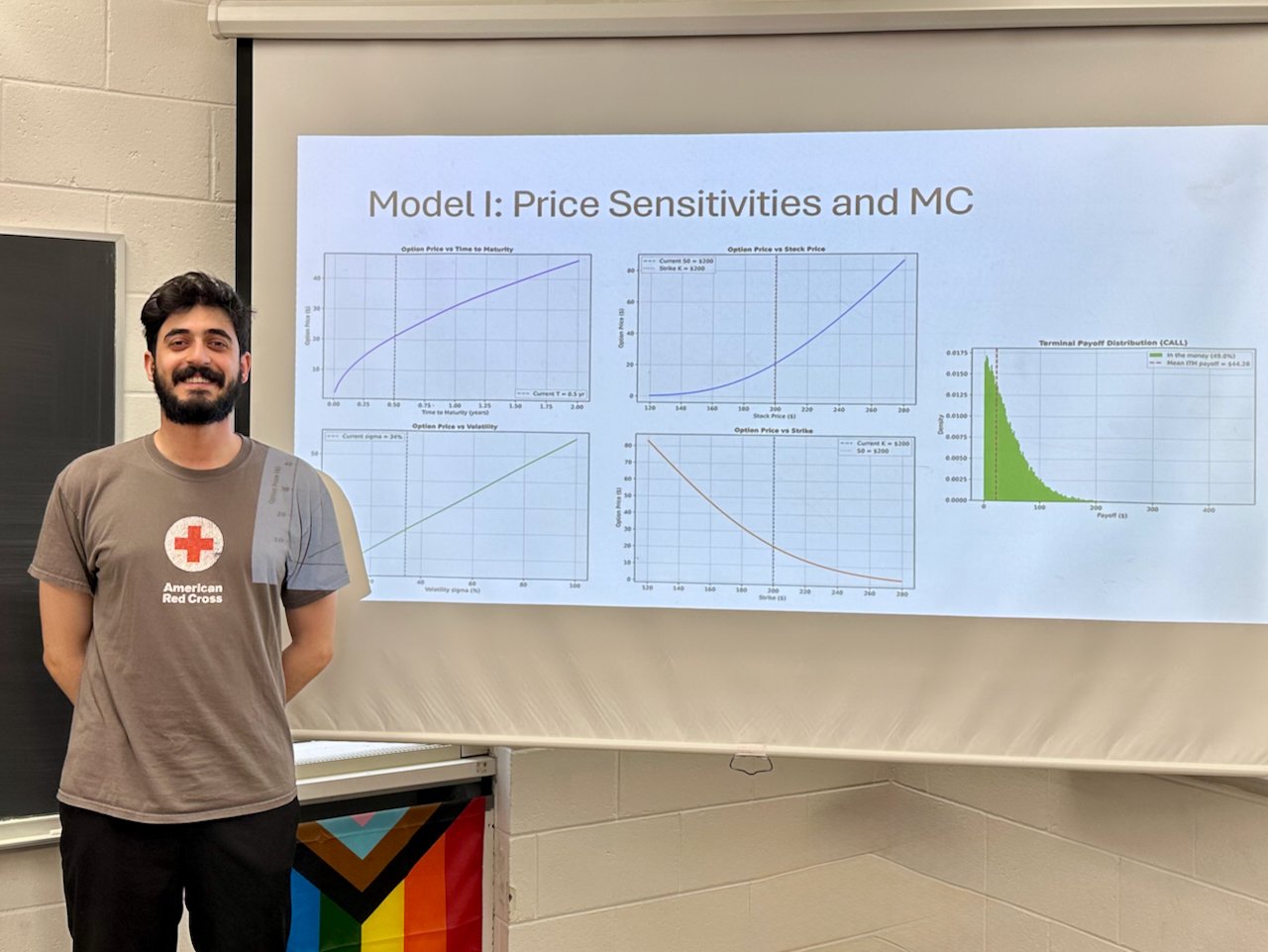
Mohmedmhdi Alkhaqani
Investigation of Path Integral Usage in Modeling Financial Derivatives
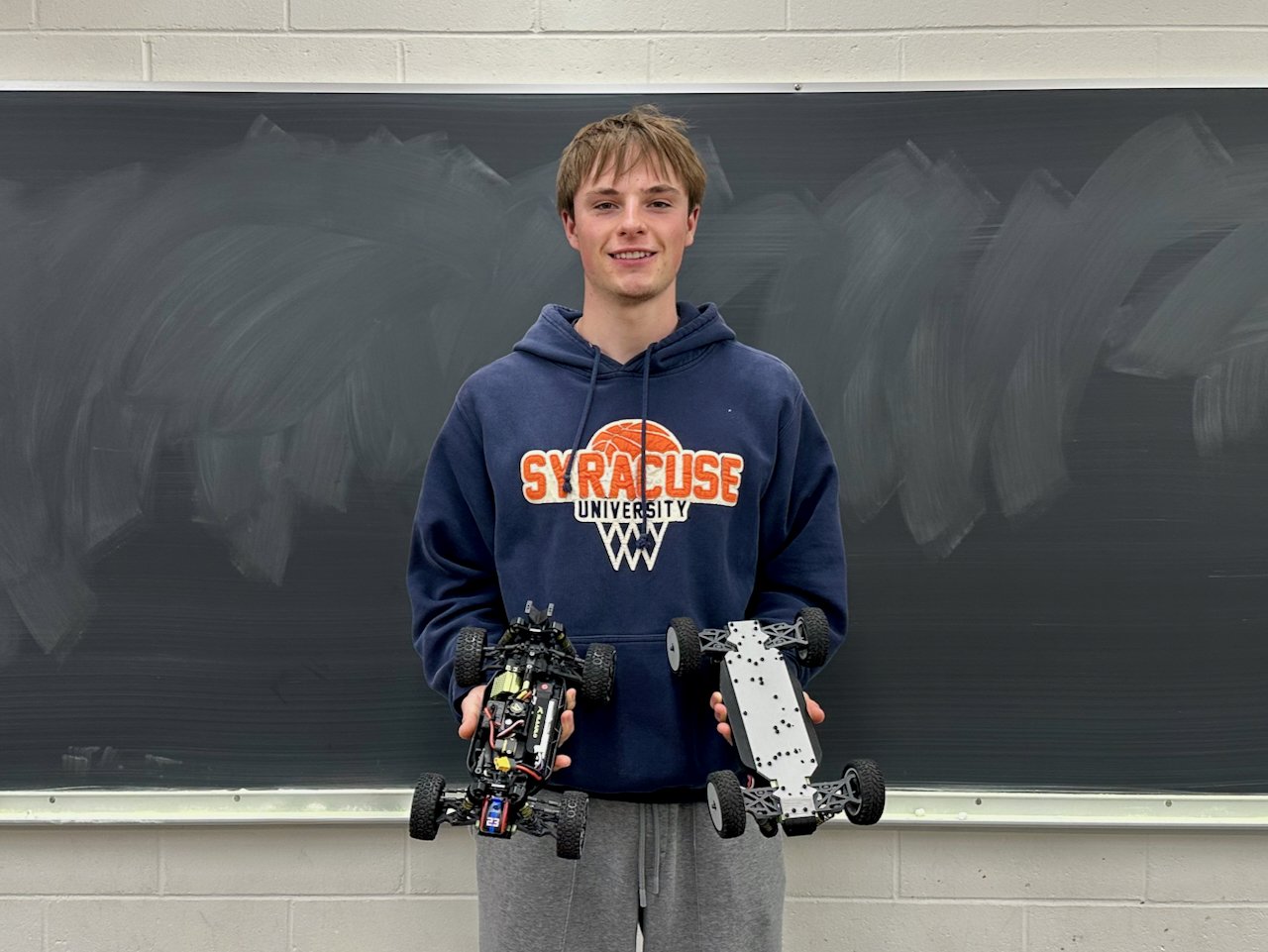
Owen Beebe
Is 3D Printing the Future of Automotive Engineering?
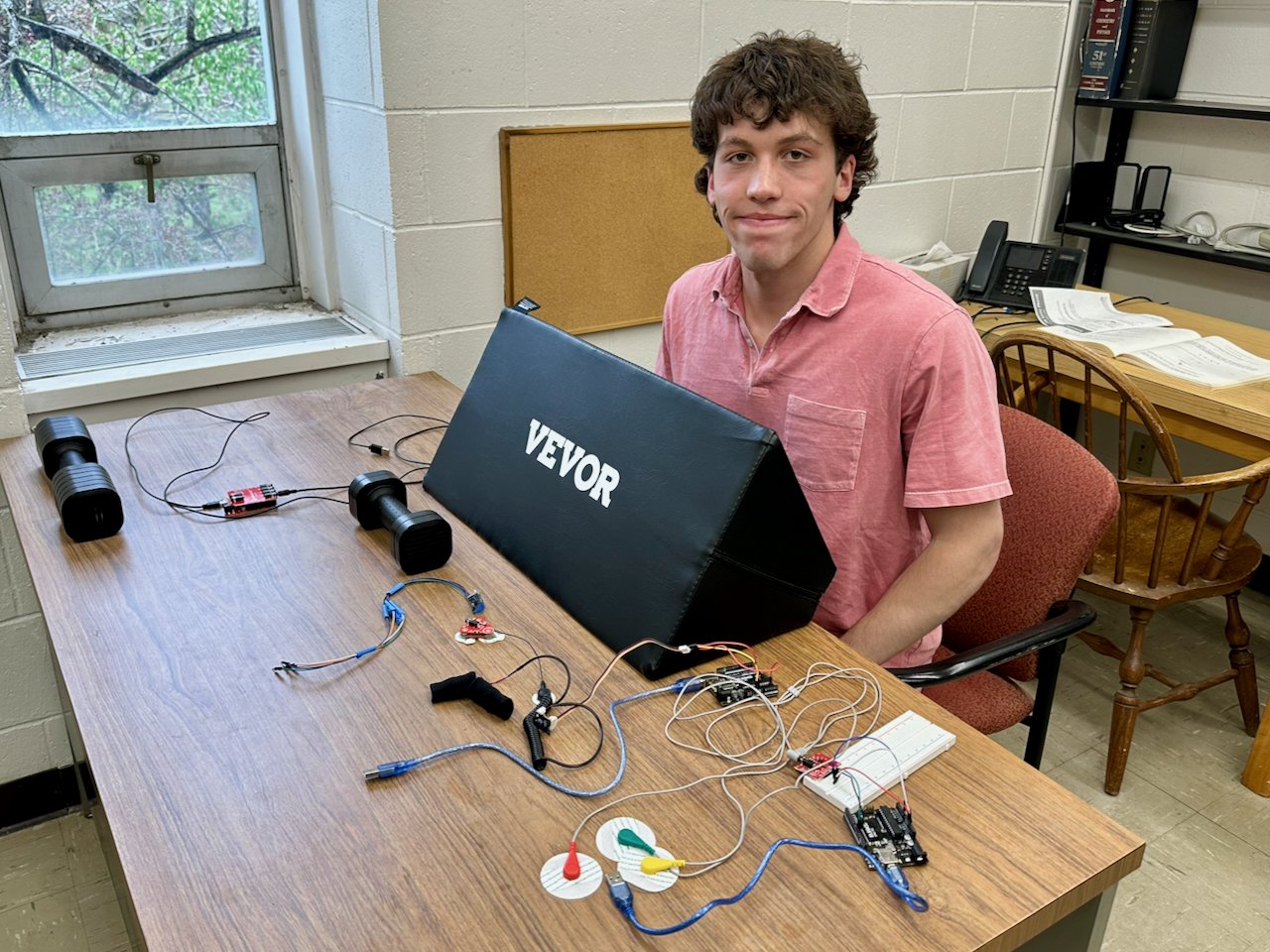
Connor Meigher
Why the Last Set Feels Hardest: A Biophysical Look at Muscle Effort and Fatigue