St. Lawrence University Brings Cultural, Historical, and Community Perspectives to FIRE-NET Wildfire Resilience Initiative
St. Lawrence University announced today that it has joined FIRE-NET: Adirondack Fire Futures, a National Science Foundation–supported effort to build regional wildfire resilience through convergent science, cultural understanding, and community collaboration.
St. Lawrence contributes leadership grounded in environmental science and humanities, community-based research, and experiential learning. The university’s recently established Center for the Environment integrates climate adaptation, forest health, environmental justice, and outdoor leadership into a cohesive mission to create agents of change.
Diane White Husic, the Center’s inaugural executive director, with extensive experience in community climate adaptation and global climate science and policy, will help frame FIRE-NET’s work within broader questions of cultural stewardship and equity. Programs such as its Adirondack Semester, which immerses students in off-grid living, ecological studies, and environmental ethics, an Environmental Studies program in its 51st year, and the university’s Outdoor Leadership and Nature Up North programs will position St. Lawrence to contribute unique insights to the fire consortium.
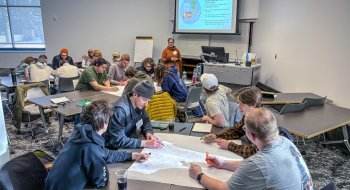
Participation in the upcoming Adirondack Fire Futures symposium will expand opportunities for St. Lawrence students to collaborate with scientists, engineers, foresters, historians, and policymakers.
“St. Lawrence University is proud to help bring human experience, climate science, history, and community voices into the center of regional resilience planning” Husic said.
The initiative is funded through NSF Award #2536051.