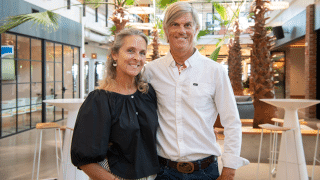
Russ and Roxanne Scully ’91 are helping shape Vermont’s future by transforming Burlington’s waterfront into a hub for innovation and creating spaces where businesses and communities thrive. Fueled by entrepreneurship, investment, and a commitment to bringing people together, the Laurentian couple is making waves well beyond Lake Champlain.
It’s impossible to come away uninspired from a visit with Roxanne Stergas Scully ’91 and Russ Scully ’91. One moment they’re extolling the joys of surfing and yoga, the next they’re discussing startup investment networks, housing policy, and the future of Vermont’s workforce. Yet beneath the wide-ranging conversation lies a consistent and generous philosophy: build the kind of community you’d want to live in, then invite others to join you.
That philosophy has guided the couple through more than three decades of entrepreneurship, community building, and economic development in Burlington. Along the way, they have helped create some of the city’s most distinctive businesses and gathering places while quietly shaping the conditions that allow other people—and other businesses—to thrive.
“We did the things we love, with people we love, and then scaled it up to share it with others,” Roxanne says.
Looking back, the progression of their work feels almost inevitable. Each venture began by asking the same question: What’s missing? Then, they set about building businesses that filled gaps they saw in the community.
When Russ and Roxanne moved to Burlington after spending the first few years after graduation in California, they immediately noticed a shortage of informal gathering places. Their response was to upcycle an old gas station into The Spot, a breakfast and lunch restaurant that brought a relaxed, surf-inspired sensibility to Burlington’s dining scene. More than a successful business, it became a community hub.
Later, when they acquired the former Blodgett Oven factory with its dazzling views of Lake Champlain and New York’s Adirondack Mountains beyond, the Scullys could have kept the shoreline private. Instead, they opened it to the public through the Burlington Surf Club, transforming an industrial site into a place where people could connect with the water and the water sports the couple loves.
“It’s a welcoming and belonging attitude,” Roxanne says.
That same philosophy fueled their creation of Hula, a 14-acre innovation and coworking campus on that same parcel of land that has become one of Vermont’s most influential entrepreneurial ecosystems.
Housed in two renovated industrial buildings that earned the Vermont chapter of the American Institute of Architects’ award for excellence in historic adaptive reuse, Hula feels less like a traditional office complex than a place where work, creativity, and well-being naturally intersect. Sunlight pours through floor-to-ceiling windows overlooking Lake Champlain. Live palm trees and water features lend a California vibe. A fitness center, yoga and meditation studios, communal kitchen, full-service café, and Brio coffee bar (the company is founded by Nate Van Dusen ’99) create spaces where people linger as much as they work.
The design is intentional. Rather than stacking offices on multiple floors, the Scullys created more than 150,000 square feet of interconnected, single-story space. Long sightlines, open gathering areas, and what Russ calls “collision spaces” encourage the spontaneous conversations that spark new ideas, partnerships, and businesses.
“The magic of single-story buildings is in the connectivity they create,” Russ says. “Hula was designed from the start to open up lines of sight throughout the buildings to encourage conversations that wouldn’t happen otherwise.”
For Roxanne, the architecture reflects something even more fundamental. “We’ve always kind of brought the outside inside,” she says. “It’s that umbrella of well-being and lifestyle—how do we want to live? How do we want to create? The process matters to us.”
From the beginning, Hula was conceived as an economic development initiative that could give Vermont a competitive advantage in attracting entrepreneurs, talented workers, and innovative companies. In a rural state, Russ and Roxanne believed success would depend on creating access to investment capital, professional networks, educational partnerships, and the people needed to help great ideas flourish.
BETA Technologies illustrates the ecosystem the Scullys envisioned. When Russ first met BETA’s founder, the electric aviation startup was operating out of a small hangar at Burlington International Airport with a team of about 30 engineers. As the company prepared to raise its first major round of funding, Hula helped organize local investors to close the round in Vermont, reducing the need to seek outside capital that might eventually draw the company elsewhere. Later, when BETA outgrew its hangar, part of its team moved into Hula, where the two organizations grew side by side.
BETA has grown to over 1,000 full-time employees and went public in November, raising over $1 billion in its initial public offering on the New York Stock Exchange. (See story about BETA’s Nate Ward ’02 on page 20.)
The ripple effects continue to spread. Hula has incubated dozens of businesses, hosted conversations around climate, entrepreneurship, and social innovation through its annual See Change conference, and increasingly draws visitors from other small cities eager to understand what the Scullys have created. This year, See Change will feature a new track devoted to helping other communities build innovation ecosystems of their own—a recognition that Burlington’s model has become one worth studying.
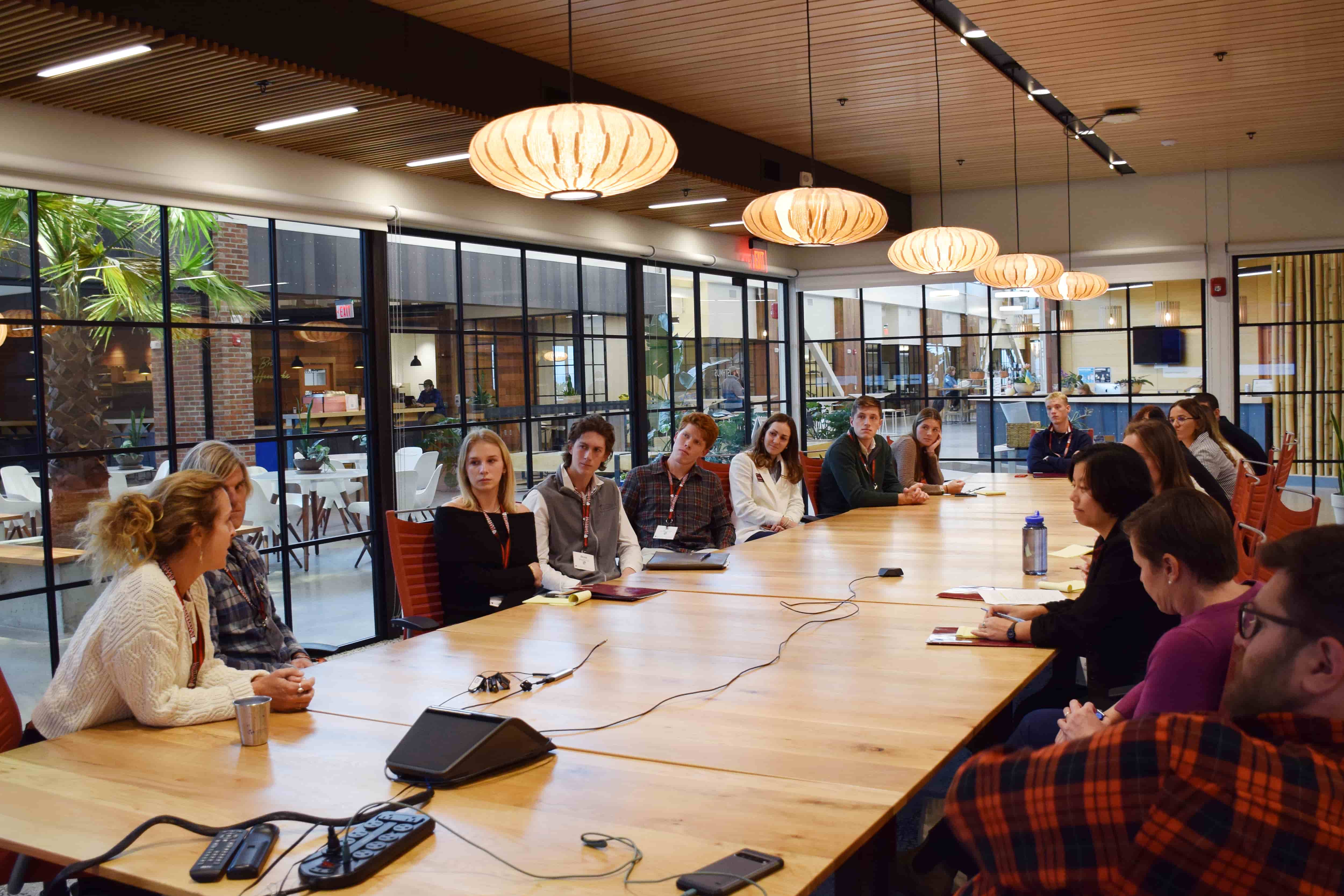
The Scullys’ commitment to cultivating the next generation of innovators extends to St. Lawrence as well. They welcome students to Hula for SLU Connect Burlington networking events, introducing them to entrepreneurs and alumni who are helping shape Vermont’s economy. Their roster of current and past employees includes several alums. This spring, they deepened that connection with a lead gift to endow the University’s Explore Lab Makerspace, supporting the same kind of hands-on creativity, experimentation, and interdisciplinary problem-solving that has become central to Hula’s mission.
These days, the Scullys are working to solve what they see as Vermont’s next missing piece. If the state succeeds in attracting entrepreneurs and talented workers, where will they live?
That question has led them into a years-long effort to help bring as many as 1,200 apartment units to Burlington’s South End. Working alongside a nationally recognized development partner and city leaders, they have helped advance plans for the new residential community adjacent to Hula— one designed to address one of the greatest barriers to Vermont’s continued economic growth.
For the Scullys, the housing project is simply the next gap to fill. As Burlington’s innovation economy grows, the question is no longer whether Vermont can attract talented entrepreneurs and workers. It’s whether they can afford to stay.
If all goes according to plan, the answer may soon be yes. For Roxanne, the impact of projects like Hula—and the housing community that will follow—can’t be measured by buildings or businesses alone. “There are just so many ripples that can happen from a good collaborative creation,” she says. “We don’t even know what the ripple effects will be.”