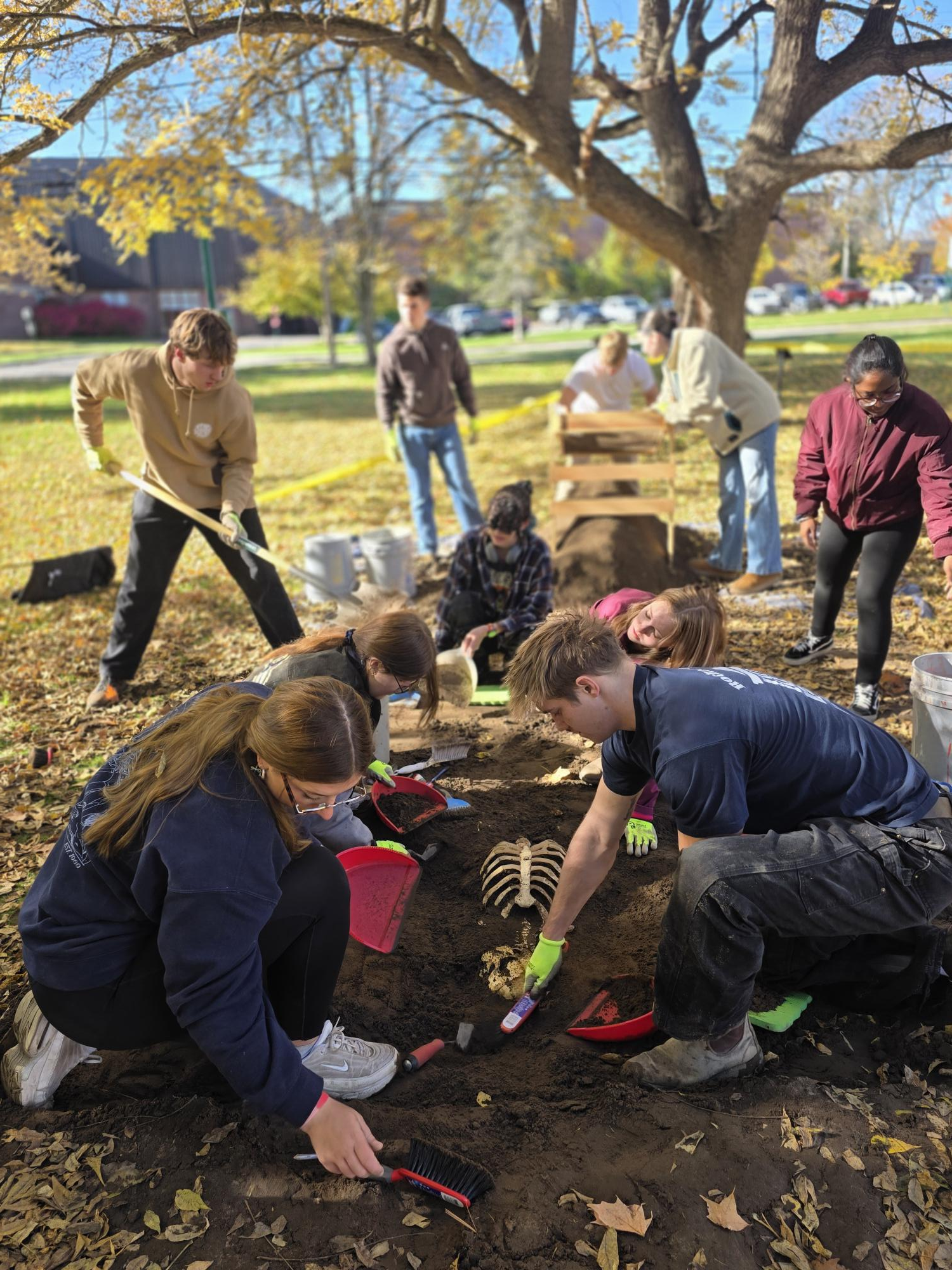
The Department of Anthropology has opened its new outdoor Anthropology Excavation Unit near Bewkes Hall. The unit allows majors, minors, and students enrolled in anthropology courses to gain hands-on experience excavating mock human remains and associated evidence in a real-world setting. Students learn practical field skills including grid setup, mapping, and site documentation such as photography, that will prepare them for future careers in the field.
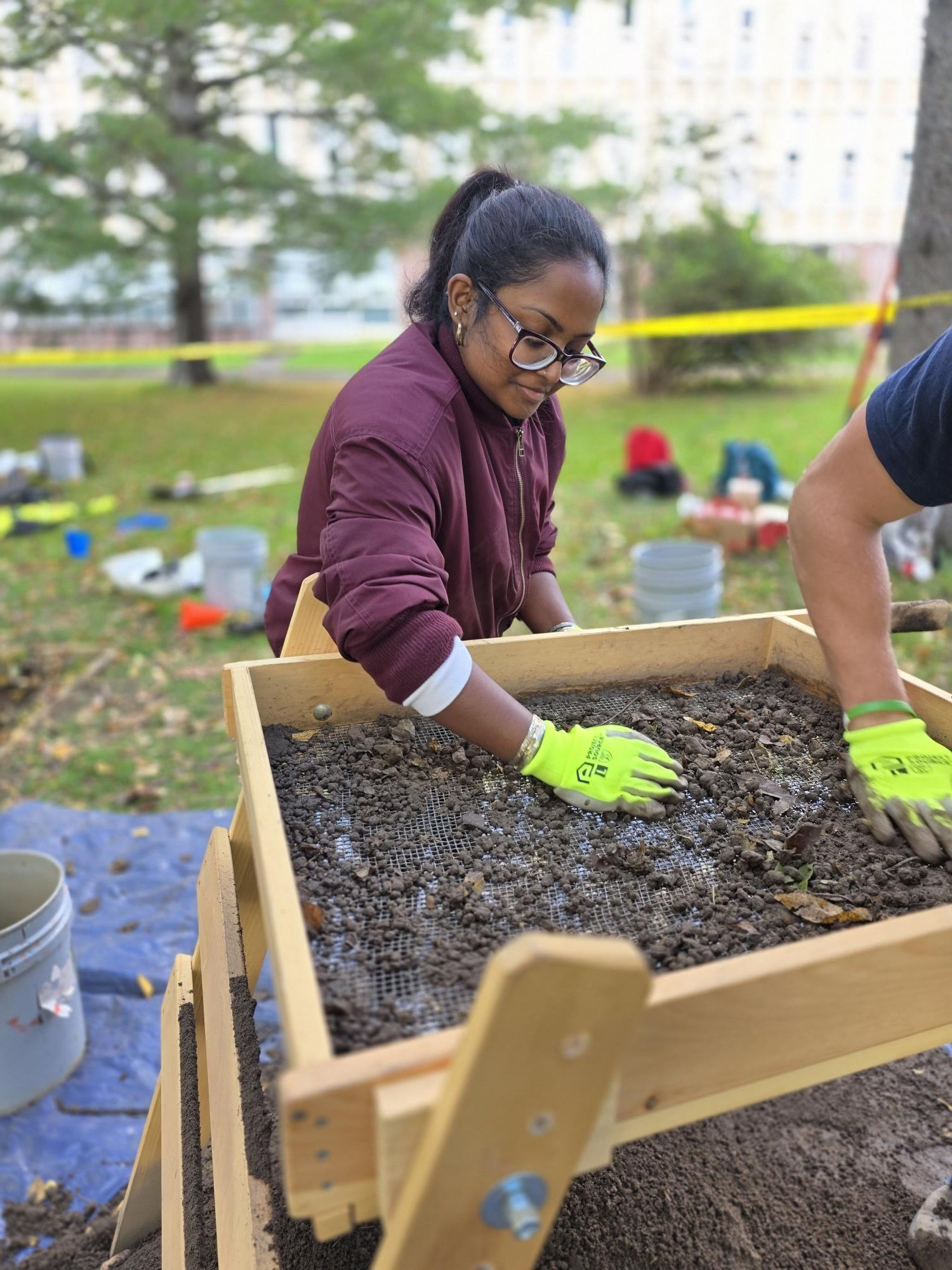
This past week, students in Dr. Mindy Pitre’s Forensic Anthropology course put the new unit to work. Over two days, students slowly excavated the plastic human skeletal remains and associated materials. Students were divided into four teams— excavators, bucket handlers, screeners, and documenters. The excavators used trowels, plastic and wood implements, brushes, and dustpans to expose the buried remains. Bucket handlers transported excavated soil to screeners who sifted the dirt for any missed “bone” fragments or associated materials. Meanwhile, documenters mapped the site and maintained the chain of custody. Students rotated through each role to gain hands-on experience in all aspects of fieldwork.
“I loved the hands-on experience of the Excavation Unit,” said Ani Flittie ’28 who plans on double majoring in anthropology and history. “Learning about proper forensic anthropological processes and techniques is important, but being able to practice them in a real-world setting is another level. As someone intending to pursue forensic anthropology, I consider myself very lucky to have an opportunity like this in my undergraduate years.”
“Hands-on experience is one of SLU’s pride and joys, and being able to work in a real-world environment has given us the opportunity to enter the field prepared and experienced in ways that many students might not be,” says anthropology major Lukas Boyce ’26.
So, if you happen to be walking by Bewkes and notice yellow crime scene tape up, don’t worry, that’s just students in the Department of Anthropology’s courses making use of their new Excavation Unit, or what they call the “Bone Pit.”
The Department of Anthropology thanks Facilities for helping make the unit a reality.