The Biology Behind the Brew
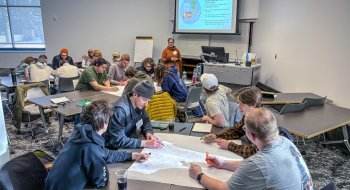
Most people probably don’t associate beer with science, but that’s changing for at least a dozen St. Lawrence students each semester who take Professor of Biology Joe Erlichman’s class, The Science of Brewing.
Erlichman, a self-described beer nerd, has been a hobbyist brewer for decades, but uses his skills as a biologist to show students just how much science bubbles under the surface of their favorite foamy beverage.
“Brewing, after all, is science,” Erlichman says. “Fermentation is science, so the lab skills I use in other biology classes are the same skills I use in this one,” he says.
The Science of Brewing
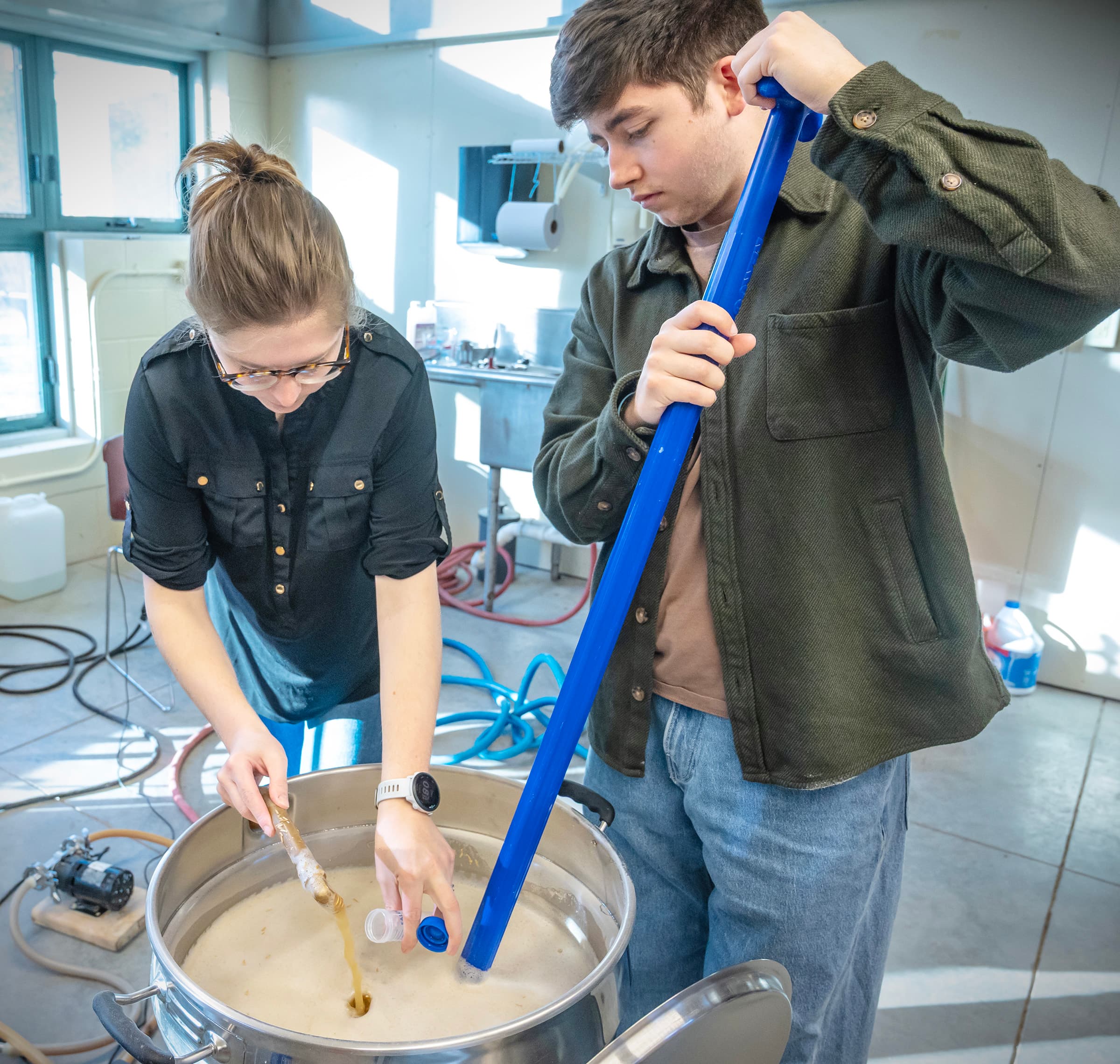
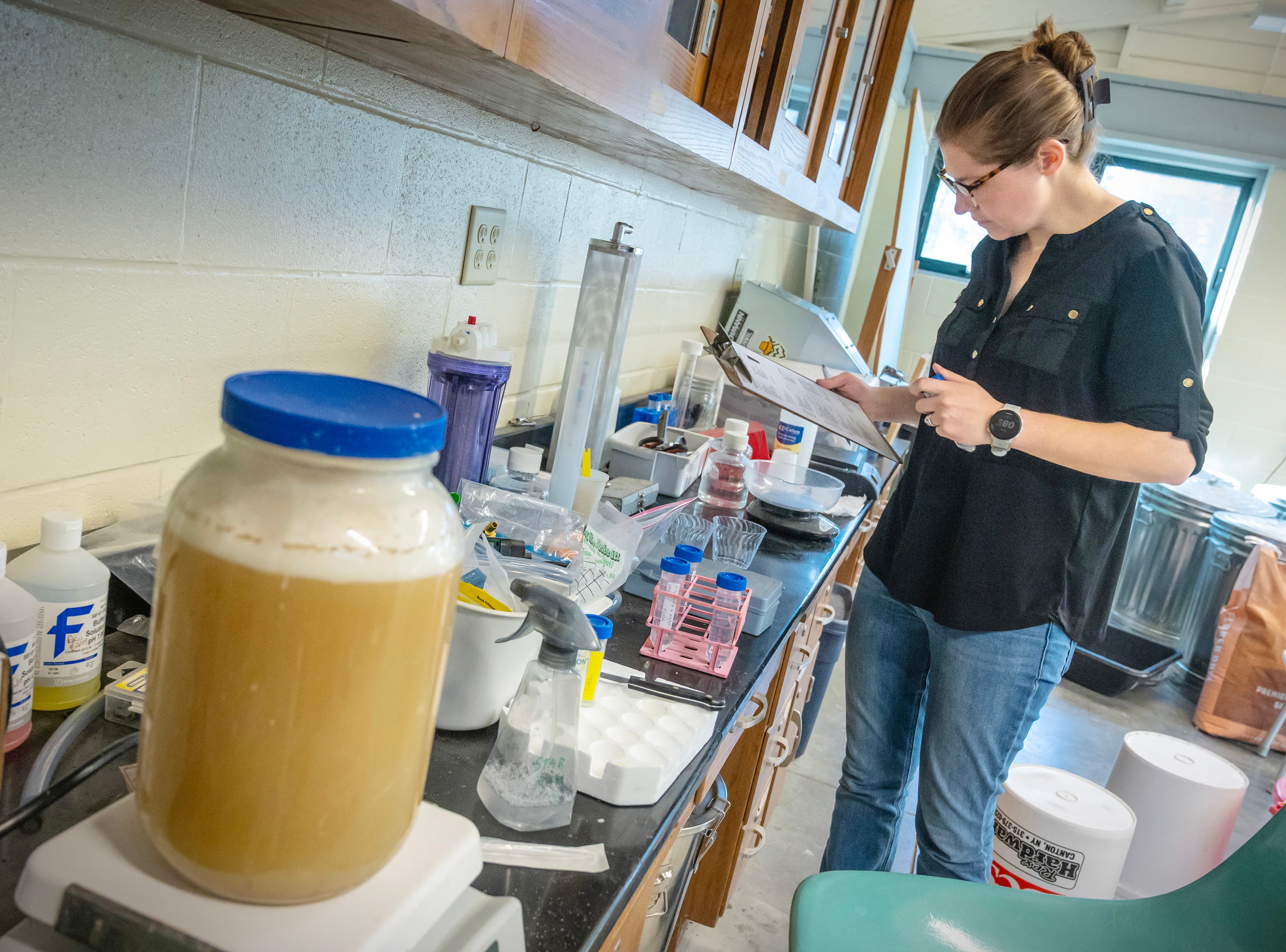
The Science of Brewing class combines two weekly lectures on the nature and science of beer with a lab component where students brew a variety of different beers over the course of the semester, from dark coconut porters to New England style IPAs to English hazelnut ales, and other styles you probably never knew existed.
In the lectures, Erlichman says, students taste different beers to develop a palate and vocabulary for what they might want to brew themselves.
The Brew Process
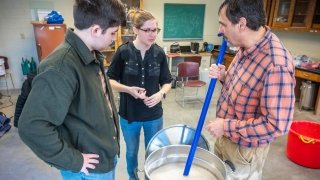
On brew days, students are separated into groups that cover different parts of the process, eventually mastering each rotation by the end of the semester.
First, Erlichman explains, students decide which grains they want to use and grind them through what appears to be a miniature wood chipper. Next, students take the ground grains and boil them in water, creating what at this point is called the “mash.”
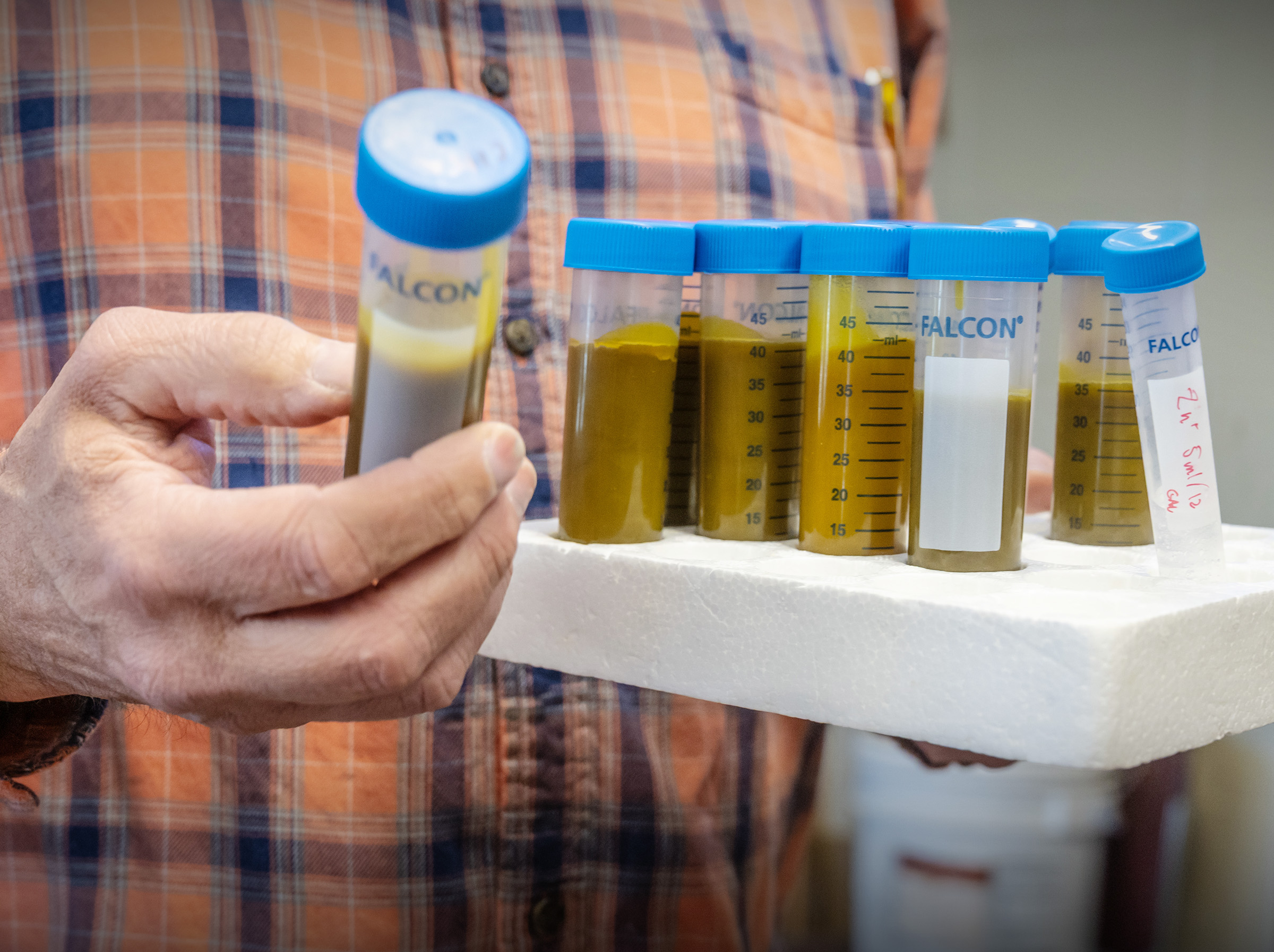
Once the grains are spent, the next group of students “whirlpool” the mash with hops. These hops, which are flowers of the Humulus lupulus plant, lend beer its distinctive bitterness and fruitiness.
After it’s hopped, another group of students cools down the liquid—which is now called the “wort”—to the point where yeast can be added. This spring, students made a sour beer using yeast isolated from the gut of a fruit-eating hornet.
Once the yeast of choice is added, the wort is fermented over the course of 7-10 days, and finally, it’s carbonated and kegged.
“Students are hands-on every step of the way,” Erlichman says. “You can’t learn it any other way.”
Turning Beer Into Career
While the class is meant to be fun and unique, it also can lead to interesting career outcomes at a time when, as Erlichman explains, craft beer is experiencing a renaissance.
Erlichman invited St. Lawrence alum Jack Droppa ’11, who owns Weird Window Brewing in South Burlington, Vermont, with his wife and fellow Laurentian Emily Tulip Droppa ’09, to talk with students about what it’s like opening a brewery. He also allowed the students to try some of their beers, like their popular jalapeño cream ale.
In fact, Erlichman himself, along with other local beer nerds, is opening a brewery in Canton later this summer, Bent Beam Brewing.
“The tagline for the brewery will be Better Brewing Through Science,” Erlichman says, and he plans to use some of the recipes in the brewery that his students have learned.
The students, many of whom just wanted to take a fun-sounding class, were impressed at how technical the process of brewing beer can be.
“It surprised me how many details can become so important, like how the pH of the water can change how the beer feels in your mouth, or how different enzymes and salts can affect the entire taste profile,” says Gemma DiMento, a senior biomedical science major. Rachel Boudreau, a senior neuroscience major, says to take the class because it seemed like a unique opportunity to learn about something she might not get the chance to do again after graduation.
"It's been cool to learn how complex the biology and science of brewing is," she says. "I can now tell you what grains are in a beer by tasting it, and I've expanded my palate a lot."
Senior biology major Karsten Braun agrees, and says he decided to take this class over others his senior year because he thought he’d remember this one for a while.
“My friends taking, like, advanced statistics classes now are jealous, but I make it up to them by bringing them back some beer,” he says.