Q&A: Meet Professor Susan Willson
Meet Your Biology Mentor
Associate Professor of Biology Susan Willson combines her love of ecology and hands-on teaching to inspire students to explore the natural world. Whether in the snow-covered forests of the North Country or the biodiverse landscapes of Ecuador, her courses connect ecological science with real-world stewardship.
What’s your favorite class to teach, and why?
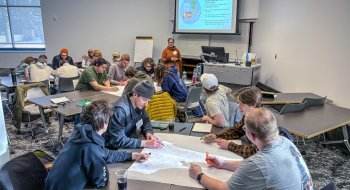
I love teaching General Ecology. It’s a small class, which allows me to get to know students individually, and we spend a lot of time outdoors collecting ecological data. Teaching it in the winter is especially fun—students learn to do forest transects on snowshoes looking for deer activity to understand how snow depth affects habitat use, and they also learn our local trees by bud structure and bark. We also dive into data analysis and ecological stewardship, giving students a full picture of the scientific process.
How do you make your courses engaging?
I bring learning outdoors whenever possible. In Ecuador, for example, each ecosystem becomes our lab as we explore biodiversity and conservation. I also invite local experts—ecologists, indigenous plant specialists, and artists—to share their knowledge with students. This approach emphasizes that university knowledge is only part of the solution to environmental challenges and that collaboration with local communities is essential.
What do you value most about your students?
Their curiosity and energy. St. Lawrence students are eager to know more, care deeply about the state of the world, and want to make a difference. I’m constantly inspired by their enthusiasm and their commitment to making the world a better place.
What’s an unusual or innovative course you’ve taught?
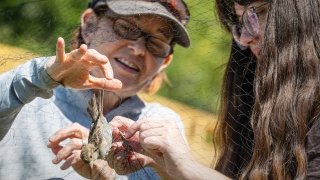
Mist Nets and Museum Skins is a one-of-a-kind course I designed. Half of the semester takes advantage of our beautiful fall weather, and we are outside. I am a licensed master bird bander, and I teach the students how to use professional mist nets to safely catch, handle and band wild songbirds. Once they are good enough, we move to Nicandri Nature Center in Massena where we encounter many bird feeder species, and color-band individual black-capped chickadees for a citizen-science project involving re-sighting of the chickadees. The second half of the course introduces students to making museum-quality study skins from dead birds that I find as roadkill, or birds killed by cats and window collisions. Students get over their queasiness fairly quickly and love the Zen-like quality of focusing on the details as they each work for hours on their bird.
What surprises students most about you?
Probably how many animals I have! My family and I run a small hobby farm with rare, ornamental-breed chickens, Nubian goats, and even an off-the-track thoroughbred racehorse that I’m training for jumping competitions. While I’m a bird biologist, my love of cats has even led me into research on how they interact with bird populations.
What’s been your proudest moment as a professor?
A decade of research by my students and me on bird-window collisions resulted in the installation of Acopian Bird Savers on the Johnson Hall of Science. Knowing that we’ve reduced bird deaths on campus is a tangible achievement that I’m incredibly proud of.