How St. Lawrence University Is Leveling Up Collegiate Esports
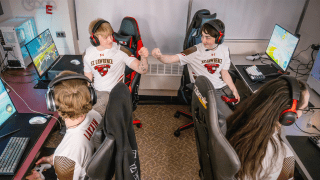
It’s well past 11 p.m., and the student-athletes still haven’t finished competing. The game has gone to overtime, and the players—sweating, jittery, bursting with emotion—are on the verge of clinching their first tournament of the season.
These students aren’t playing hockey, or basketball, or soccer. They’re playing esports, or electronic sports—competitive video games. It’s the fastest growing collegiate sport, and St. Lawrence is equipping itself to be one of the premier esport programs in the country.
Esports at St. Lawrence
“When we do something here at St. Lawrence, we do it right,” says Kadin deRuijter, esports coordinator and head coach. “We care about quality, and we’ve received a lot of support from our Athletics department which has afforded our esports program a high degree of flexibility and marketability.”
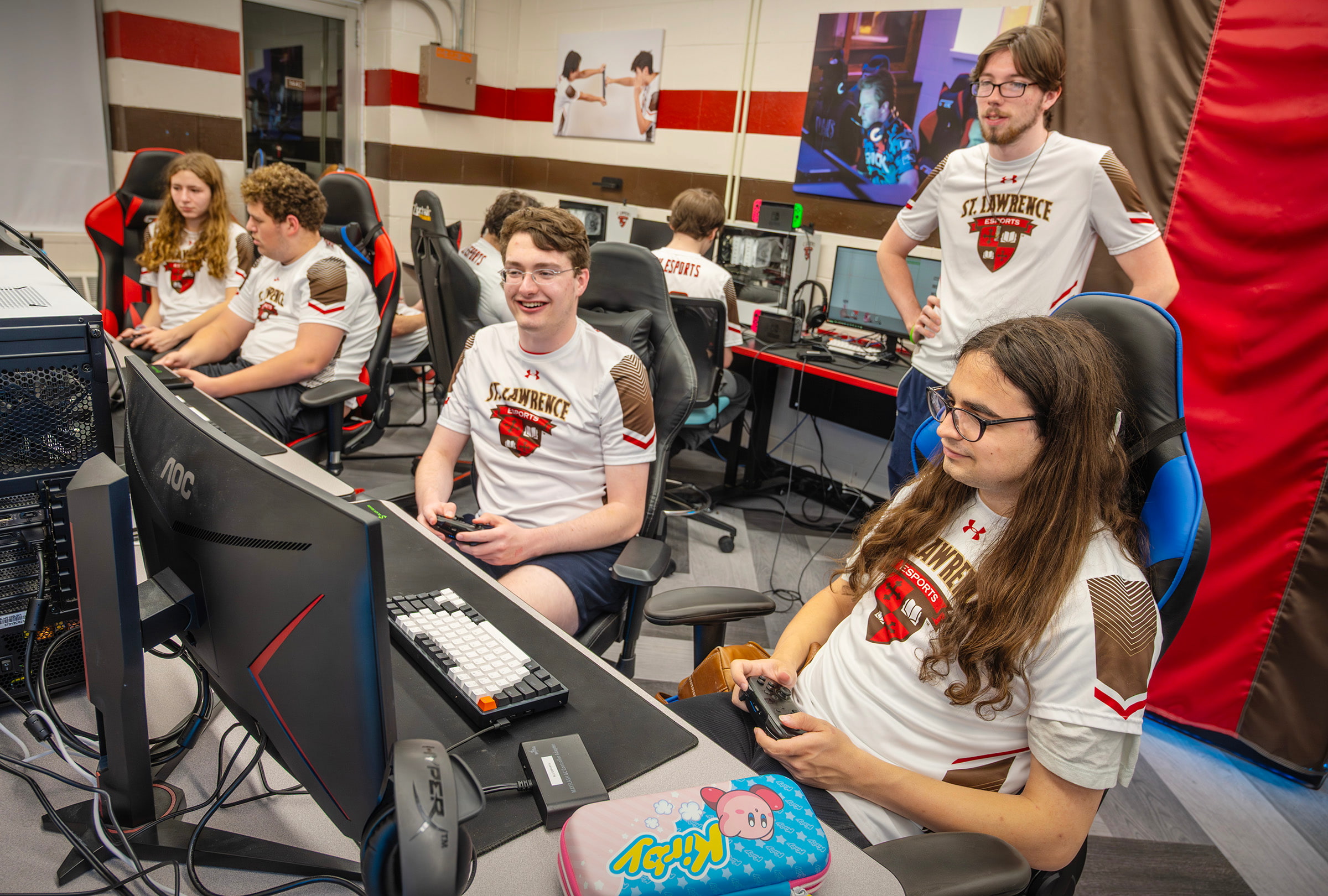
That’s evident just by touring the Esports Gaming Lab in Bewkes Hall, which looks like the inside of the Starship Enterprise. The multi-room facility is decked out with dozens of gaming computers—all equipped with the latest technology—as well as gaming consoles, flatscreen TVs, and even a hyper-realistic racing simulator.
It’s a 24/7 oasis for esport athletes to practice, train, watch film, and compete in games and tournaments.
That support is part of what has allowed the University’s nascent esports program to skyrocket the last year. The program, which was promoted from a club to a varsity sport in 2021, tasted its first big success last spring when the program saw its win-rate jump substantially and sent multiple teams to the divisional playoffs.
One of those teams, Overwatch—a first-person team-based shooter game—even earned a bid to the National Esport Collegiate Conference (NECC) Nationals.
“It was invigorating to know, so early on, that our program was on the path to greatness,” says deRuijter, who joined St. Lawrence in the spring of 2023.
Currently, the esports program contains five separate teams, or games—Valorant, Super Smash Bros Ultimate, Rocket League, League of Legends, and Overwatch.
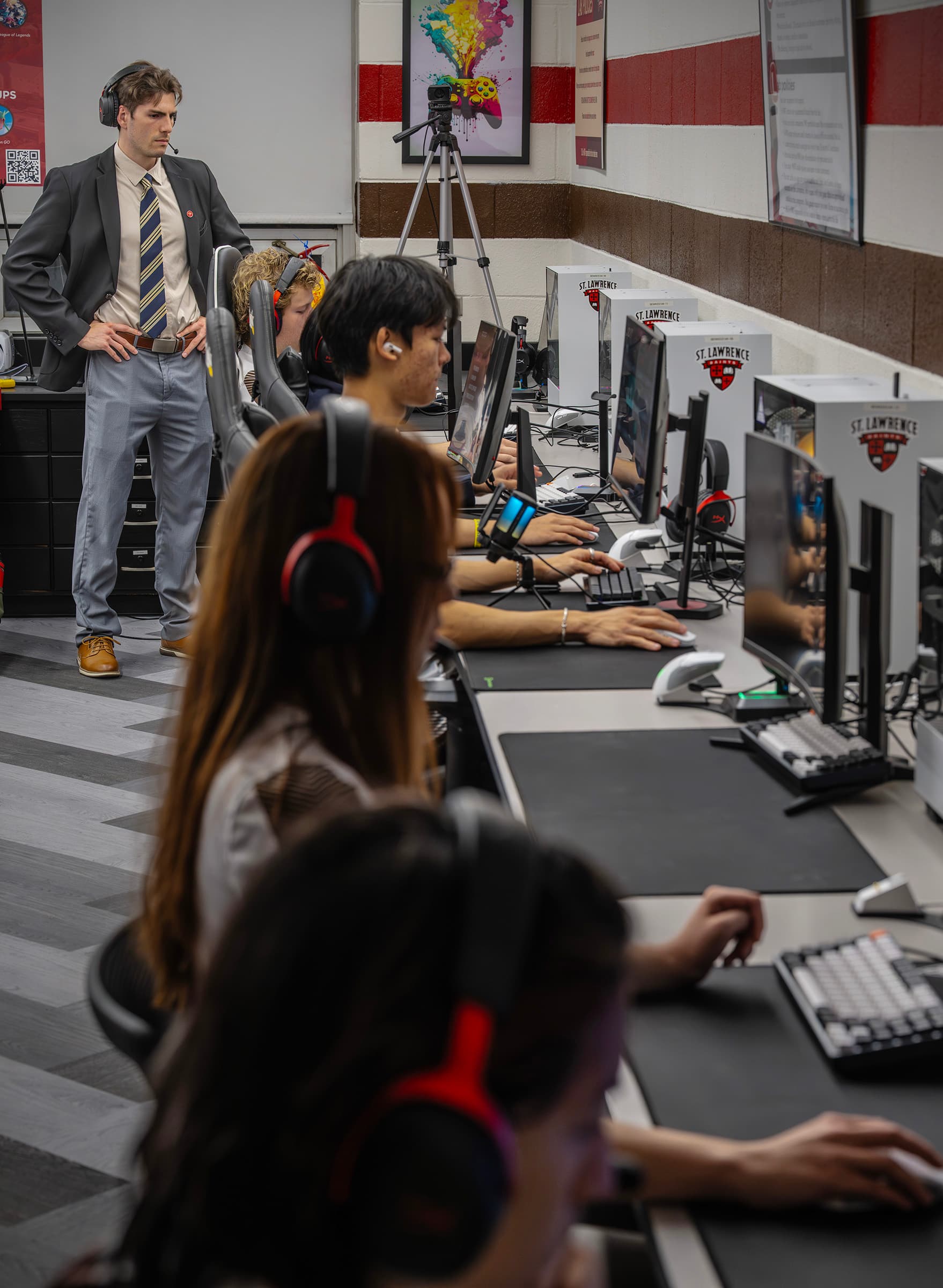
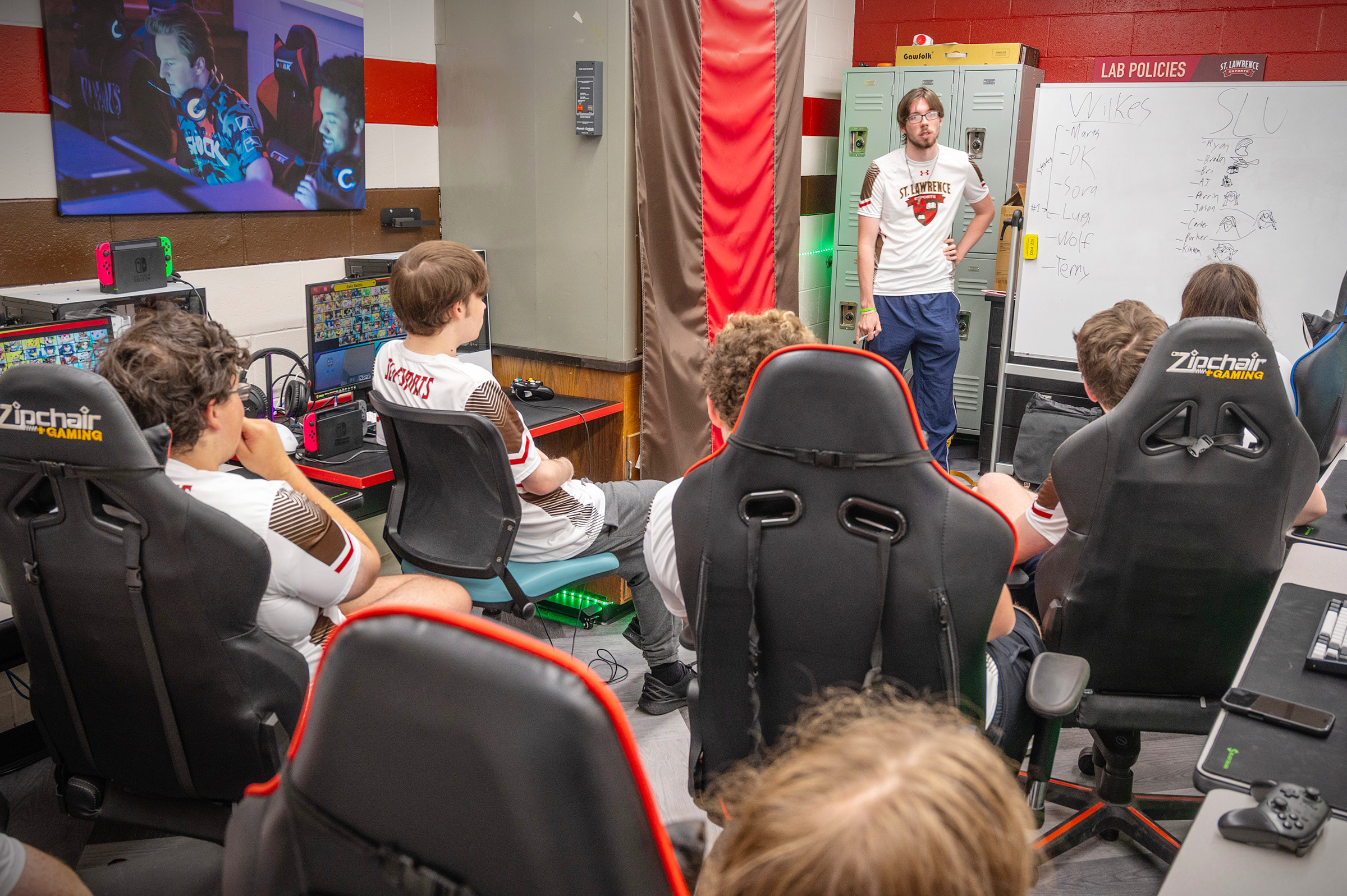
DeRuijter not only oversees the operations for all these teams, but coaches them, too. He compares it to being a track-and-field coach, where some athletes do short-distance, some do long-distance, and some even throw a javelin, but that head coach—despite maybe only being an expert in one of the areas—still needs to understand the fundamentals of them all to properly coach.
“We are fortunate to have assistant coaches for each title as well as team captains who can help out,” he says.
But deRuijter isn’t just trying to make student-athletes great at esports. He’s trying to make great student-athletes. He wants the esports program, like St. Lawrence’s other athletics programs, to live up to its liberal arts reputation, where athletic success is intertwined with academic and social success.
“There’s this misconception that if you play esports, you won’t be physically active or engaged in other aspects of campus life, but that couldn’t be further from the truth,” deRuijter says, noting that our esport athletes often study abroad, are part of multiple clubs, attend lift sessions in the varsity weight room, and generally immerse themselves on campus just the same as any other student-athletes.
“I think it’s important that our esports program prepares our student-athletes for the real world just like traditional sports,” deRuijter says. “It isn’t just a hobby. The discipline, time management, and physical and mental regulation required to play esports completely prepares our athletes for adulthood.”
What Makes eSports a Sport?
Erik Schneider ’26 is a dual-sport athlete and global studies major both on the Valorant and the track-and-field team as a javelin thrower.
“There is a stigma surrounding esports that it’s for losers and nerds who don’t shower,” he says, half seriously, “and that’s a shame.”
While he acknowledges that esports doesn’t require the same physicality as, say, football, he wants people to know there are striking similarities between esports and traditional sports.
“The level of competitiveness, the drive to win, the need to practice, the required teamwork—all of that is essentially the same,” Erik says.
On St. Lawrence’s campus, at least, he has found any stigma to be more fiction than reality. “Lots of people think esports are cool now,” he says, adding that the stigma surrounding the sport is mostly in gamers’ heads. Plus, he says, “no one worth their salt can judge you for doing something you love.”
Perrin Dulmer ’28, who came to St. Lawrence because of its competitive esports program, has also found campus to be open-minded and interested about esports and its athletes.
“We definitely have a very accepting environment, both on the team and on campus in general,” she says. As one of the few women on the esports team, Perrin says her gender has never been used to make her feel uncomfortable or less-than.
“Being a woman on the esports team just means I work hard and earn every piece of what it takes to get here,” she says. “I’ve never felt that was held against me or that my skill was viewed as any less."
A Winning Vision
That professional, dedicated mindset and culture are cultivated from the top-down.
“What we’re doing is undoubtedly a sport, at least within the context I’m trying to create here,” says Josh Kobayashi ’28, captain of the Overwatch team. He’s spent the last year galvanizing and leading his teammates, getting them to take seriously the need to formally practice, study game theory, watch film, work out, and conduct themselves as the serious athletes they are.
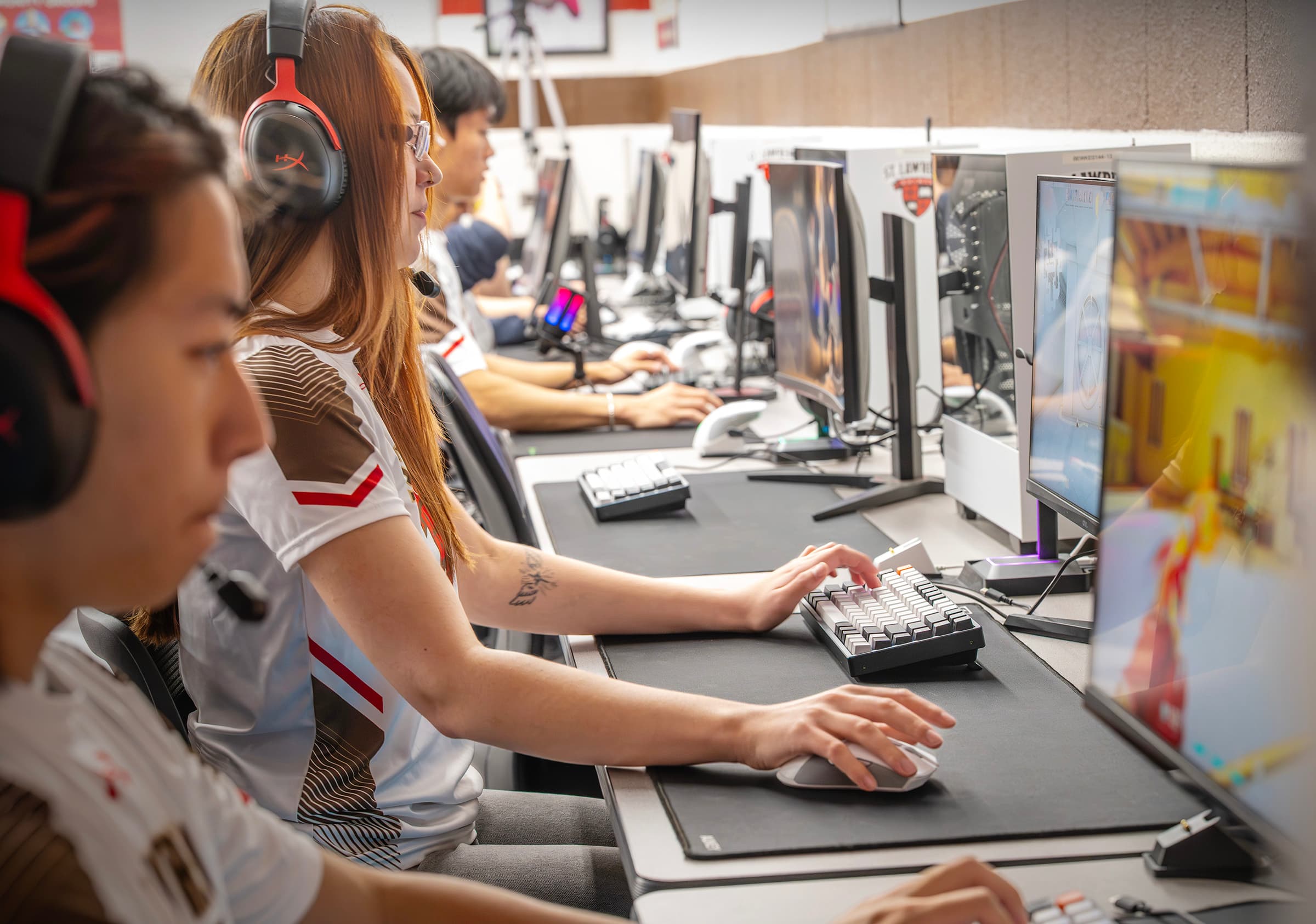
“My goal is to make our esports program, and in particular our Overwatch program, more official and professional,” he says.
That’s a goal he shares with deRuijter, who wants to shape not only great esport athletes but great Laurentians.
“It would be great to win more games,” deRuijter says. “But success to me comes down to how interconnected esports is with the campus community.”
“The goal I have,” he says, “is if you took an athlete from every sports program here at St. Lawrence, and went through a day of practice and classes and social gatherings, and just observed the way they conduct themselves and the grades they get, I would love if you couldn’t tell which one was the esports athlete.”