Faculty Focus-March 31, 2026
Faculty members put their knowledge into action so students and others are able to benefit from it. Recently, faculty appeared on syndicated podcasts, published groundbreaking research in journals, and presented at international conferences.
Madeleine Wong
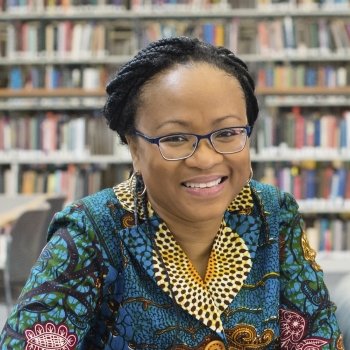
Associate Professor of Global Studies Madeleine Wong recently presented a paper at the Annual Conference of the Association of American Geographers in San Francisco. The title of her presentation was, “Doing life and family during the Covid-19 pandemic: Navigating (im)mobilities for skilled Ghanaian transnational families."
The presentation examined how professional Ghanaian migrant families mobilized complex geographies of support to “do family”—locally and transnationally—and the creative mobility strategies they deployed to “do life” across borders despite the disruptions and (im)mobility regimes engendered by the pandemic. The presentation revealed the uneven geographies of mobility privilege and the class and gender dimensions of transnational reconfigurations.
Lisa Torrey
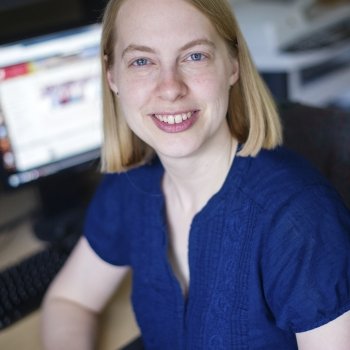
Rutherford Professor of Computer Science Lisa Torrey recently published a research paper and presented it at the 57th Technical Symposium on Computer Science Education.
The paper, titled “Detecting Cognitive Slips in Novice Code Tracing,” centers around three main ideas: Code tracing, which is reading code and predicting what it will do; Misconceptions, which are mistaken beliefs about how code works; and Cognitive slips, which are lapses in attention or working memory.
Given that, the paper notes how novice programmers sometimes trace code incorrectly due to misconceptions. However, tracing errors do not always reflect flawed mental models, since they can also be caused by cognitive slips. Instructors may wish to respond differently to errors caused by slips rather than misconceptions, but these errors can be difficult to tell apart. The paper, then, describes one instructor's search for an effective way to detect slips. Asking students to sketch or explain their traces seems insufficient, but engaging students in analyzing their own errors shows more promise, Torrey argues.
Howard Eissenstat
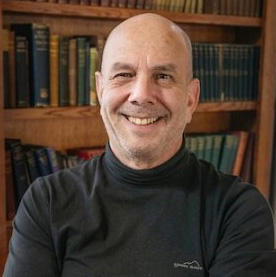
Laurentian Associate Professor and Chair of History Howard Eissenstat’s comments on Turkey's capacities as an intermediary in regional conflicts and its applicability to the Iran War were included in an article in the Italian newspaper, Il Foglio.
Eissenstat also recently spoke to Diego Cupolo for Turkey ReCap about Turkish-Israeli tensions and Turkey's potential role as an intermediary in resolving regional conflicts.
“[We] run the risk that Israeli and Turkish officials are cementing the idea that they are natural rivals in a zero sum game for power in the region,” Eissenstat said.
Eissenstat also recently wrote a policy brief for Stockholm University's Institute of Turkish Studies, titled "The Next Big Middle East Conflict? The Turkish-Israeli Rivalry." In it, he argues that Turkey and Israel—once regional partners and now open rivals—are competing in a Middle East dramatically reshaped by Gaza and the U.S.-Israeli war on Iran. By neutralizing Iran and its proxies, Israel removed the Gulf states' principal rationale for tolerating Israel as a partner. Turkey, by contrast, is increasingly seen as a useful partner by states in the region."
Direct conflict, Eissenstat writes, "is not imminent.. but policymakers should not mistake the current calm for resolution. The underlying competition is structural, the narratives on both sides are hardening, and the risk of miscalculation is real."
Daniel M. Look

Charles A. Dana Professor of Mathematics Dan Look was recently featured on several episodes of
Macmillan's The What and Who of EDU podcast. The following episodes have aired and area available on Spotfy and Apple Podcasts: "Show Your Work: 10 Ways to Get Students to Reveal Their Thinking," which aired March 12; "What Discipline is the Coolest? 10 Professors Explain Why Their Field Rules the School,” which aired February 25; "10 Teaching Strategies Teachers Once Doubted and now Swear By," which aired December 3, 2025, and others.
Look’s recent book Math Cats: Scratching the Surface of Mathematical Concepts was also recently translated into French, "Le Théorème du chat." Read more about Math Cats on the St. Lawrence University website.
Patti Frazer Lock
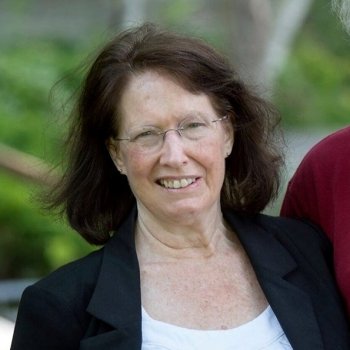
Professor of Mathematics and Statistics Patti Frazer Lock recently gave two national invited webinars. In one, she served on a panel on "Concepts Over Computation" sponsored by the American Statistical Association Section on Statistics and Data Science Education.
In the second, she was the sole speaker in a webinar sponsored by John Wiley and Sons on the topic of "The Future of Statistics Education: Insights from the 2026 GAISE Recommendations."
Submit News
St. Lawrence’s Faculty Focus is a regular roundup of noteworthy faculty news.