Faculty members put their knowledge into action so students and others are able to benefit from it. Recently, faculty published in prestigious journals, presented at renowned conferences, wrote groundbreaking book chapters, and received international acclaim.
Damon Berry

Associate Professor and Chair of Religious StudiesDamon T. Berry is a featured author in the recently published book On Christian Nationalism: Critical and Theological Perspectives. Berry wrote the first chapter “‘Whose House?’: Christian Nationalism, January 6, and Political Investment in Whiteness.”Since the January 6, 2021 coup attempt at the U.S. Capitol, Christian nationalism has widely been called the “greatest threat to democracy in the United States.”
Yet academics and activists present many conflicting definitions and solutions. On Christian Nationalism: Critical and Theological Perspectives features an array of scholarly essays on Christian nationalism, offering innovative exploration of topics including definitions and historical context, current trends in the United States (including intersections with racism, sexism, antisemitism, and Islamophobia), comparative phenomena abroad, and practical ways to address the problem theologically or politically.
Berry teaches courses on various topics, including American religious history, religion & politics, extremism, religion & violence, and special topics courses, like “Conspiracy Theory in Religions.”
Diane White Husic
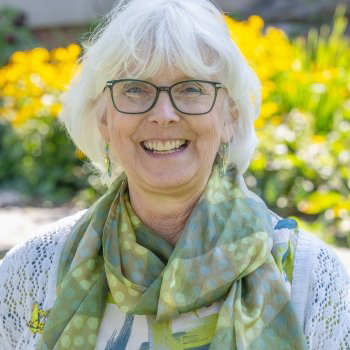
Richard ’64 and Gail Stradling Executive Director of the Center for the Environment Diane Husic recently attended the United Nations Framework Convention on Climate Change (COP30) conference in Belém, Brazil. She was a co-organizer and moderator of an official side event panel presentation titled "Building Climate Bridges Between Higher Education and Communities: Dialog, Storytelling, and Conflict Resolution.”
As part of her work at the COPs, Husic serves on the steering committee for the Research and Independent NGOs constituency group and helped to lead daily meetings, and she presented on the latest work related to climate resilient agriculture from the Technology Executive Committee.
Husic’s research spans a wide range of topics, including reframing sustainability in higher education, climate change impacts on ecosystems, the transformational role of undergraduate research experiences, and developing climate change leaders.
Anna Fahr
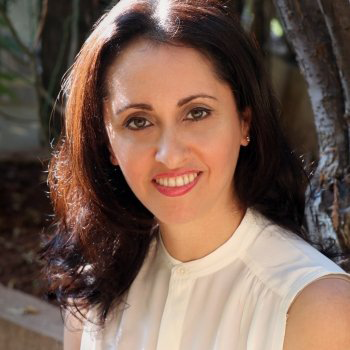
Assistant Professor of Digital Media and Film Anna Fahr’s debut narrative feature, “Valley of Exile,” continued its run on the international festival circuit this fall with screenings in Fameck, France, Washington, D.C., and Shiraz, Iran, where it received a Special Jury Mention in the Broken Olive Branch Competition of the festival.
Fahr is also among eight directors from across Canada selected to attend the European Film Market at the upcoming Berlin International Film Festival, where she will be pitching her new feature film in development, “Beirut in Between,” to producers, funders and distributors, as part of the Director's Guild of Canada Market Accelerator program.
Fahr is an independent filmmaker, educator, and founder of Morning Bird Pictures, a Toronto-based production company dedicated to creating films with social impact that focus on the contemporary Middle East and its diaspora.
Eloïse Brezault
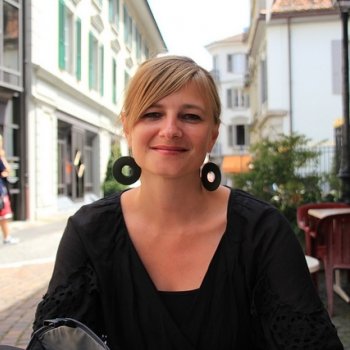
Professor and Chair of World Languages, Cultures, and Media Eloïse Brezault presented a paper titled “L’Histoire rappée: Reclaiming African Intellectual Heritage through Senegalese Hip Hop” at a conference at the Sorbonne in Paris, France on Hip Hop in French: The Rap Text Between Francophone Poetry and Narrative.
Her presentation explored the innovative project “L’Histoire rappée” developed by Senegalese Hip Hop artist Simon Kouka, which seeks to revive and re-center the stories of African leaders and intellectuals who have been marginalized or distorted in dominant historical narratives. The project also reflects the political dimension of Simon’s artistic engagement. As cofounder of the Senegalese citizen movement Y’en a marre, he is widely recognized for his activism in defense of democracy and social justice. Last year, Simon was invited to campus through an Arts Collaborative grant, along with graffiti artist Docta, to speak with students about their artistic and political practice.
Brezault’s research interests include Francophone African literature, cultural theory, postcolonial literature and migrant identities in a globalized world.
Mert Kartal
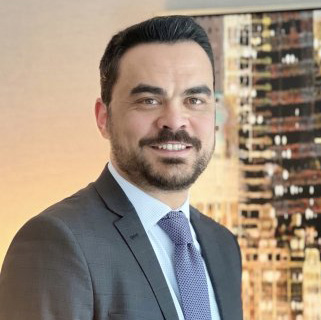
Associate Professor of Political Science Mert Kartal’s recent piece for Good Authority—a prominent political science platform that translates academic research into accessible content for a broader audience—analyzes Europe’s fraught dilemma over roughly €200 billion of Russian sovereign assets that were frozen after Russia’s full-scale invasion of Ukraine.
The article, titled “What Europe can and cannot do with Russia’s frozen assets,” argues that while the moral case for seizing these funds to support Ukraine is strong, the legal, economic, and political constraints make outright expropriation extremely difficult.
One promising idea, Kartal notes, is the European Commission’s new “reparations loan” plan: Instead of taking the frozen assets, the EU would raise approximately €140 billion by issuing special bonds backed by all member states and then lend that money to Ukraine.
Kartal serves as a fellow at Good Authority, where he draws on his expertise in European Union politics, good governance, and corruption control to provide in-depth analyses of current events and pressing political issues for the general public.
Jessica Sierk

Associate Professor of Education Jessica Sierk recently attended the American AnthropologicalAssociation’s annual conference, where she was a finalist for the 2025 Douglas Foley Early Career Award. She also presented a paper at the conference, titled "When You’re Not the Only One Tracking Your Period: Teaching Reproductive Health Privacy in a Post-Dobbs Era," as part of the panel "Paranormal Panoptic Activity: New Surveillance Mechanisms in Educational Contexts."
Sierk’s paper examines how sexuality education can better prepare students to navigate the post-Dobbs landscape, where reproductive rights, digital surveillance, and privacy concerns increasingly intersect. Grounded in feminist surveillance, critical data, and reproductive justice frameworks, Sierk shares how she shifted her course content to foreground privacy, surveillance, and media literacy as essential components of sexual autonomy. This work offers insight into how educators can respond to evolving socio-technical challenges through justice-centered pedagogy.
Sierk is working on several new research projects focused on higher education pedagogical innovations related to labor-based contract grading, undergraduate research experiences, and social media.
Submit News
St. Lawrence’s Faculty Focus is a regular roundup of noteworthy faculty news.