
Autocorrect? We Just Have Dictionaries!
By Evie Hopper, Emily Helterline, & Joe Frankenfeld
September, 28, 2026
Imagine this future scenario. It’s March 13, 2027. The air has a bite, but the sun is finally peeking out after a long winter, and the plump campus squirrels are starting to make their existence known again. As I, an imaginary future student, walk across campus, my eye catches on the brown Carhartt vest of an Adirondack Semester alum. I’ll soon be one of them. Just last week I learned that I was accepted into the program for the coming fall and am heading to meet with semester alumni Emily Helterline, Joe Frankenfeld, and Evie Hopper. I’m excited to talk with them about what the fall will look like.
I enter the Ireland-green room in the Noble Center, the warmth of the room and vast array of plants reminding me of the spring to come. My eyes scan the room and land upon the three program alumni animatedly chatting as they wait for me to arrive. I cross the room to sit with them, and I’m greeted with excited hellos and bright smiles as I sink into the comfortable couch. I have come armed with questions to ask them about life on the semester. After introductions, our conversation shifts toward the learning process over the course of the semester.
“What are classes like?” I ask. “How do you learn without technology? All of my schoolwork on campus relies on computers so heavily. If Canvas stops, so does life.”
The three share a knowing look. “Well,” says Emily, displaying the a true sense of authority. “Just because there is no technology, the workload does not decrease. There are so many things to learn in and outside the classroom.”
Evie’s head perks up and she dives into the conversation. “There is definitely a lot to accomplish in Arcadia. We generally have one class per day. On Mondays half of us went to woodworking in the morning, while the other half went Friday mornings. There we hand-carved canoe paddles with expert paddle maker and boat builder Everett Smith and Adirondack Semester alum and former Assistant Director Will Madison. In the afternoon we had an English class, ‘Writing the Adirondacks,’ with Dr. Mark ‘Mongoose’ Sturges, where we familiarized ourselves with the ADKs through reading and discussing essays by local authors. We also wrote web features in small groups that were uploaded to the program website on a weekly basis. Get excited for that assignment, it was a blast!”
Indeed, I remember reading some of the web features before applying. “How did you upload them without internet access?” I ask.
Joe answers. “Well actually, Mark would take our handwritten final draft, type it up, act as our editor and upload it after we approved his edits. What you don’t see online are the countless drafts and crossed out scribbles that go into a polished piece. I remember when Peyton Hunsicker said, ‘I didn’t realize how bad my spelling and grammar skills were. There’s no close enough on paper the way there is on a computer with autocorrect.’ Having no autocorrect was a challenge we all faced, and we became good friends with our dictionaries because of it.”
“Mark would also come to the village early,” Emily adds. “So we had time to ask him questions before class. That was so helpful because we had no way of contacting our professors when they weren’t in the village. Our ‘Land-use Change in the Adirondacks’ professor Dr. Pete Pettengill once mentioned how hard it was to change class plans because there was no way to update us ahead of time.”
Evie jumps in and says, “We had Pete’s class from 9:00am to 4:00pm on Tuesdays. That long period allowed our class to take extravagant field trips all over the Adirondacks.”
“One time with Pete,” Emily interjects. “We went to the Upper Works trail system to learn about the once thriving mining industry and its impact on the land today. I remember looking up at the monstrous blast furnace. I felt so tiny with it looming above me; it looked like it had been abandoned just yesterday. If I focused really hard, I could almost smell the fire billowing out of the grand smokestacks.”
“What was Professor Pettengill like?” I ask, having heard much about this living legend of land-use expertise.
Joe responds. “Class with Pete was always exciting, and it was thrilling to be somewhere new while being so immersed in the local history.”
I, future student, try to imagine some of the adventures my fall will hold. I’m looking forward to seeing the Adirondacks as more than just a fun place to recreate.
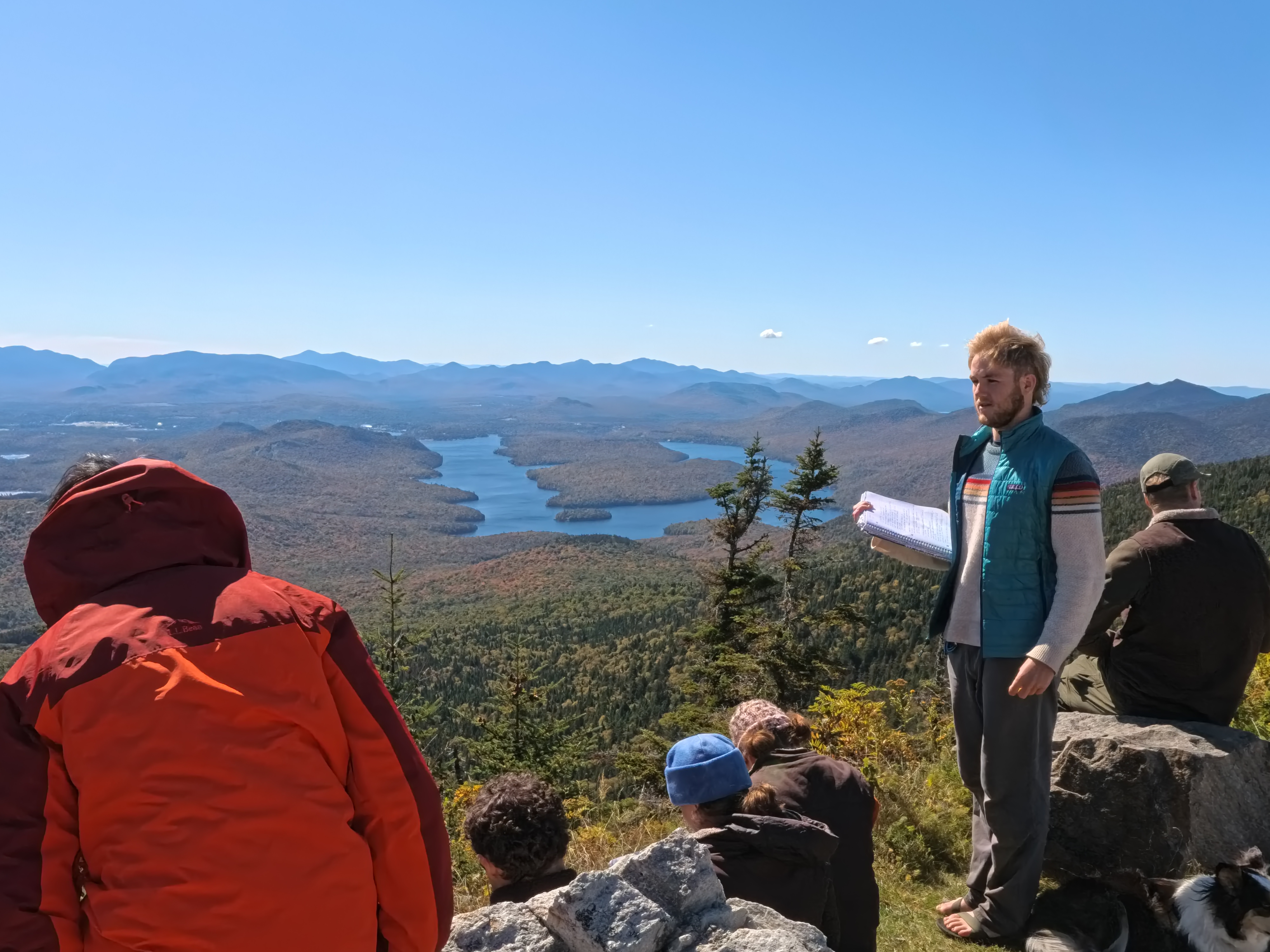
Emily continues. “Dr. Eileen Visser’s class, ‘Natural History and Ecology of the Adirondacks,’ was also a full day, allowing for more field trips; there was never a dull moment. One time we went snorkeling in a swampy area of Lake Massawepie—it was gross, but totally awesome. As we slithered among the various species, Eileen prompted us to pretend we were fish. Eric Kniple was so excited for class that day that he squelched around in flippers for hours before we got to the swamp. He remarked, ‘Every kick and pull was slowed by the reeds. I emerged with them cascading from my mask like a real Massawepie mermaid. The earthy scent of swamp lingered on my skin until I had the chance to jump in the cove back at Arcadia.’ Eileen’s border collie Mika joined us for that adventure and many others too,” Emily adds.
“Wow, that sounds like fun,” I say.
“It was so fun,” says Evie. “Just take alum Lars Fattinger’s advice and start your fern project early.”
My interest is piqued by this fern project, but I wonder how time-consuming it can actually be. “I’ll try not to procrastinate,” I say.
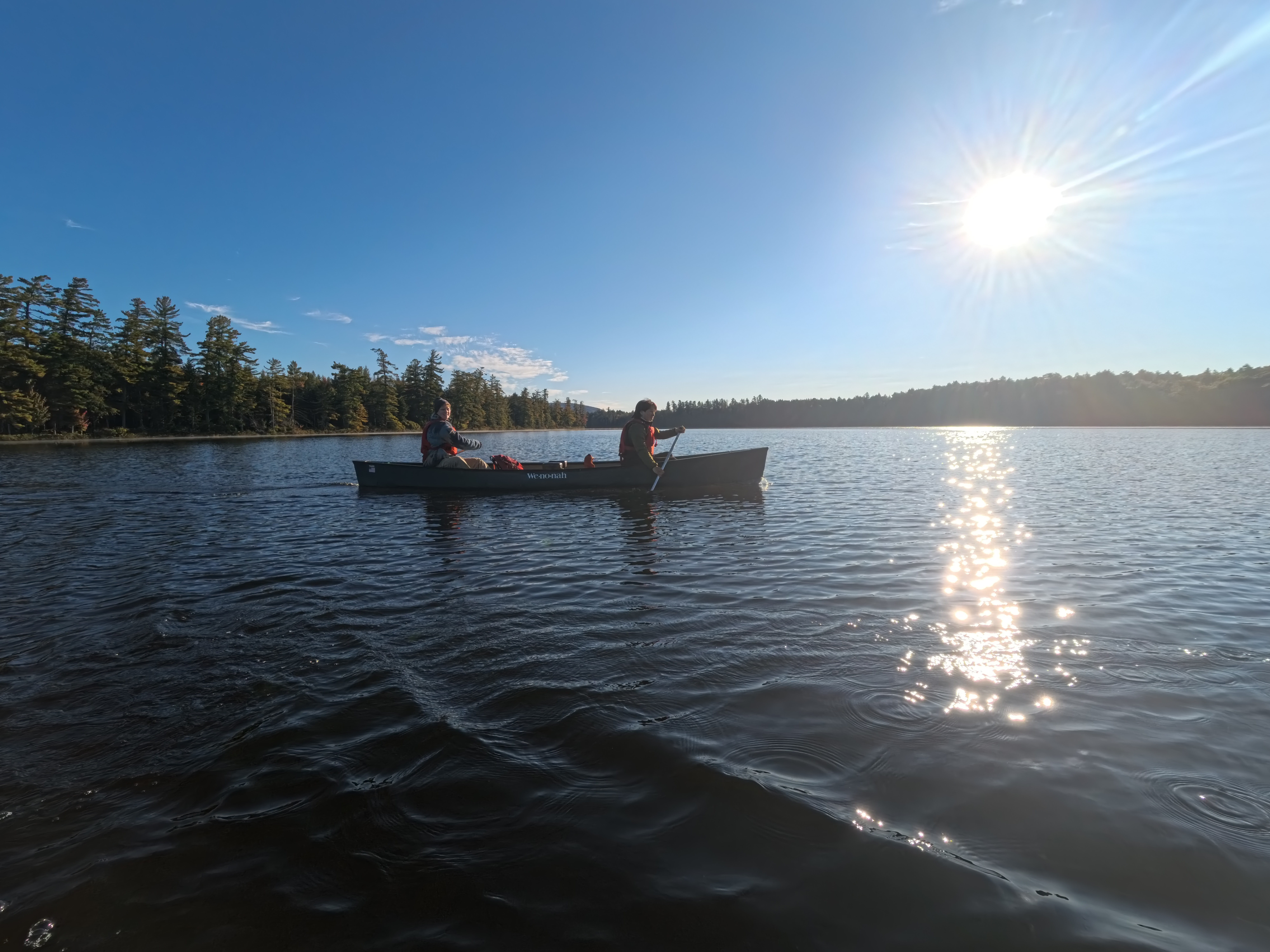
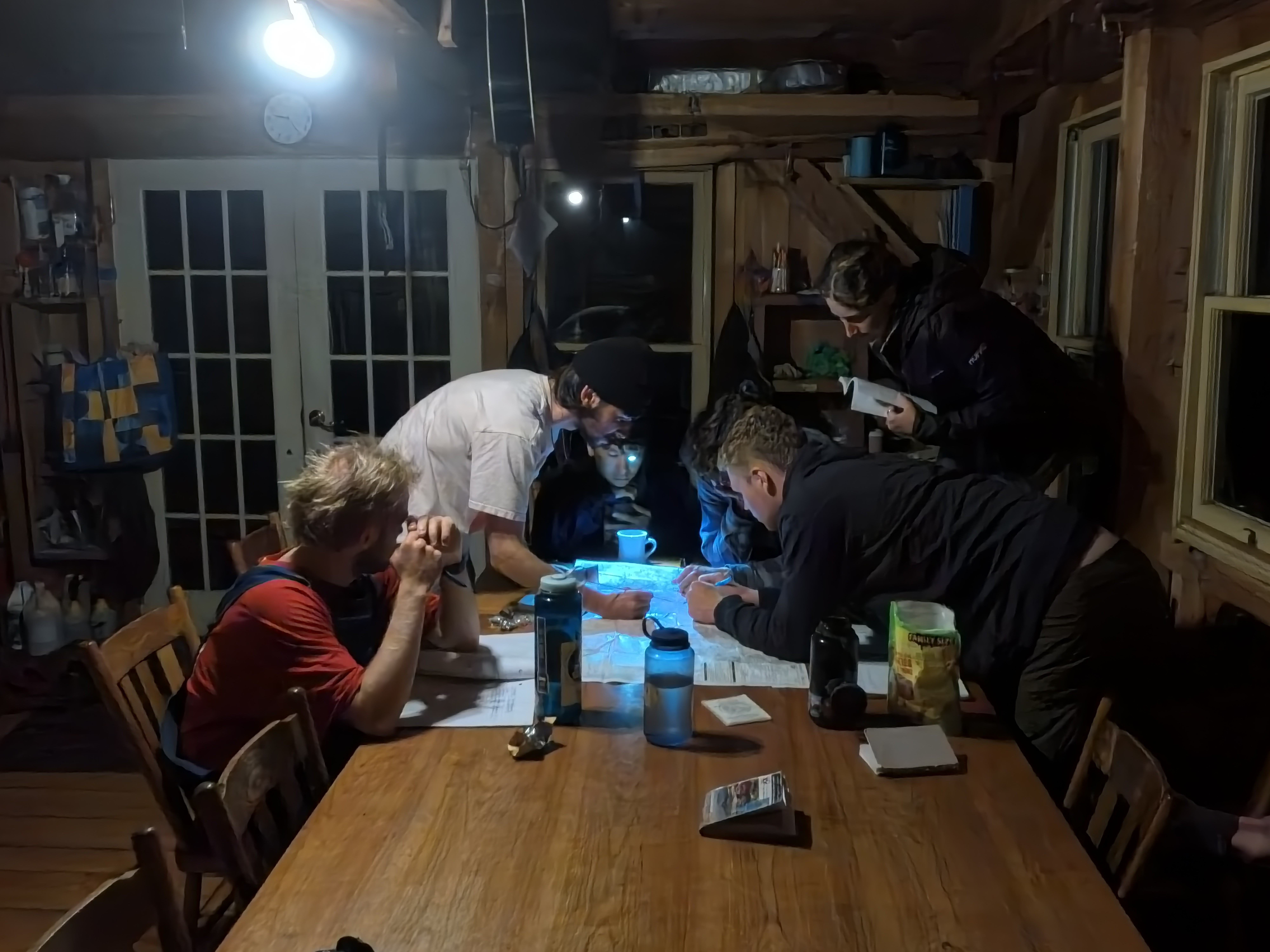
“The week is far from over, though,” exclaims Evie. “Thursday mornings you’ll have ‘Ethical Leadership and Recreation in the Adirondacks (E.L.R.A.)’ taught by assistant directors Nate Trachte and Nicole Panek. Nate and Nicole are a perfect example of our living learning community because we live with them and we learn from them. This class kicked off our semester with an eight-day canoe trip (where the infamous Mr. G. originated) that was a constant community learning experience. As the semester progressed we spent our classes learning E.L.R.A. principles and how to plan outdoor trips. We actually planned a seven-day backpacking trip with Nate and Nicole’s guidance.”
My excitement grows with every new day described, but I still have many questions. “Is it weird to live with your professors? I can’t imagine what that looks like.”
Joe jumps in. “I did not think it was weird at all. They were essential to the village dynamic with everything they did for us—and even better friends. When class rolled around, they put on their teaching hats, leading to a constructive learning environment.”
Emily adds, “They would even join us for board games. Catan, a popular settlement building and resource trading game, was one of our favorites. The kitchen comes alive as night falls with the smell of dinner still lingering. Shouts of ‘who has ore?’ and ‘you said wheat, not oats,’ ring out across the village. AD Nicole Panek has her own house rule in which wheat must be called oats, and mistakes force you to give up a card. Jacob McCoola, our program director, is a Catan expert and strong hater of the oats rule. Games against Jake rarely end in favor of anyone else.”
Joe interjects. “By the way, Jake teaches ‘Knowing Nature’ on Friday afternoons, a philosophy class about how we as humans interact with nature. In that class we explored our own identities and how they impact the ways we belong in the natural world. As much as class kept us on our toes, Jake’s dogs Eddy and Jinora, with their adorable fluffy faces did their best to steal our attention. A big component of Jake’s class is completing a one-hour sit spot each week. We would creep into the woods and settle in as silently as possible. If you are quiet enough, it was like the forest would forget you entered the space. You became a part of it all, and soon critters would run about oblivious to your presence. I remember Izzy Kinsella remarking, ‘It’s the first time in my life I have enjoyed sitting and doing nothing. Sit spots let me focus on nature and not myself. It’s so rewarding and I feel so at peace.’
Evie speaks up. “Even though ‘Knowing Nature’ ended our school week, our weekends were often filled with adventures ranging from rock climbing at an outdoor crag and whitewater rafting down the Hudson River to visiting the farms and farmers that supplied our dairy and meat on the semester. With six out of seven weekdays scheduled, this made us covet our one full free day do anything we wanted.
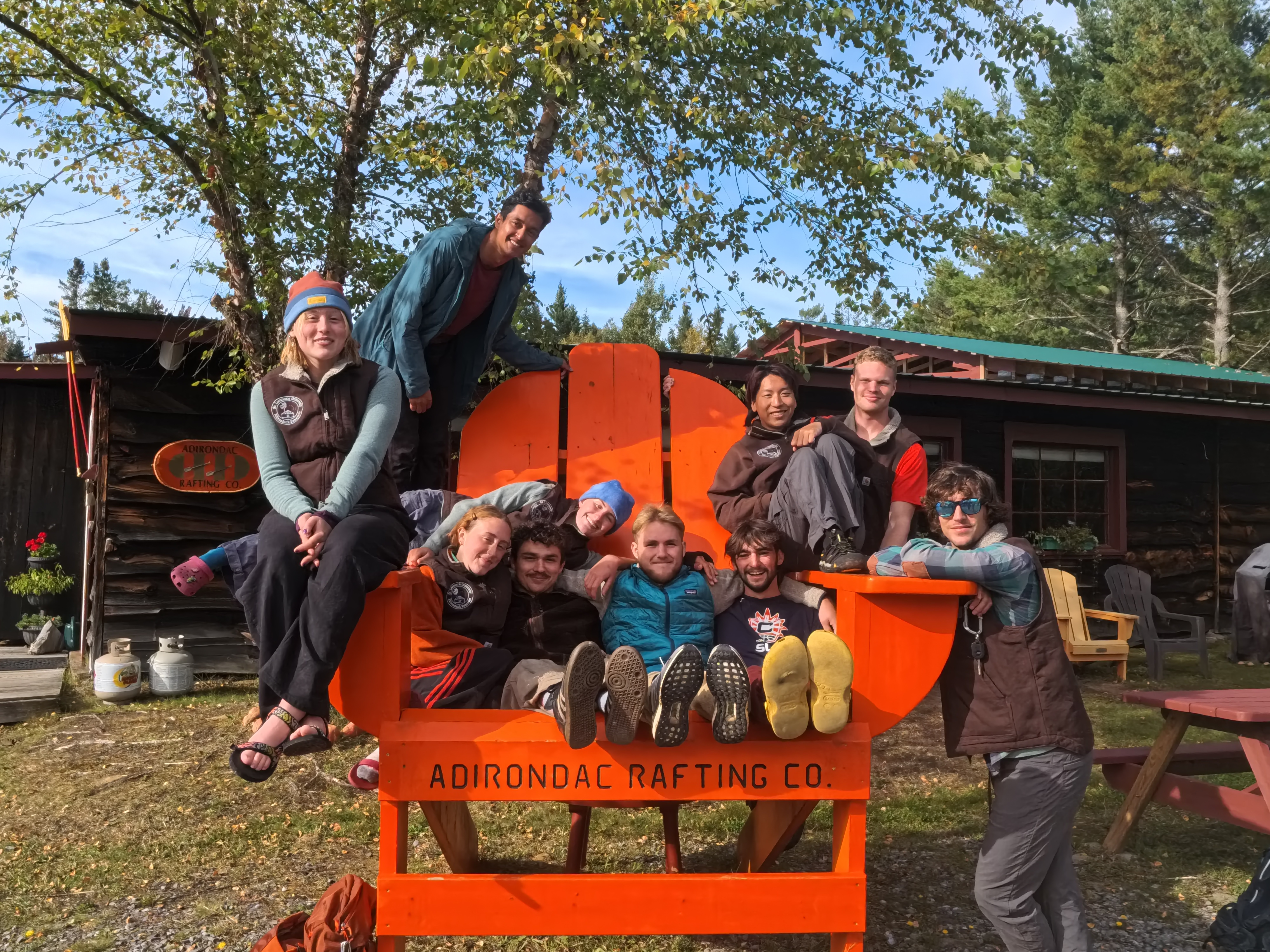
The conversation continues with me, imaginary future student, asking questions and the trio happily answering, giving me advice for my time on the semester. Their eyes light up as they speak about their experiences and their connection to the people and the place. It feels like we could talk forever about what my fall will entail, but the time eventually comes for us to part ways. As I stand up to leave, I ask one final question. “Has the way you go about daily life changed since doing the semester?”
Emily smiles and answers. “To quote Ed Kanze, an Adirondack naturalist and writer, during his visit to our ‘Writing the Adirondacks’ class: ‘We tend to devalue internal resources and value external ones, like going to look things up on a phone. But you can learn a lot more from being forced to use your own shrewdness. Nobody may have taught you how to use it, but you do have your own brain.’”
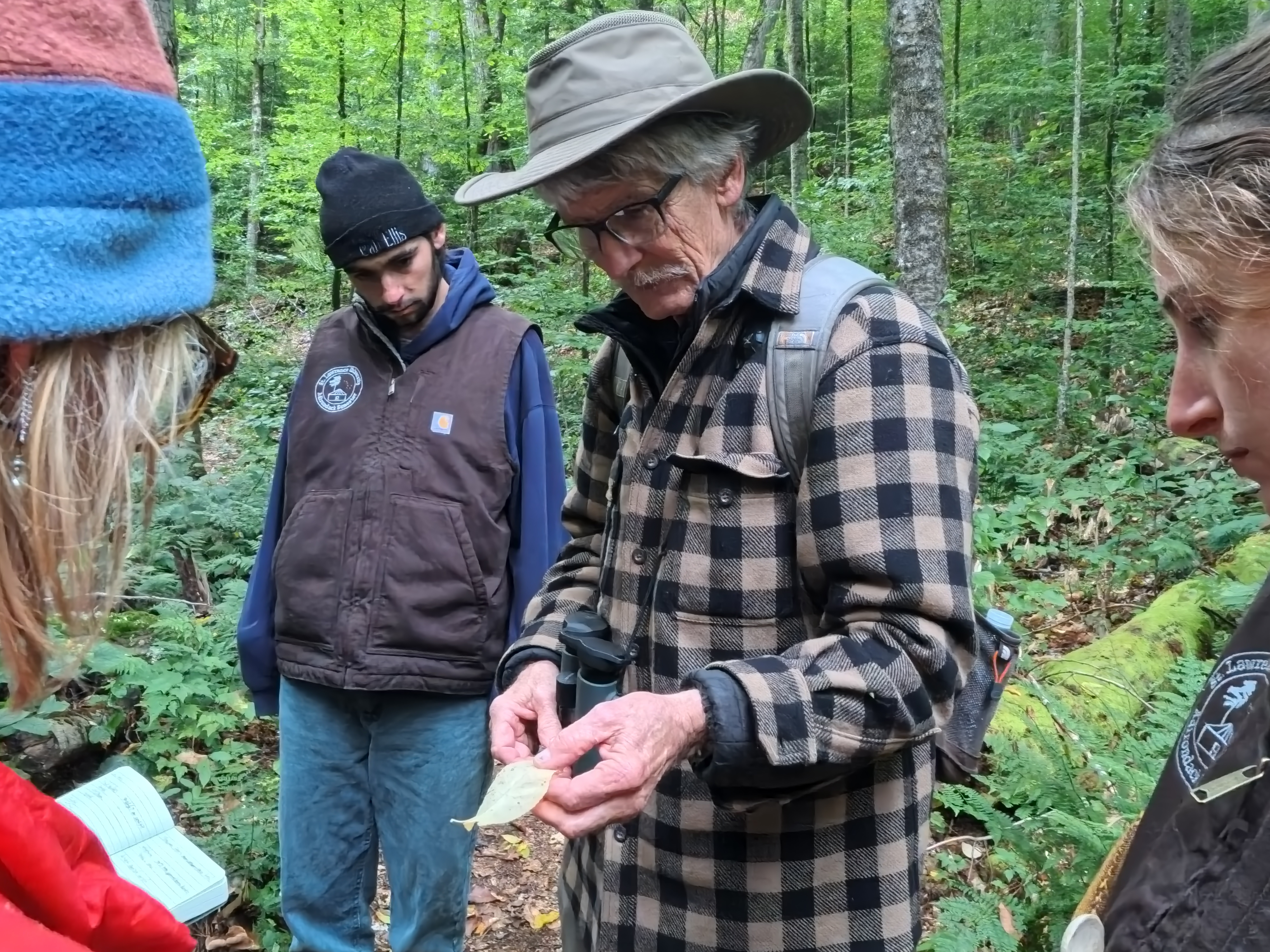
“The Adirondack Semester requires individual original thinking and reflection,” Evie adds, “rather than ‘relying on a computer to do the thinking for you,’ as Mark would always say. It’s an important skill to learn and one that is very valuable in life.”
I nod and say my goodbyes to the three, eager to lock my phone away and forget about technology for a semester. I walk out of the Noble Center into the early spring air, aromatic with freshly budding plants and thawing ground. A lot is still up in the air. I don’t know who I will live with at Arcadia, or even what Arcadia looks like, but that is part of the mystery, and I am excited for what’s to come.