From Canton to Mars: St. Lawrence Professor Plays Key Role in Historic Space Mission
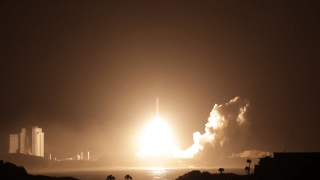
When a rocket carrying Japan’s Martian Moons eXploration (MMX) spacecraft lifted off in the early morning darkness on October 20, St. Lawrence University geology professor Andrew Beck was watching from a nearby island.
“It was very dark, but then it lit up the sky like it was daytime,” Beck recalls. “You see the light, then you hear the noise, and then you can actually smell it. It was like a wave of senses.”
Standing roughly 35 miles from the launch site in southern Japan, Beck had a front-row seat to a milestone in a scientific endeavor nearly a decade in the making. And over the next several years, he expects to bring St. Lawrence students along on the journey.
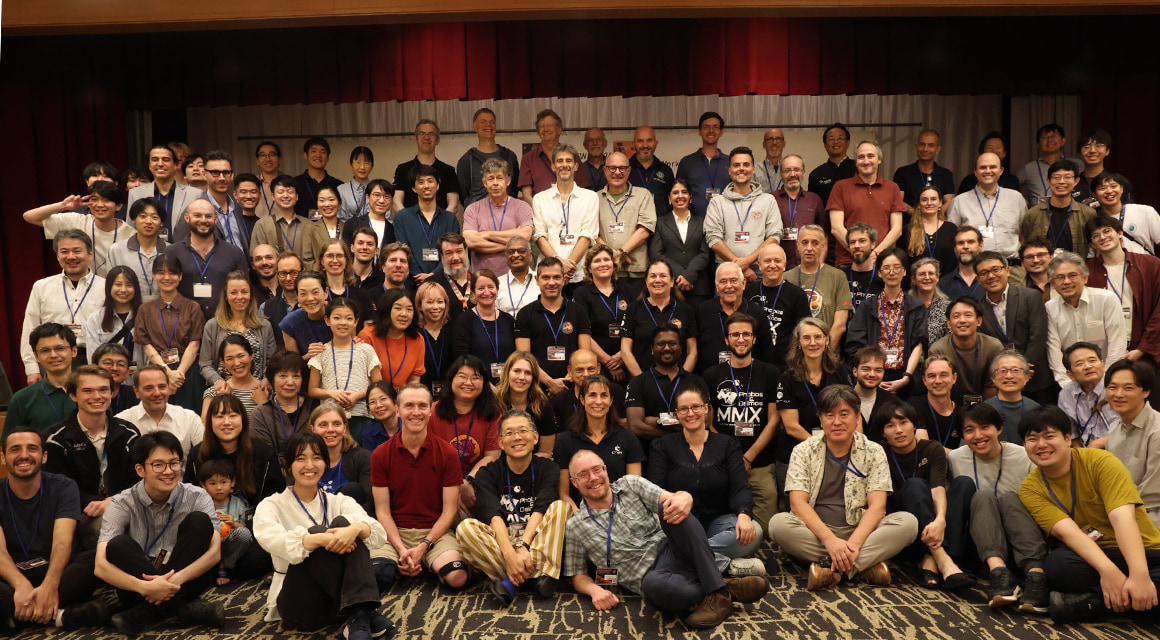
Beck, an associate professor and St. Lawrence’s inaugural Dr. J. Mark Erickson Professor of Geology, joined the international mission team in 2017 while working at the Johns Hopkins Applied Physics Laboratory. He arrived at St. Lawrence this fall after serving as an associate professor and department chair at Marietta College. His previous experience includes a postdoctoral fellowship at the Smithsonian’s National Museum of Natural History, and his research ranges from microscopic examination of meteorites to interpreting data collected by spacecraft.
Uncovering the Mysteries of Mars’ Moons
Led by the Japan Aerospace Exploration Agency (JAXA), in collaboration with NASA and the European Space Agency, the MMX mission aims to uncover how Mars’ moons formed.
“We know how Earth’s moon formed, and even have a good understanding of moons around more distant planets like Jupiter. But our neighbor Mars is still a mystery,” Beck explains. “Its moons, Phobos and Deimos, could have formed from a giant impact, like Earth’s, or they could be asteroids captured by Mars’ gravity. By studying Phobos, we hope to find out.”
The mission also offers another intriguing possibility: bringing pieces of Mars itself back to Earth.
Scientists already study rocks from Mars that have arrived on Earth as meteorites, but those rocks must be durable enough to survive their journey through space and Earth’s atmosphere. Material collected from Phobos could include different types of rock originating from Mars, potentially revealing information that existing meteorites cannot.
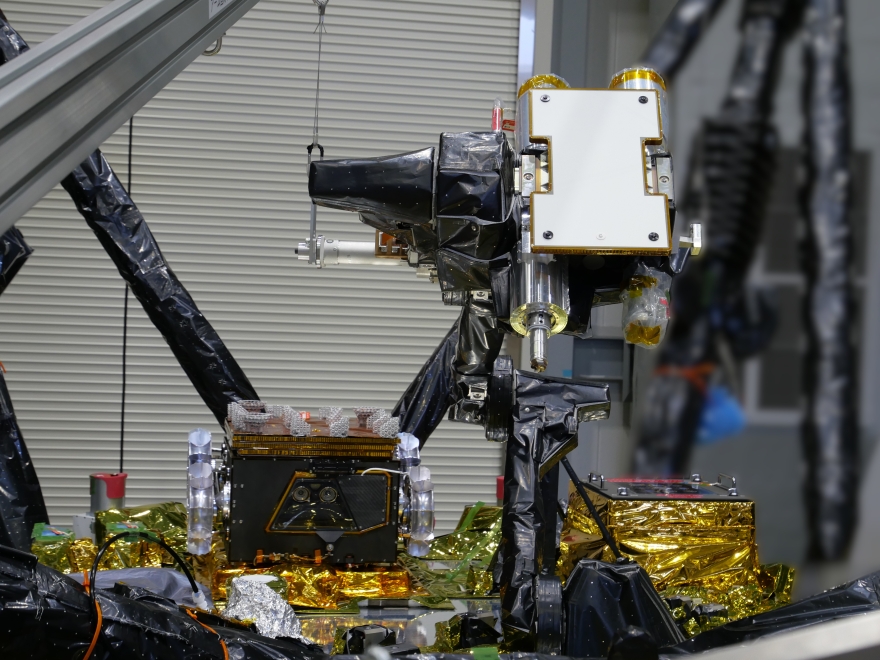
The spacecraft is expected to reach Mars in August 2027 and spend several years studying Phobos before collecting samples to return to Earth in 2031.
Beck’s role centers on interpreting information collected by a gamma-ray and neutron spectrometer, MEGANE (Japanese for ‘glasses’), an instrument that will help scientists identify the chemical elements present on Phobos’ surface. By examining those findings, he and his colleagues hope to better understand the moon’s geological composition and history.
A mission of this scale brings together scientists and engineers with a wide range of expertise, each contributing to a shared goal. For Beck, the opportunity to collaborate across disciplines and communicate findings with colleagues around the world is an essential part of the work.
A New Frontier for Student Research
For St. Lawrence students, the mission offers an opportunity to participate in scientific research taking place millions of miles from Earth.
“What’s exciting is that students will be able to work with real-time data coming back from the spacecraft,” Beck says. “We’ll be looking at the chemical makeup of Phobos and trying to understand what that tells us about the rocks on its surface. They’ll have an opportunity to contribute to the research as the mission unfolds.”
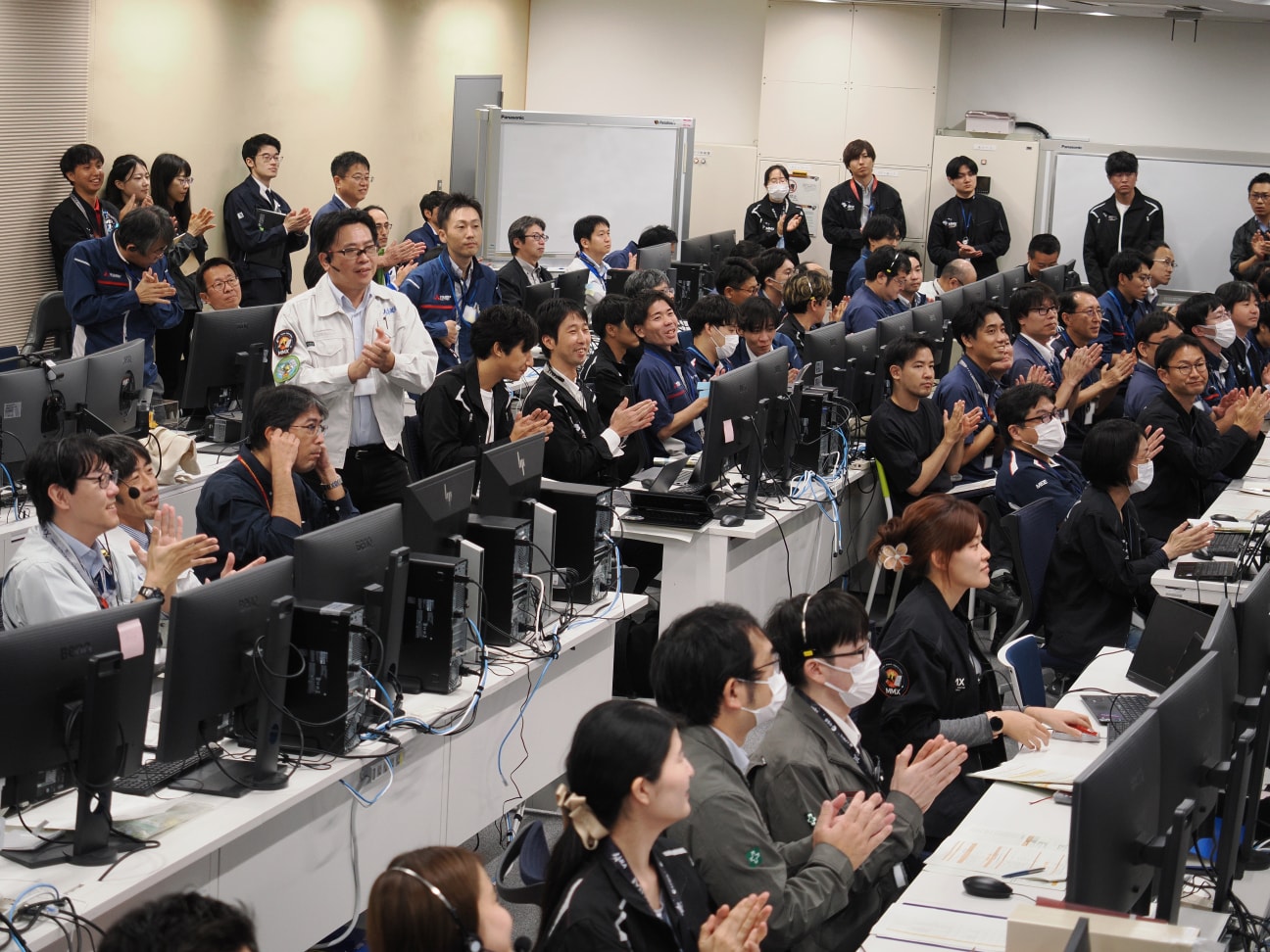
Their involvement could become even more significant when the spacecraft returns samples to Earth in 2031. Beck anticipates having students participate directly in examining the returned material, potentially giving them the chance to be among the first people to study geologic samples from the Mars system returned by spacecraft.
Because this work will require specialized laboratory facilities, students may also have opportunities to conduct research at institutions elsewhere in the United States or abroad.
Beyond MMX, Beck hopes to introduce more students to planetary science, a field that combines geology and physics. He sees opportunities for greater collaboration between the two disciplines at St. Lawrence and plans to share the mission’s progress with the broader community, including a potential public lecture when the spacecraft reaches Mars.
With the spacecraft now on its way, Beck and his students have years of scientific discovery ahead. And when the first samples from Phobos return to Earth, Laurentians could be among those helping to unlock their secrets.