
On Parkinson’s: Three Artists’ Journeys- Kristin Rehder, C. David Thomas, and Torrance York
As Parkinson’s disease grows rapidly around the world—affecting more than 10 million people globally and 1.2 million in the United States projected by 2030—artists are probing the enigma of a neurodegenerative disorder whose cause is still uncertain, whose cure is still not at hand.
With a provocative blend of personal experience, courage, and artistic integrity, the three artists in the exhibition have turned a lens on their own Parkinson’s disease. Reflecting the disease itself, which manifests differently in each person, the artists tell their individual stories through divergent photographic and printed methods.
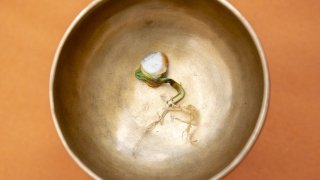
In her Semaphore project, Torrance York examines a personal shift in perspective after being diagnosed with Parkinson’s disease in 2015. Installed in a mind-map style display, these metaphorical photographs point to her new challenges and frustrations as well as her goals for self-care, including optimism and human connection.
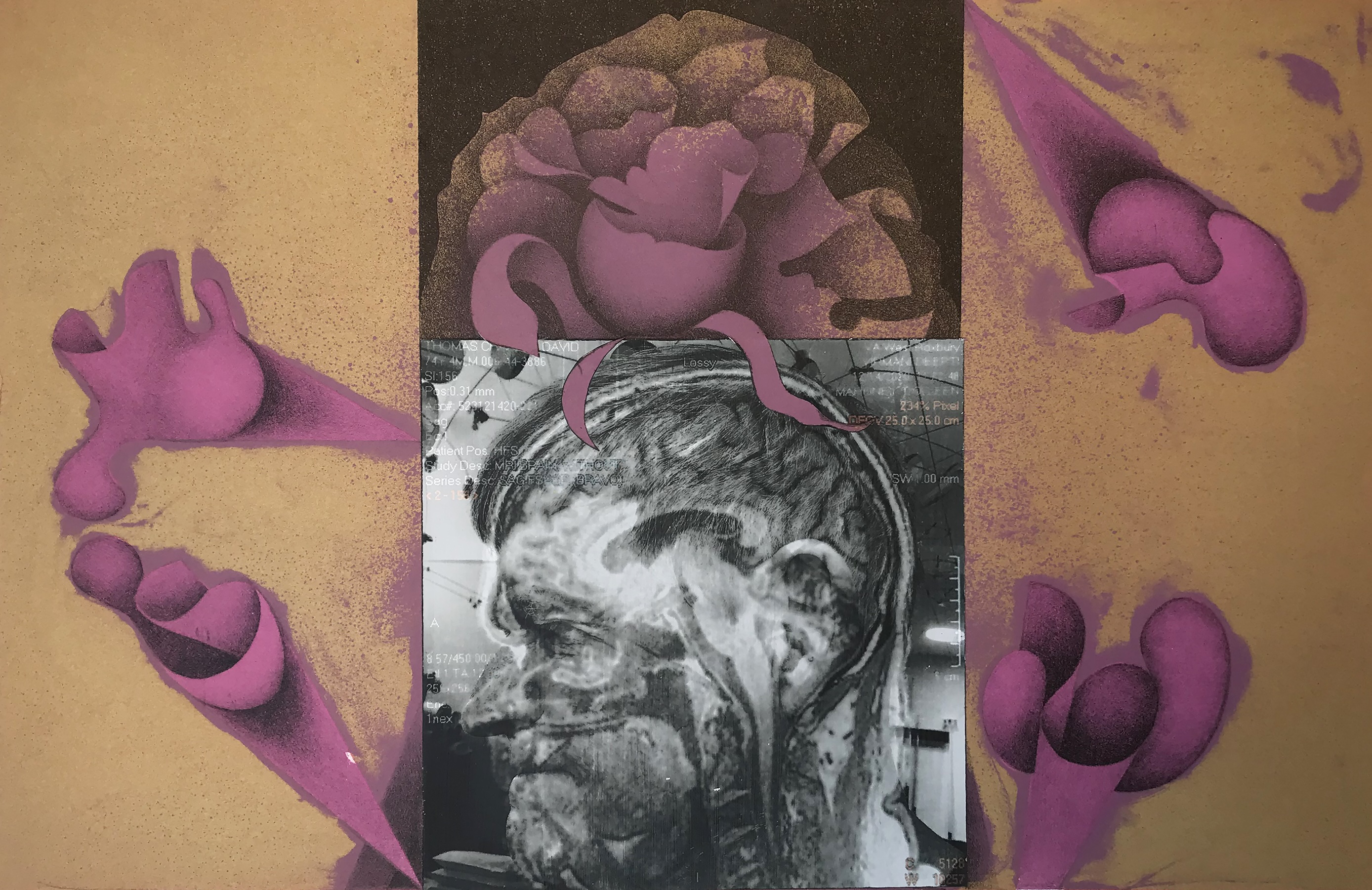
FINDING PARKINSON’S, Doing Battle with My Brain, a series by C. David Thomas, draws its inspiration from a set of slides of the artist’s brain taken from MRI scans, combined with selfies and lithographs to express his awareness and determination in living with such a confusing, degenerative disease.

Kristin Rehder developed TREMOR to explore the many connections between her body’s quaking and the changeability of the natural world. She allows her animated hand to direct the camera while shooting with a slow shutter, converting what some perceive as a disability into the opposite—into possibility and positive energy.
Curated specifically for St. Lawrence University—a champion of interdisciplinary learning—the exhibition invites viewers to renew their understanding of the mechanisms underlying Parkinson’s disease and its present treatments, but also to go further. What are the human elements of this disease? How does Parkinson’s impact everyday life? How can we express fear and hope contemporaneously? And how does creating art and perceiving art affect what goes on in our brains?
Link here to view the Panel Discussion with the artists Kristin Rehder, C. David Thomas, Torrance York, and Dr. Ana Y. Estevez, SLU Charles A. Dana Professor of Neuroscience, and Dr. Joe Erlichman, SLU Professor of Biology.