
Exhibition: Traces & Transformations- Recent Work by St. Lawrence University Studio Art Faculty
Traces & Transformations: Recent Work by St. Lawrence University Studio Art Faculty brings together the works of Kasarian Dane, Rachael Marne Jones, Sarah Knobel, Liza Paige, and Melissa Schulenberg alongside works from St. Lawrence University’s Permanent Collection. Though each artist offers a distinct visual language and perspective, all share a common thread: exploring the marks of human existence through three- and two-dimensional forms that serve as records of meaning at both intimate and collective levels.
Materiality is central to their work. Clay embodies the earth’s history; pigments capture the experience of color and perception; and repeated patterns and symbols, whether physical or cultural, accumulate meaning over time. When these works are paired with selections from the university’s collection, the exhibition extends and highlights the relationship between materiality and the ongoing visual dialogues throughout art history.
Ultimately, the exhibition considers how humans leave traces through objects, stories, materials, symbols, and creative acts, and how those traces shape our understanding of memory, identity, culture, and environment.
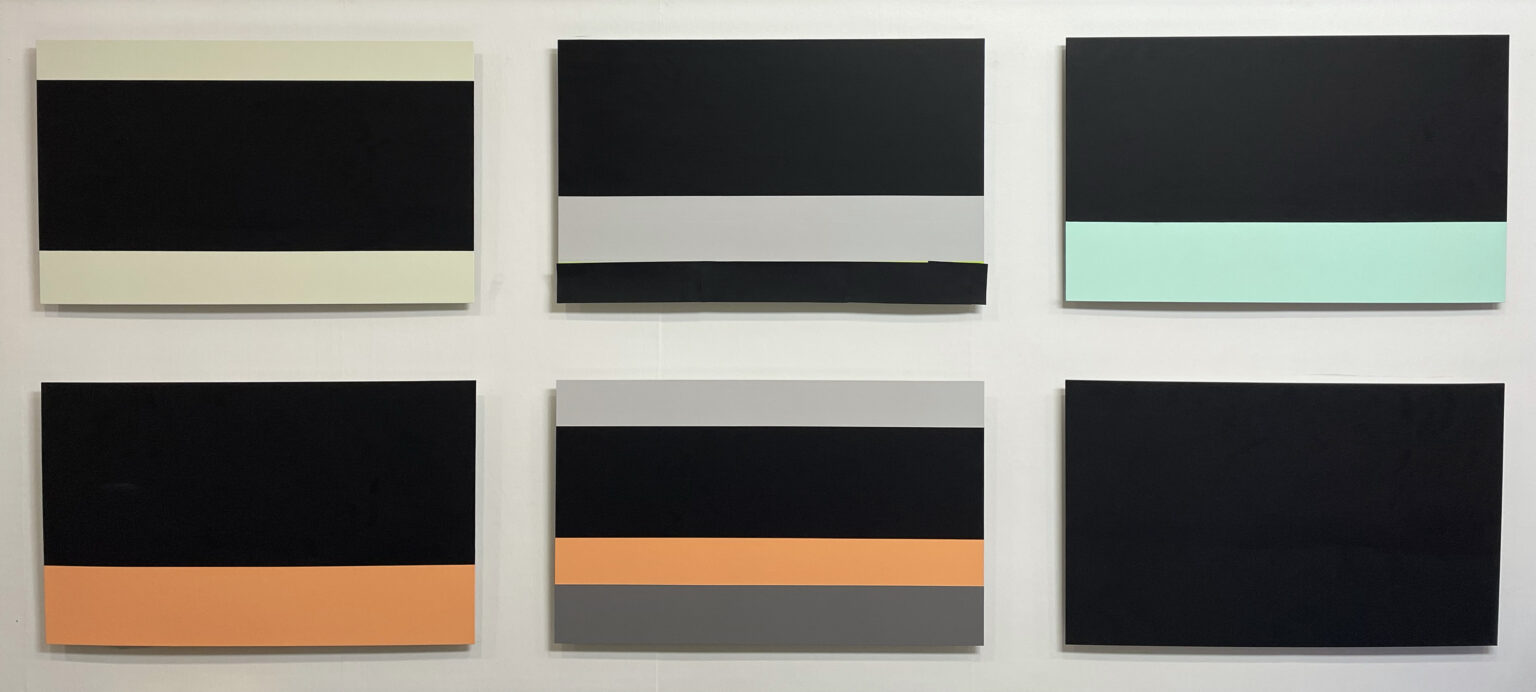
Using hard-edged geometric divisions, Kasarian Dane’s paintings delve into the complexities of chromatic and achromatic hues to highlight their purity and presence. Working primarily on aluminum panels, Dane allows the paint to rest directly on the surface, capturing reflections from surrounding walls. His work cultivates spaces for contemplation, remembrance, and beauty.
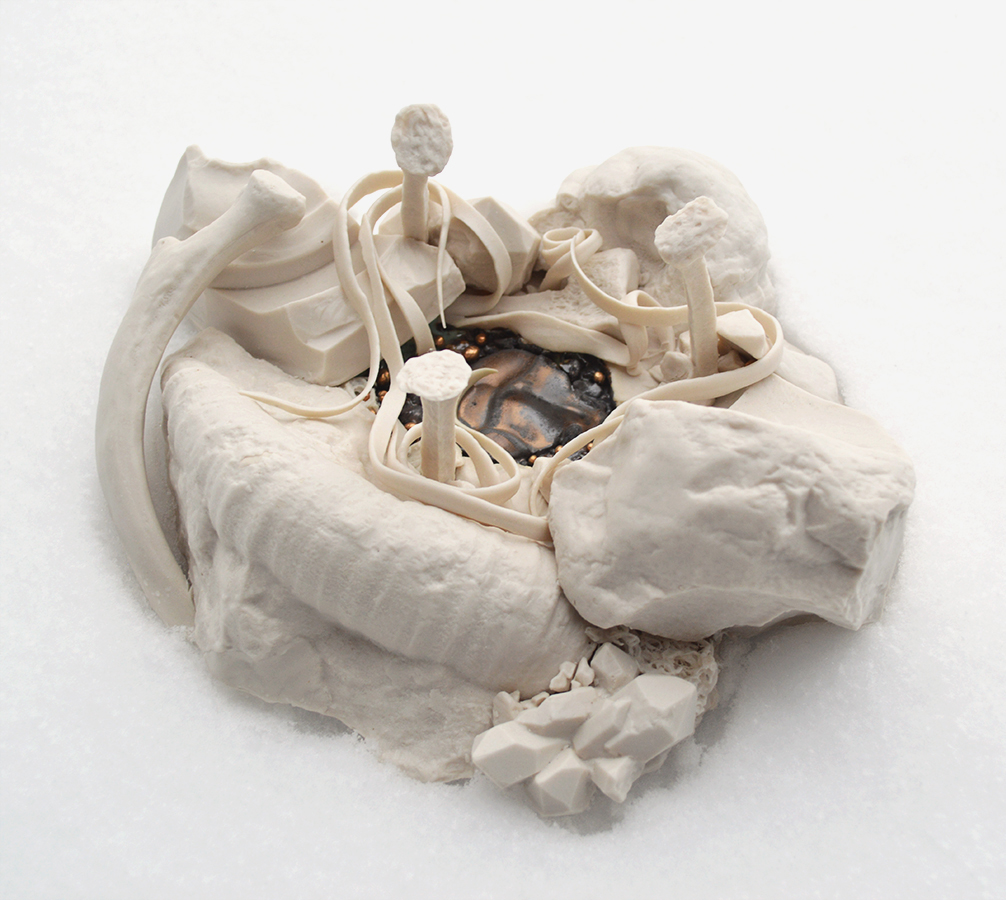
Rachael Marne Jones uses clay to investigate fossils, debris, and the material remnants of objects, questioning what traces tell the human story. Her work evaluates “the vast discrepancies within a world where capitalism’s breath is both hollow and colossal, tapping the pulse of every living being on this planet.” Jones values the archaeological quality of working with clay: “When language fails to explain the nuances of material intimacy, clay provides a platform for understanding humankind’s deep emotional history with our environment and the objects we surround ourselves with.”

Sarah Knobel creates still-life photographs that place plastic materials in natural settings, exploring issues of consumption, waste, and the meaning and symbolism of the material’s afterlife. She employs a range of techniques, both maximalist and minimalist, including alternative photographic processes to investigate these materials. Her work evokes artifacts, terrariums, and even miniature ecosystems. Knobel explains, “I use this process to confront my grief over the consequences of consumption and to spark a conversation about the future and the traces we may leave behind.”
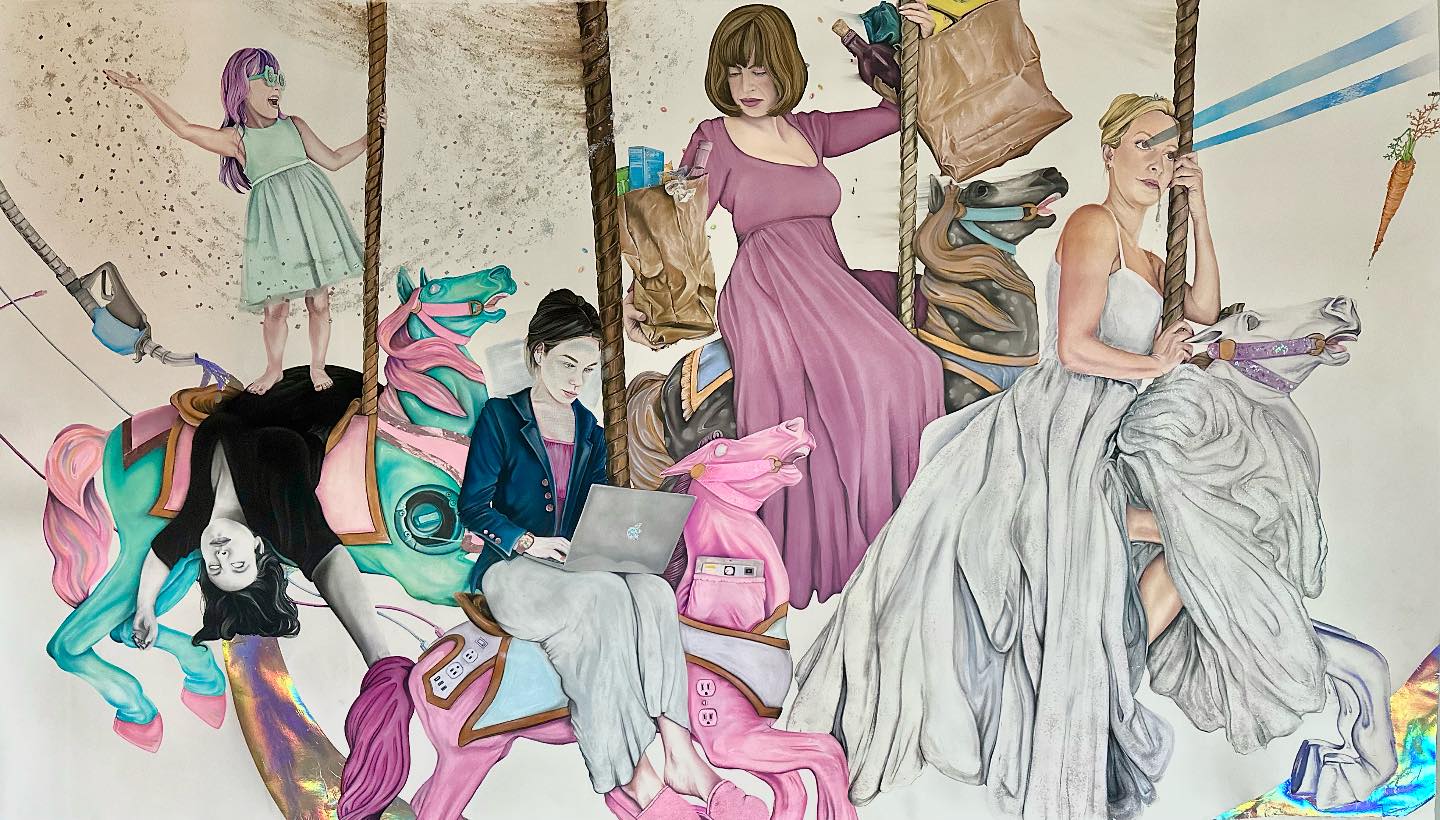
Liza Paige’s drawings delve into the human condition by weaving historical narratives with contemporary female experiences. Drawing from her fascination with narrative portraiture and psychology, Paige’s latest work explores the biblical parable of The Four Horsemen of the Apocalypse. Using metaphors for conquest, war, famine, and death, she examines how these enduring symbols have shaped the artistic understanding of these traditional allegories taken from a feminine and modern perspective.
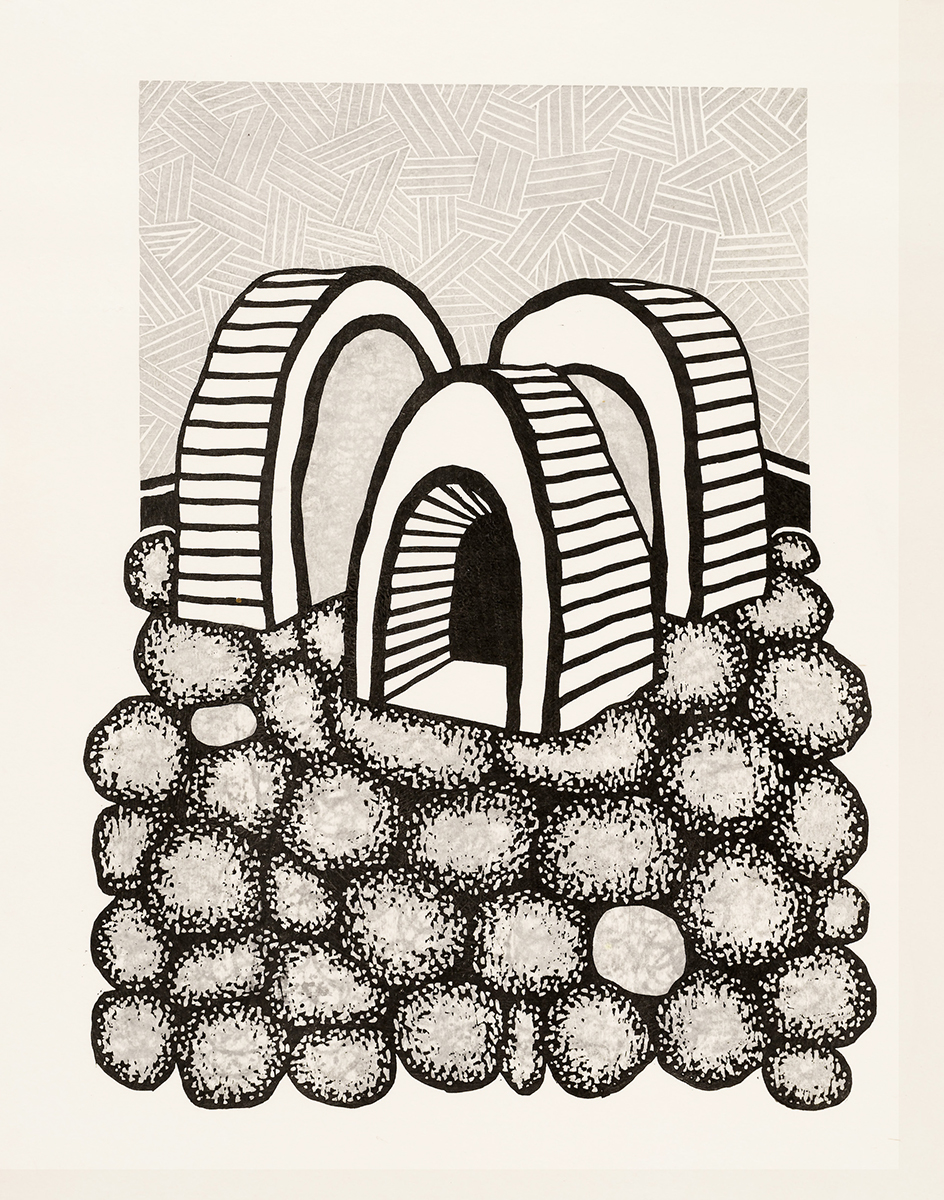
Melissa Schulenberg uses printmaking to contemplate personal and referential marks, a visual alphabet comprised of stripes, humps and stumps, scars, thread, totems, shadows, woven textures, and torus shapes. Recently, she has blended her own visual alphabet with influences from historic Japanese prints, juxtaposing geometric patterns against organic forms. Schulenberg playfully shifts between micro and macro perspectives within her compositions, often often merging both within an evolving visual language
Free and open to the public
GALLERY HOURS:
Main Gallery
Monday – Thursday 12-8 pm
Friday – Saturday 12-5 pm
Hallway Gallery
Monday – Sunday 7 am – 12 pm