The Terrible, No Good, Very Bad 46 High Peaks
By Emily Campbell, Garen Steiner, & Leah Rice
October 20, 2025
The trails go straight up the mountain drainages. It’s like hiking up a waterfall. Sometimes slime grows on the rocks that carry the mountain run-off down, making for a slippery hike. If you do slip and fall and bang your head, you’ll be waiting many hours, even days, before being rescued, assuming you even have cell service to call for help. In the summers, you’ll run into countless unprepared and unsuspecting hikers. Mount Marcy’s summit looks like summit day on Everest: a line of people following one after the other trying to reach the top, human poop lining the trail, and candy wrappers galore. What differs from Everest is that hikers in the High Peaks are dressed in jean shorts, cotton t-shirts, and crocs. In the winter, test your luck on Algonquin Peak where you’ll be met with 70mph winds, temperatures cold enough to give you frostbite, and a layer of ice two feet thick.
Heck, just try finding a spot to camp in the High Peaks region on the weekends. Once you reach your desired spot, you’ll most definitely find that it’s full and the next nearest campsite is two miles away. And that one’s full too. You should have known, because parking was impossible, even at four in the morning.
Stay out of the Adirondack High Peaks. Go out west and climb a mountain more than twice as tall with half the effort. Or go to the White Mountains of New Hampshire, where at least they have switchbacks. But if a god-awful time is what you’re looking for, then spend a week backpacking in the High Peaks.
In 1924, Bob Marshall and his family guide, Herbert Clark, were the first to document their summits of every Adirondack High Peak—all 46 of them. Today, hikers who want to earn the title of “Adirondack 46er” must hike those same 46 peaks. An Adirondack High Peak is defined as a mountain that rises at least 4,000 feet in elevation and is three-quarters of a mile away from its neighboring High Peaks. These specifications hold true for most of the 46; however, a few do not actually rise above 4,000 feet but made the original list due to inaccurate geological surveys. Nonetheless, they remain on today’s list for history’s sake.
As a result, peak-bagging revolves around an occasionally arbitrary list of summits. In the early 1900s, Bob Marshall wrote that the Adirondack Peaks “are comparatively little known and, with a few exceptions, almost never climbed” (at least by white settlers, we might add). A century later, the Adirondack High Peaks region is flooded with tourists in search of solitude and hikers looking to “bag” peaks. In many ways, the 46 have provided a structured goal for people to get outside and challenge themselves in awe-inspiring landscapes. The 46 have changed lives, inspired environmental consciousness and action, and created a community of people who care about the Adirondack region. They have pulled outdoor enthusiasts from near and far to recreate on these popular trails, which in turn leads to degradation of this magical place. It is undeniable that peak-bagging culture has shifted the Adirondack scene.
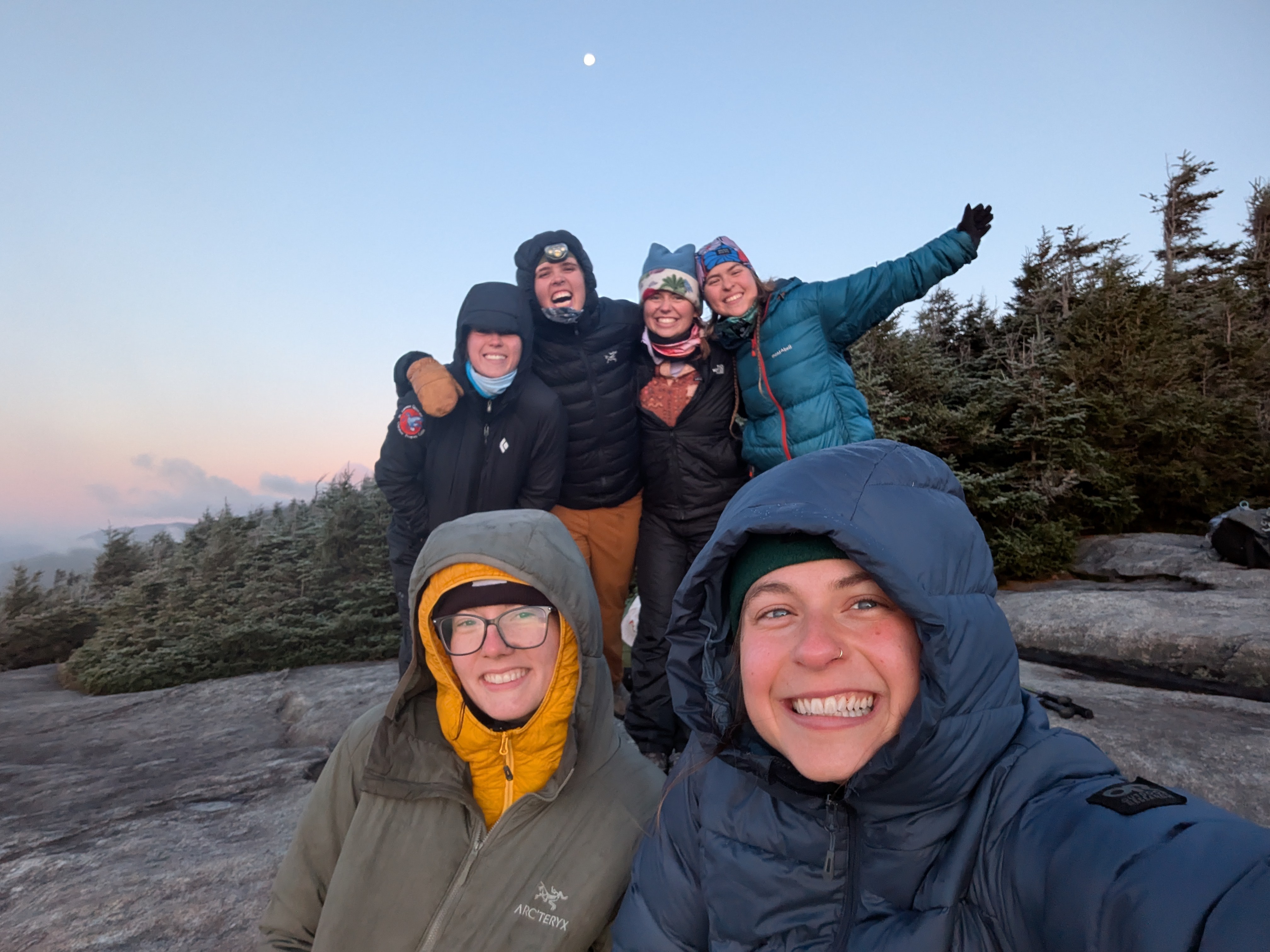
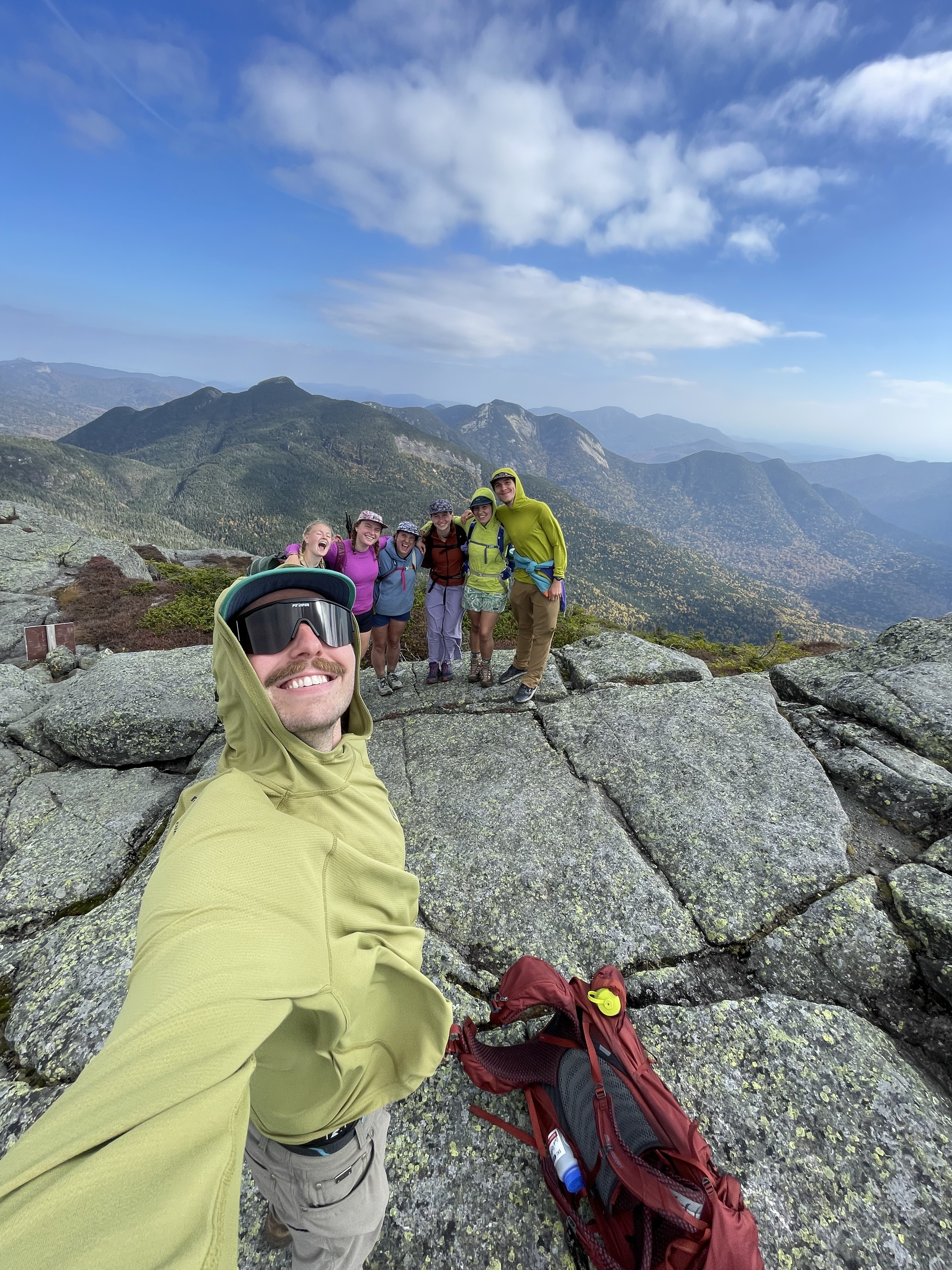
Every year, Arcadians are tasked with planning and embarking on a weeklong backpacking trip in the High Peaks region of the Adirondack Park. This trip is part of our Ethical Leadership and Recreation in the Adirondacks class (ELRA). Assistant Director and ELRA co-instructor Nicole Panek said, “The goal of the backpacking trip is to practice ethical leadership in the outdoors. All week is class as student leaders have the opportunity to practice decision making and putting the group’s needs before their individual wants, all while exploring what ethical leadership means to them.” Due to group size regulations in the High Peaks, our tight-knit community was forced to split into two groups of six students, plus either Nate or Nicole. After getting into groups, excited energy buzzed through the air as they started looking at maps to discuss the potential routes. Eva Nielsen, Marina Garlicl and Jordyn Bell described their group’s (the Fluffy Unicorns) planning process. It started with a mind map that allowed individuals to share their goals for the trip, such as certain sights and summits to see and the difficulty people were comfortable with. The Fluffy Unicorns wanted to climb some mountains with the goal of seeing the top, enjoying the process, and learning along the way. Jordanna Samburgh explained that the second group’s (the Tort Snorters, named after the 88 tortillas that they brought) “route revolved more heavily on what peaks we wanted to do, but our plan was still flexible. The priority was still learning and connecting with each other and the land around us.” With completed RAD (route and description) plans in hand, the groups shared a prolonged goodbye and set out on their adventures.
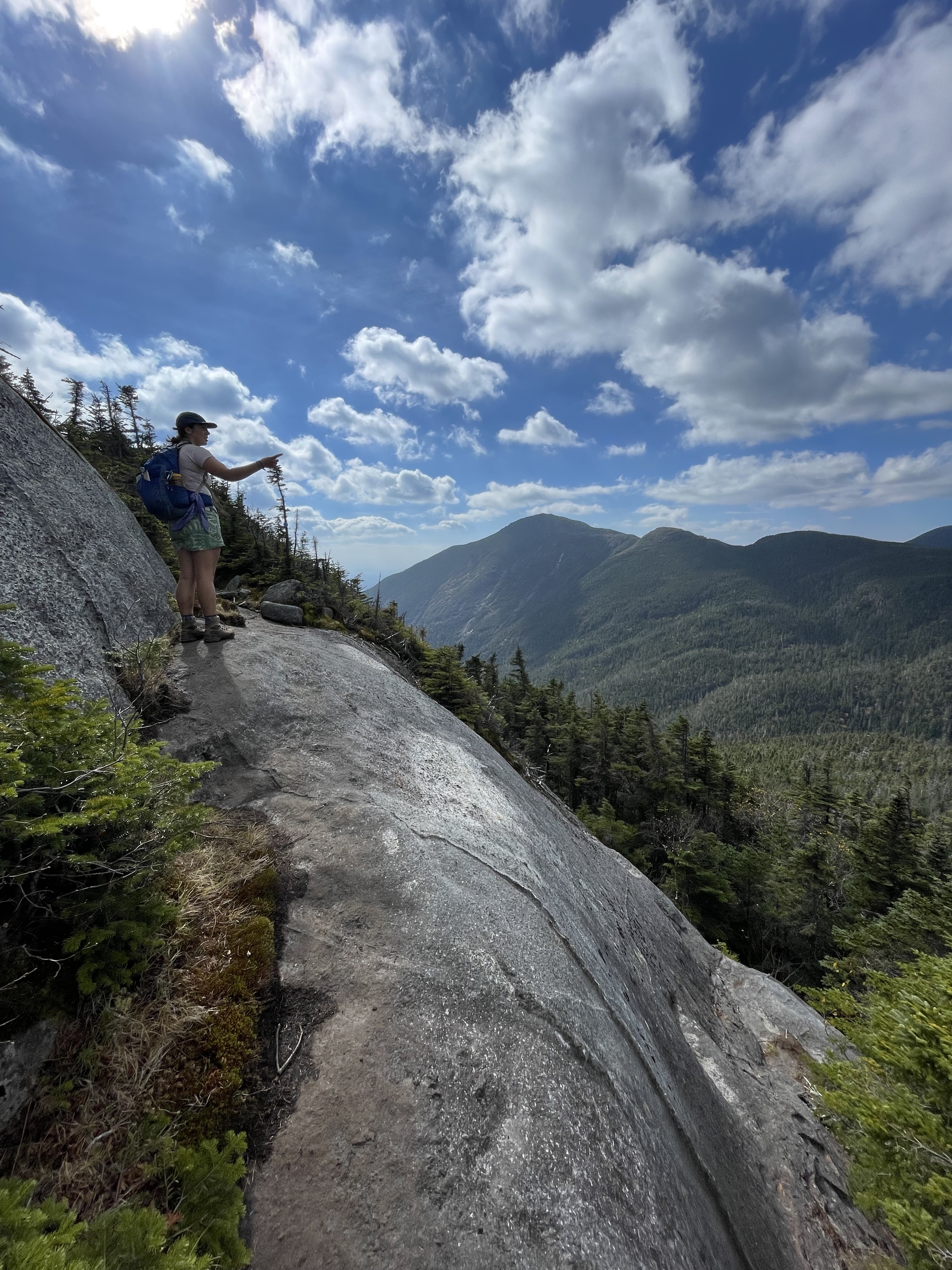
Each group encountered their own unique challenges along the way. On day 3, the Fluffy Unicorns had to completely change their route after coming to a closed trail. After two hours of hiking, the trail the group had planned to use to get to Johns Brook Lodge from Marcy Dam was closed due to flooding and beaver dam. Rachael Welch, a designated student leader for the day, later said, “When we ran into the sign, my co-leader Maddy and I discussed potential options for the group. After deciding this decision required the entire group’s input, we all sat around a map and rerouted.” After planning a new route that everyone felt comfortable with, they continued hiking until a few trail runners assured the Fluffy Unicorns that the trail was okay to be on, prompting them to reassess their decision. Ultimately, they decided to respect the trail closure sign and continue with their new route. As they walked on, they discussed how they probably would have been fine to stick to the original plan and use the closed trail. However, this decision would have missed the point of the backpacking trip. Running into and overcoming obstacles is part of being a leader. Making sure the decisions being made respect the land that you’re using is part of ethical leadership, which is exactly what the Fluffy Unicorns did.
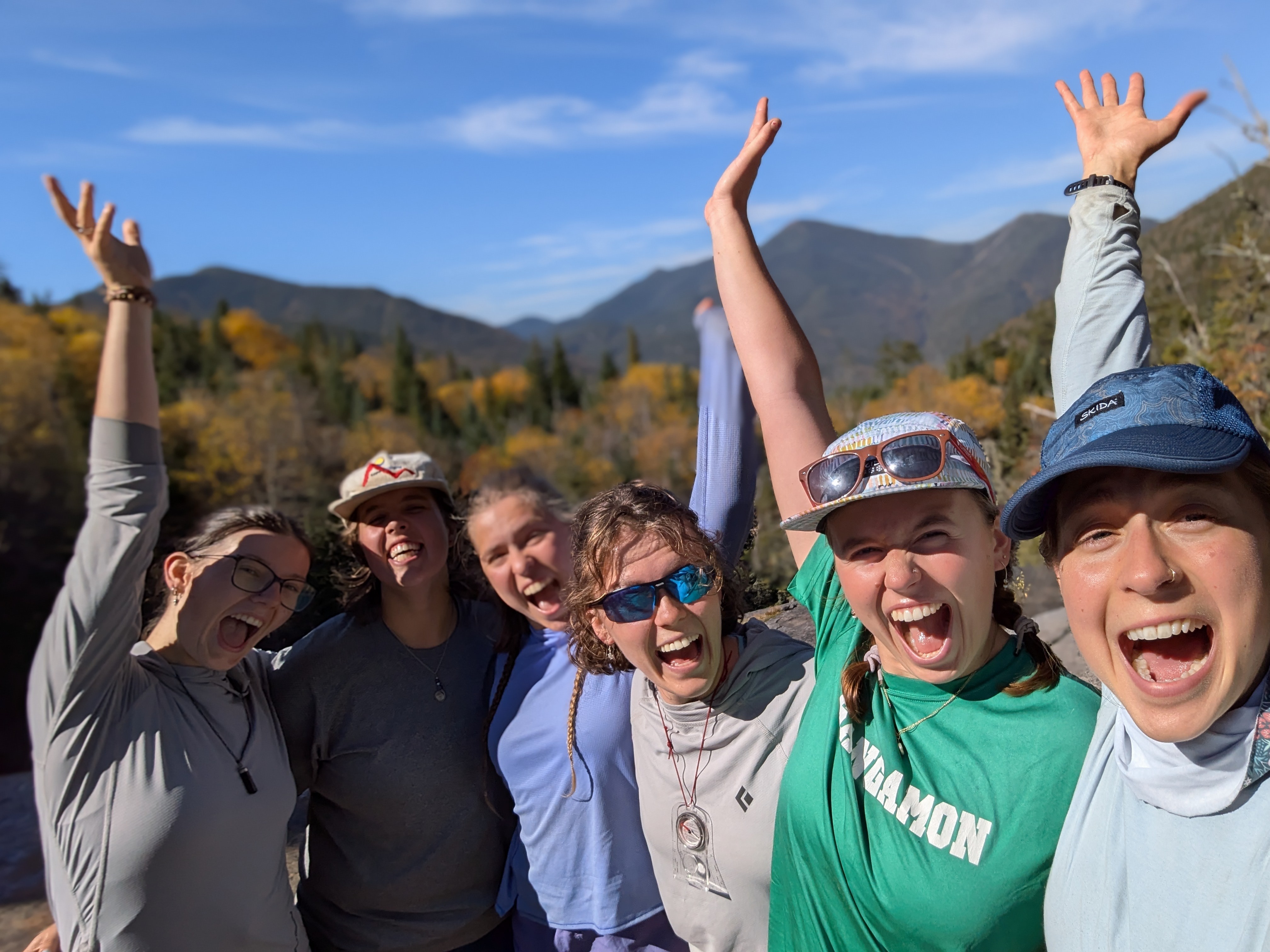
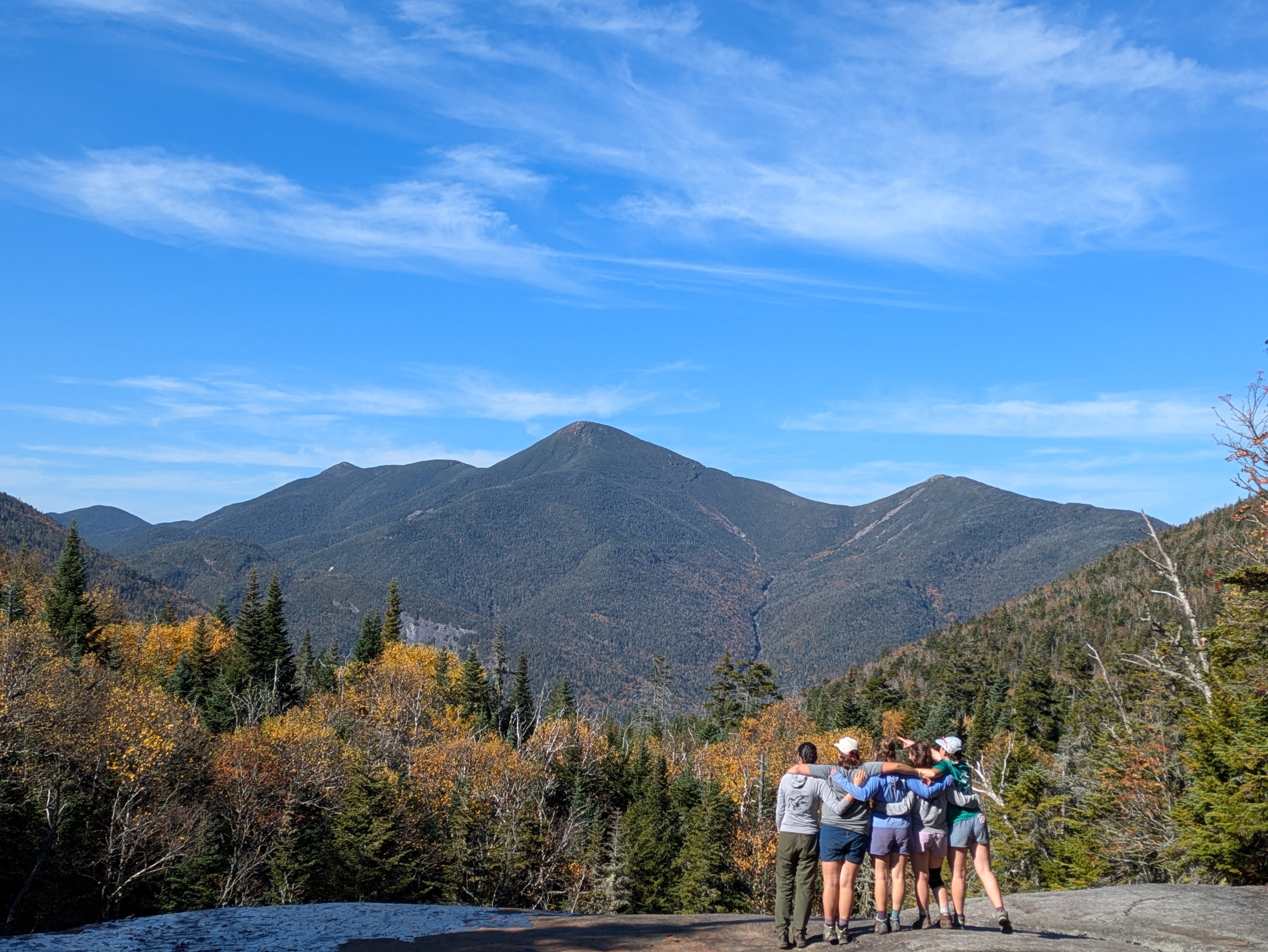
The Tort Snorters also had a harder than expected day when moving camp from Howard’s Lean-to to Lake Arnold. The day involved more elevation gain and a less maintained trail than the group expected. At the end of the day, the group was lucky to get a camping spot at Lake Arnold. However, their plan for the following day was intense, involving three peaks and fifteen miles. They suspected it would take at least ten hours. Even though the group felt they could handle it, they decided that the group as a whole would benefit from a more relaxed day. So, they summited Colden, where they spent hours soaking in the sun and views. On the summit, students taught lessons on map and compass reading, plant identification, and knot tying. As they were munching on their many tortillas for lunch, two friendly hikers passed by. They stopped to chat, and the Tort Snorters noticed that one of the men was wearing a hat that said “46er (100 times).” Later, assistant director Nate Trachte told the group about an article he’d just read portraying the guy with the hat. The Tort Snorters were amazed to believe that he had completed the 46 High Peaks one hundred times, which sparked conversation about whether anyone thought they could complete the same feat. Then the question arose, why? Arcadians pondered the man they’d just met and wondered why he had climbed all 46 peaks one hundred times. Because he enjoyed it? To say he did? To spend time outside? The Tort Snorters questioned their own motives for hiking this peak. They reflected on how they truly embraced the slower day that did not revolve around bagging peaks. In fact, Beckley Wooster later said that day “was her favorite of the whole trip.”
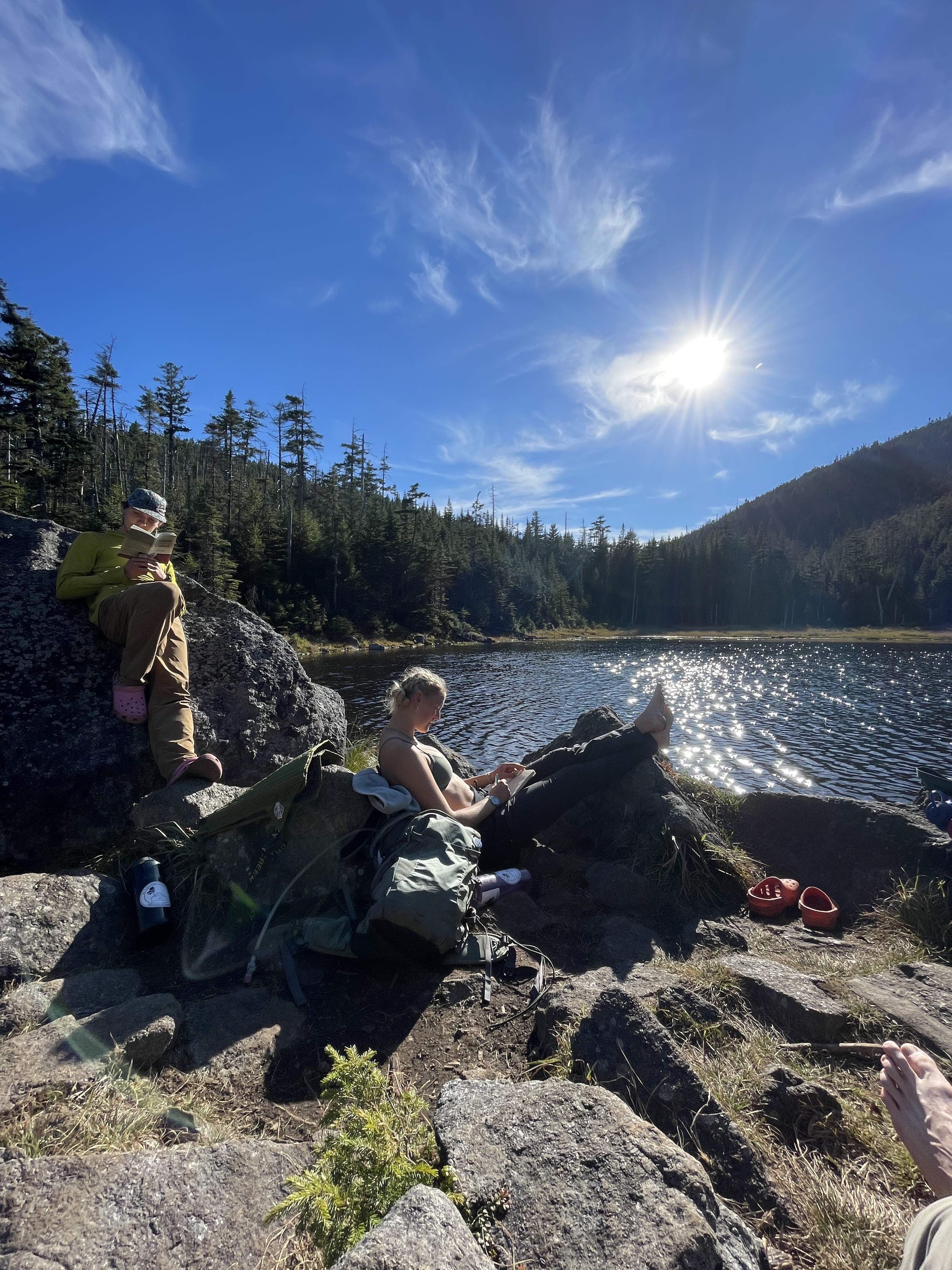
At first glance, doing the 46 High Peaks seems like a groovy way to fit in with the outdoor community. When you summit all 46, you get a snazzy certificate and a sticker to slap on your car to show off your accomplishment. Have you ever thought that this list could skew your relationship with the outdoors? On the summits of several High Peaks, Arcadians overheard many conversations along the lines of, “How many peaks have you done today?” and “I’m headed to snag those ones next.” Conversations like these tore attention away from the present, frustrating many. Nate Trachte responded by playing “Country Roads” on the harmonica. Listening to his scrappy version of this song, the Arcadians only cared about singing with each other. The music grounded them. They would remember how the sun felt on their faces and the bright red tree across the valley in a sea of green. By only focusing on the peaks you want to summit, you are unable to truly appreciate the beautiful world around you.
The Tort Snorters were also inspired by the NOLS 40+ group they ran into a couple of times in Johns Brook Valley. Each adventurer greeted us with big grins on their faces, bubbling about how excited they all were to make memories together. Leah Rice admired how “excited they were to do whatever sparked their interest.” The group had the option to read by the brook, go fly-fishing, explore nearby trails, and more, depending on how they were feeling that day. There was no talk about bagging peaks, no talk about checking things off a list.
The High Peaks offer an array of incredible experience from breathtaking views to strenuous climbs and a sea of colorful leaves. People who enter this space get in touch with the land and community members around them. People must recognize how special this place is and the impact they have on it. So, the next time you decided to hike a terrible, no good, very bad High Peak, remember why you went out there in the first place.