
The Song of Arcadian Life
By Jacqui Smith, Beckley Wooster, & Jordanna Samburgh
September 22, 2025
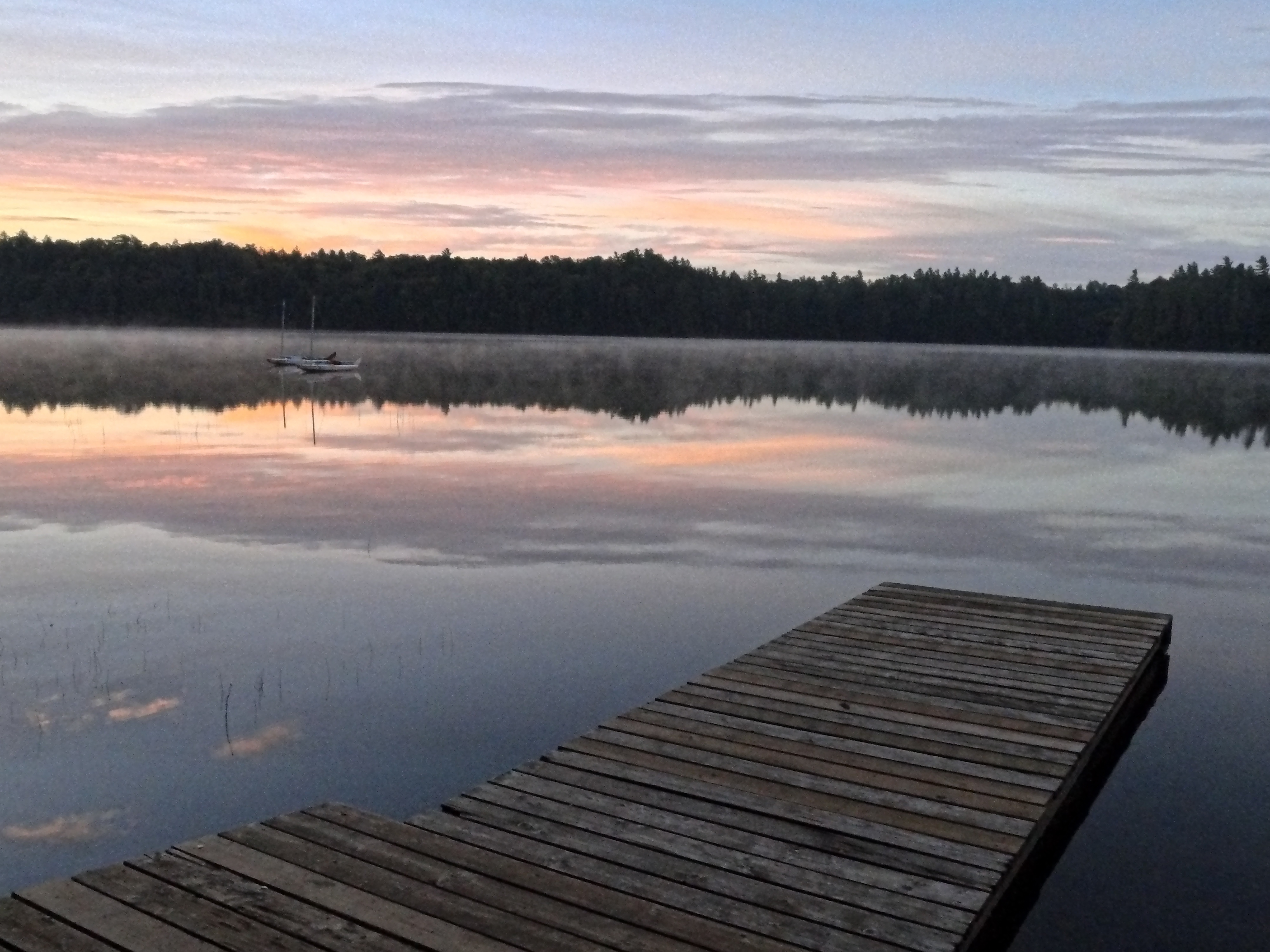
Picture this: You wake up in your yurt to the sound of loons singing and the sun’s first rays peeking through the trees. You roll over and mumble, “Five more minutes, mom,” then remember that you are in the yurt village on Massawepie Lake participating in the Adirondack Semester. You reluctantly leave the warmth of your sleeping bag and make your way to the kitchen because you are on cook shift this morning. Although most of the village is still asleep, the quiet sounds around you form the first few notes of a song that will continue throughout the day. Birds whistle in the nearby trees as you kneel down at the edge of the dock to fill the water jugs. You take a peaceful walk from the lake with the water jugs swishing and splashing in a melodic rhythm against your legs.
Once you get back to the kitchen, the water is poured into tea kettles and placed onto the stove to boil. You grind the coffee beans and become mesmerized by the percussion of the crunches, only to get snapped out of it from the high-pitched whistle note of the boiling water. After slamming, crashing, and tossing yogurt and cereal onto the table, it is finally time to ring the bell. The offbeat chimes echo through Arcadia as you yell, “Breakfast!” You and your cook partner wait as eleven sets of feet shuffle slowly into the kitchen with a chorus of harmonized good mornings and sleepy hugs. Breakfast moves slowly as we pass around yogurt and granola. Then you rush through the dish line—soap, rinse, bleach, soap, rinse, bleach—and the flow creates a beat you stomp and hum to.
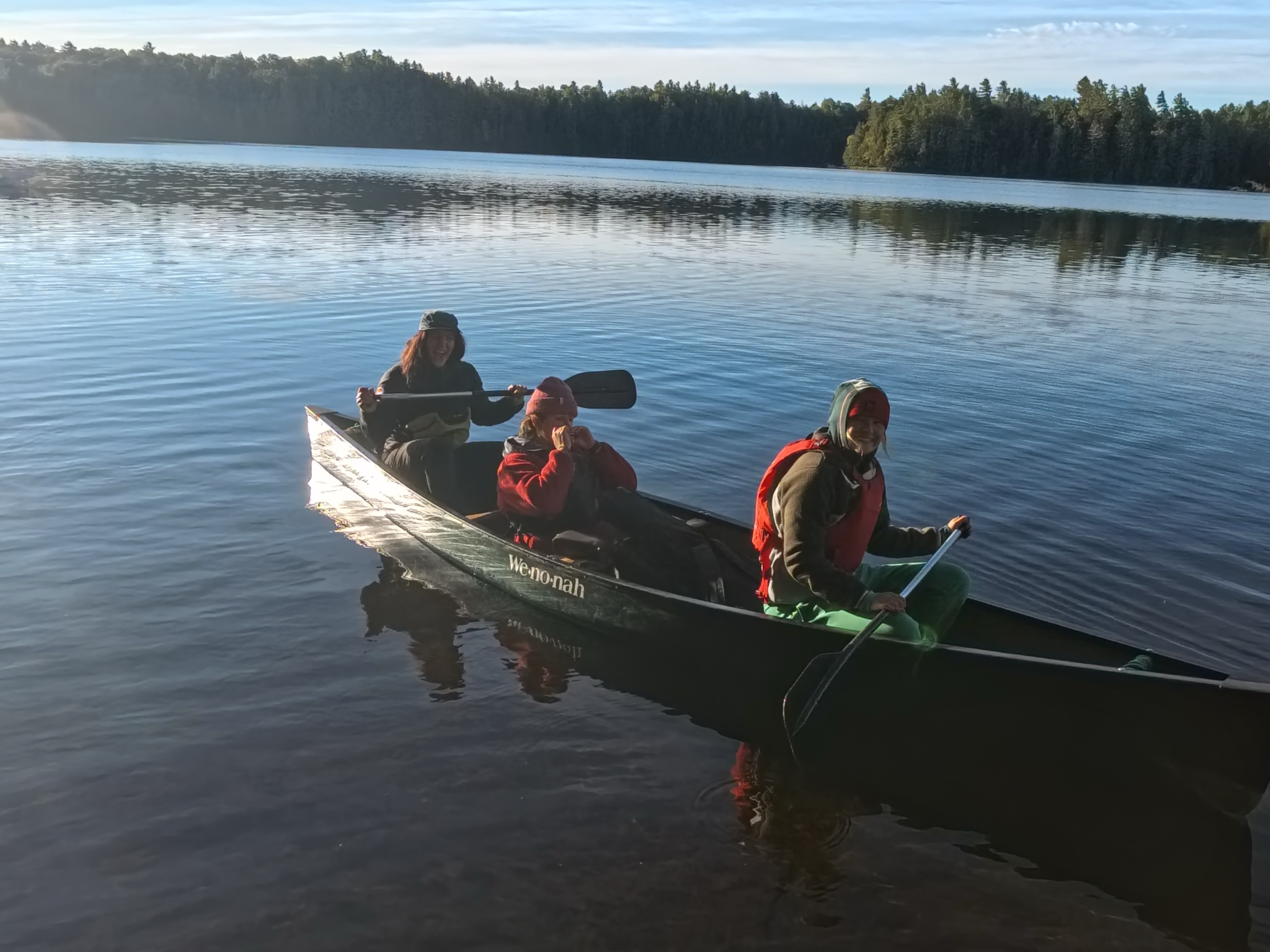
As the tune of breakfast comes to a close, the next melody opens with paddles slicing through the water. Our voices echo as we sing sea shanties, and Arcadian Jacqui Smith shreds on the harmonica. We paddle across the lake in unison to our van, still unsure where we are going for today’s class.
We chatter quietly while a CD player is plugged into the auxiliary cord. Fellow Arcadian Eva Nielsen’s Chappel Roan CD blasts as we drive down the bumpy roads of Massawepie. The van comes to life with the excitement of hearing music out loud and the joy of singing more than the same fifteen songs on guitar. Arcadian Maddy McGlinn says, “There is a real sense of love and community when we sing together.” We jump around from CD to CD, hearing everything from children’s lullabies to European EDM music. An hour and twenty minutes later, we’ve arrived at our destination for the day.
An important part of the Adirondack Semester is the inclusion of experiential learning by using our beautiful Adirondack home as a case study. On this Wednesday morning, our Land Use Change in the Adirondacks course with Dr. Sara Ashpole brings us to the Adirondack Experience museum on Blue Mountain Lake. Our arrival is signaled by a chorus of cheers as we pull into the parking lot on the first of our many field trips. Our van doors open and close with a swoosh followed by a thud, reminiscent of a bass drum thundering as we march through the doors. We are here to learn more about the multitude of ways the Adirondack landscape has been used over time. We venture into the expanse of clanging and whirring in this now-unfamiliar front country environment. Our ears are no longer accustomed to this modern-day cacophony, and our senses are overwhelmed as we adjust to the beat of the outside world.
One of our first stops of the day is at the museum’s boat-building workshop. Our excitement is palpable as we scour the exhibit for potential ideas to use on our own paddles, which we are crafting in our woodworking class. During our search, our ears are graced with the familiar shwoop of metal tools carving into wood.
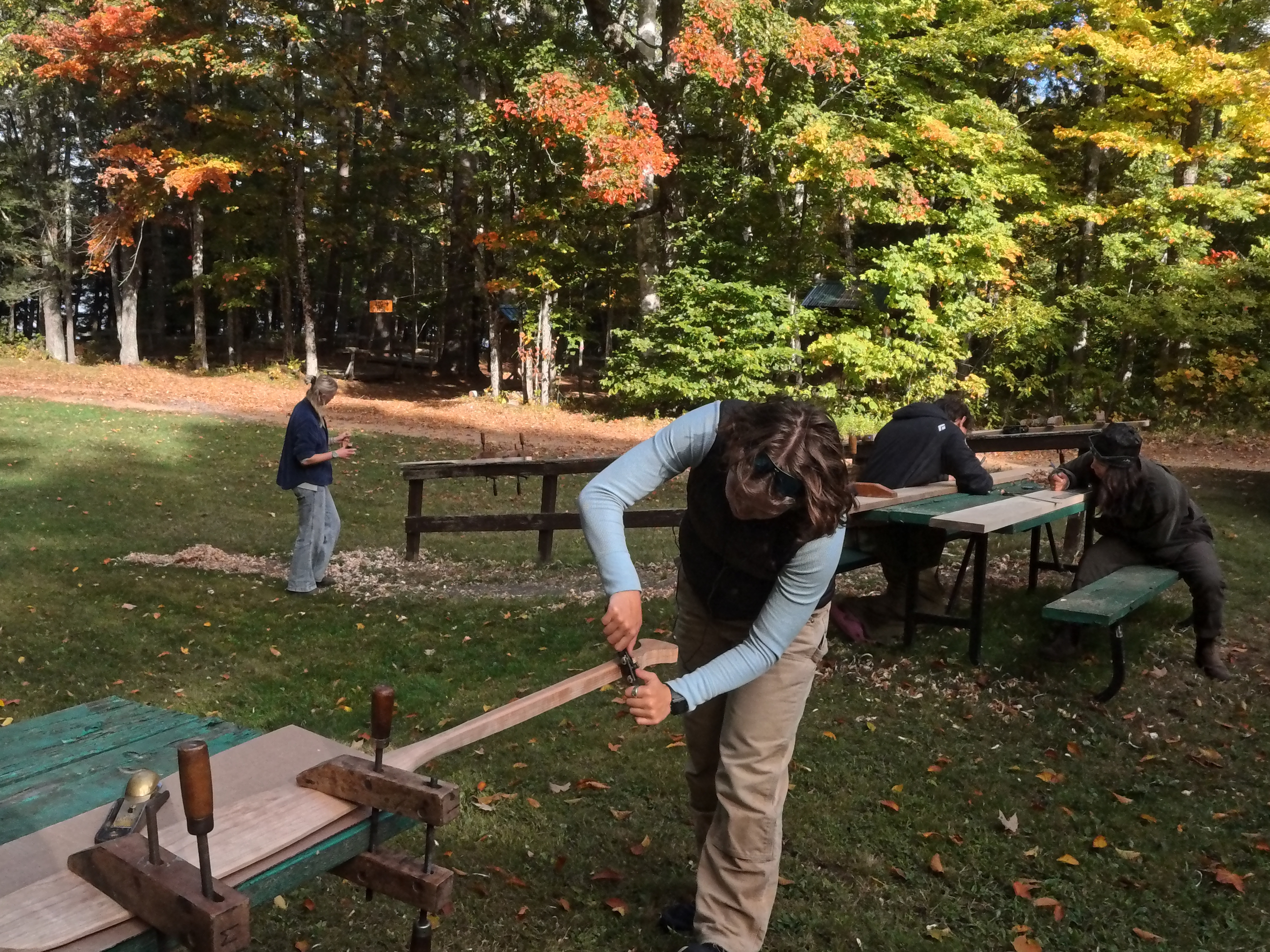
The resident boatbuilder himself is hard at work, providing a well-known cadence as we look through the displays. If you look closer, you might even see an Arcadian foot or two tapping along. Our day at the museum is spent studying the song of the Adirondacks’ past. Its melody, we quickly learn, was filled with the slice of a logger’s saw, roar of a miner’s furnace, and blast of a hunter’s rifle.
Music is a constant part of our semester. Whether in the kitchen, van, or on field trips, it is always present around us or within us. When asked about the role music has played in years past, Adirondack Semester Jacob McCoola states, “Many Arcadians have created songs about their experience on the semester in order to express and share them with both our internal and external community.” One could even say we have a musician’s soul. And on this day we bring it with us outside of Arcadia, to each stretch of unknown road, town, and antique store.
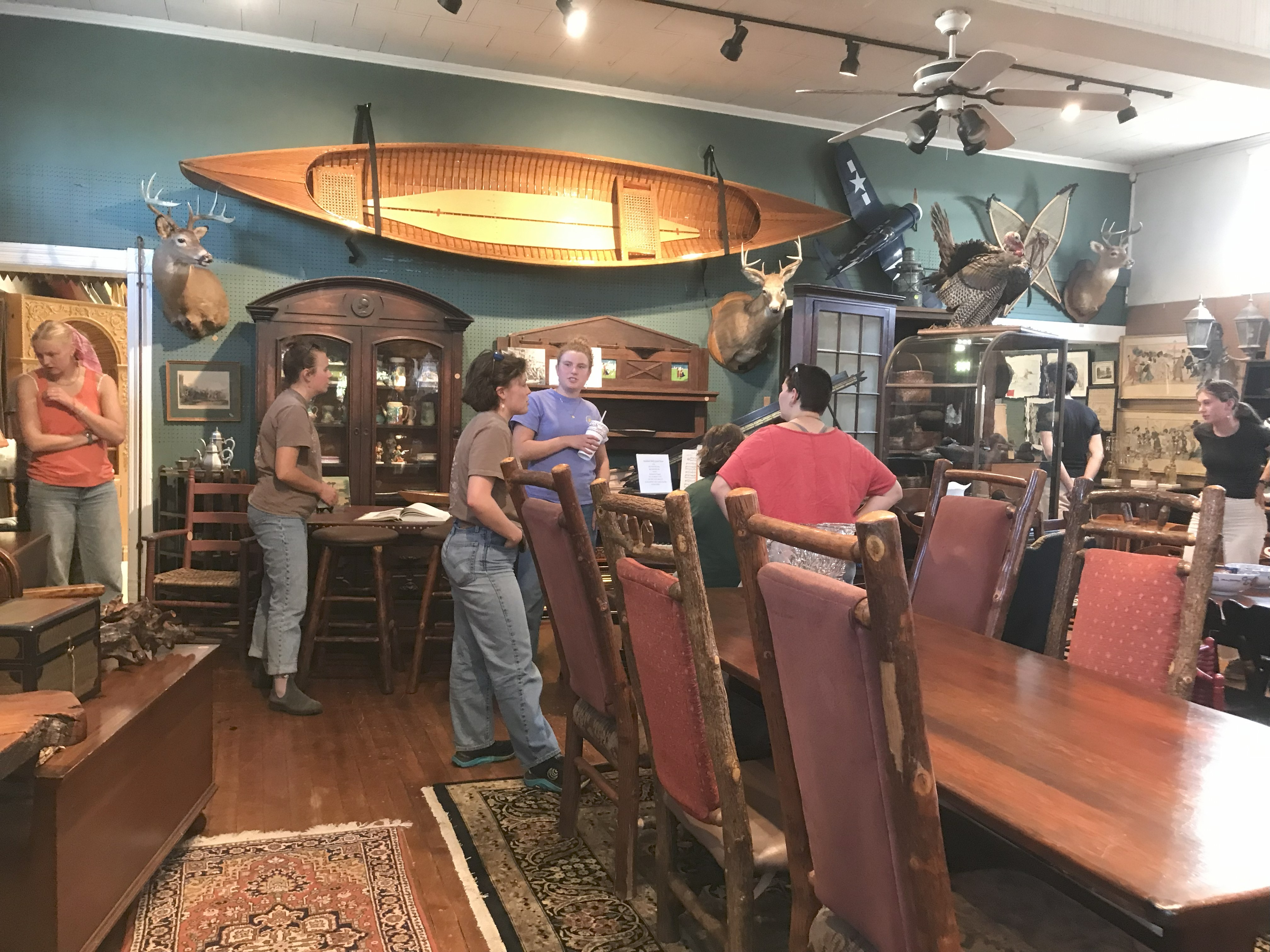
Unique Antiques, a quaint store in Long Lake, is an impromptu stop on our way back to Arcadia, due to the search for a singing fish by Arcadians Jacqui Smith, Beckley Wooster, and Garen Steiner to add to their self-proclaimed “rainbow trout” yurt. As we look, Jacqui spies an antique piano with a “please play me” sign on it, almost as if it knew we were coming. She sits down and starts playing Billy Joel’s “Vienna.” As the first notes ring out, each Arcadian is drawn to the sound, almost like moths to a flame. Within moments, Unique Antiques becomes our very own concert hall. Voices blend and echo as our community of musicians, Laurentian singers, and car rockstars share a piece of our Arcadian soul. After our song fades away, we realize that a new member has joined our company—a sweet older woman, presumably the shop’s owner. She meets us all with a grin, commenting on the beautiful community she can see we’ve created. At one point she asks, “Are you a chorus group?” “Of some sort” is the best answer we can give. As our time, in the store comes to an end, we file back to our van, each one of us with a fresh apple and a welcome invitation to come back soon.
At 4:30 p.m., back in the yurt village, the Arcadian kitchen comes alive with the music of making dinner. On your cook day, you and your partner are responsible for planning the meal, which usually begins with a look into the vegetable cage, a shelf with a wire mesh door where we store our CSA share. When cooking in the front country, you can generally choose a recipe first and let the ingredients come as an afterthought. However, in Arcadia, the vegetables we have on hand dictate what you can cook. With this in mind, your creativity kicks in and soon the kitchen transforms into a whirlwind of musical chaos. Bowls and pans clang, knives tap against cutting boards, water sloshes into pots, and the propane stove clicks as you coax it to light. These noises blur together to form a song, and your laughter becomes the melody. Giggles from the cook crew can usually be heard wafting out of the kitchen, which builds excitement for the coming meal.
As 6:30 p.m. rolls around, always sooner than expected, you and your partner rush to set the table and pull together the finishing touches of your masterpiece. Eager to share your work with the community, you have the honor of ringing the dinner bell. Laughter fills the space around you as Arcadians gather at the big wooden table. You and your partner introduce the meal, highlighting the ingredients in every dish. You mention vegetables and grains, but everyone knows from experience that the unspoken ingredients in each Arcadian meal are music and love. You and your partner recite your chosen dinner quote, which is received by a drumroll of hands banging on the table, followed by a loud cheers as everyone throws their arms in the air. This musical riot signals the start of dinner chaos. Dishes clatter as they are passed around, followed by a chorus of “Please pass the sriracha” and “Can I have the nooch?” (our name for nutritional yeast, a staple of Arcadian dinner seasoning). Everyone settles into the chatter of dinner conversations, and soon enough bowls are empty and stomachs are full.
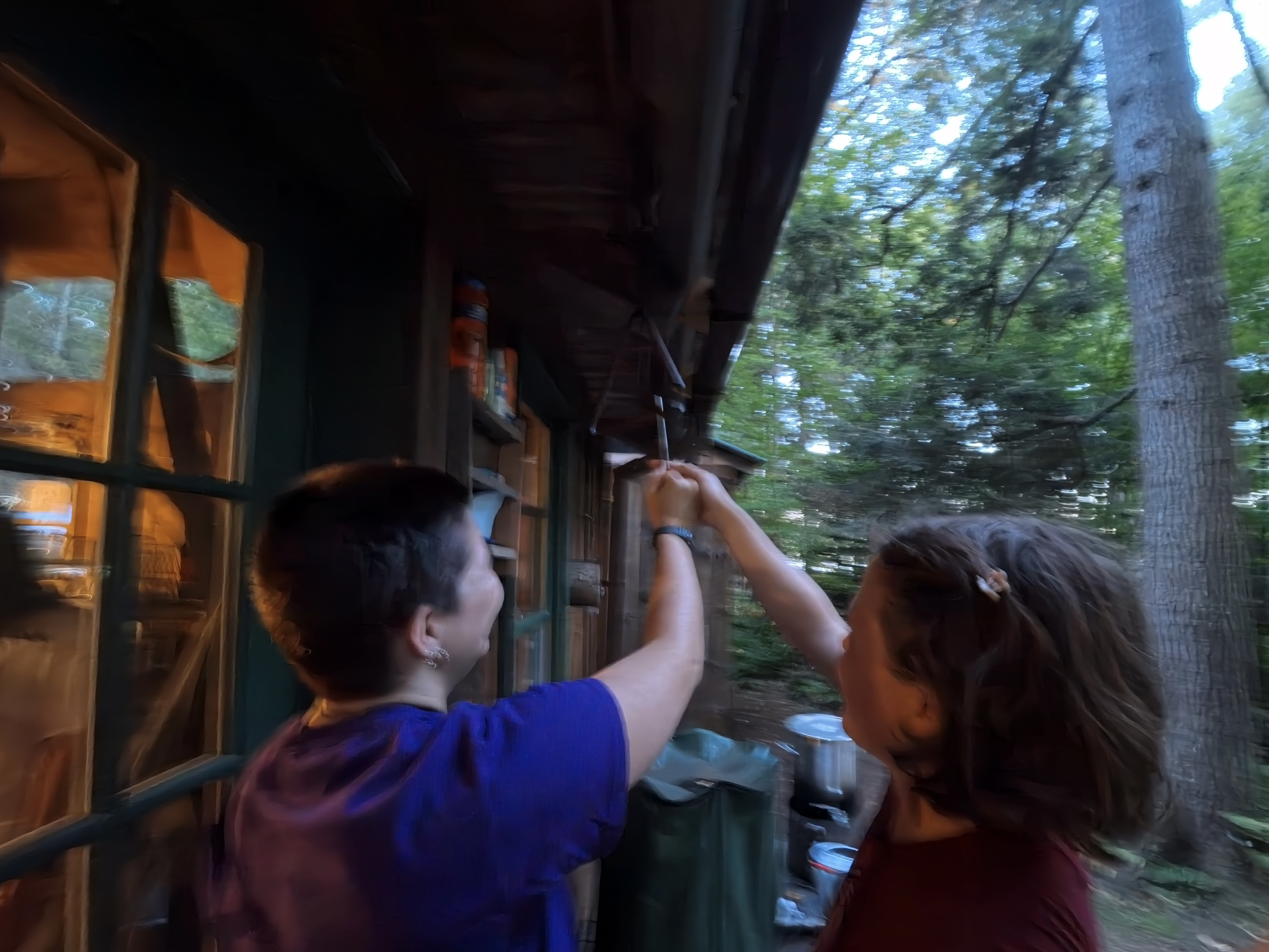
You and your cook partner get up from the table to slosh water into the sinks and begin the familiar rhythm of dish line. Your fellow Arcadians trade the dinner items on the table for notebooks and highlighters, and the music of evening time begins. Our resident musicians take down their guitars, which conveniently hang above the kitchen door, and begin strumming familiar chords. Within moments, the whole kitchen erupts in song. The chorus of Caamp’s “By and By”, a favorite in the village, can probably be heard echoing across the lake. Playing music during dishes has become a tradition in the yurt village, and it’s a beautiful way to bring our community together. In the words of Arcadian Beckley Wooster, “Every time we play guitar and sing together, I feel warm and full of love.” This sentiment is shared by many Arcadians.
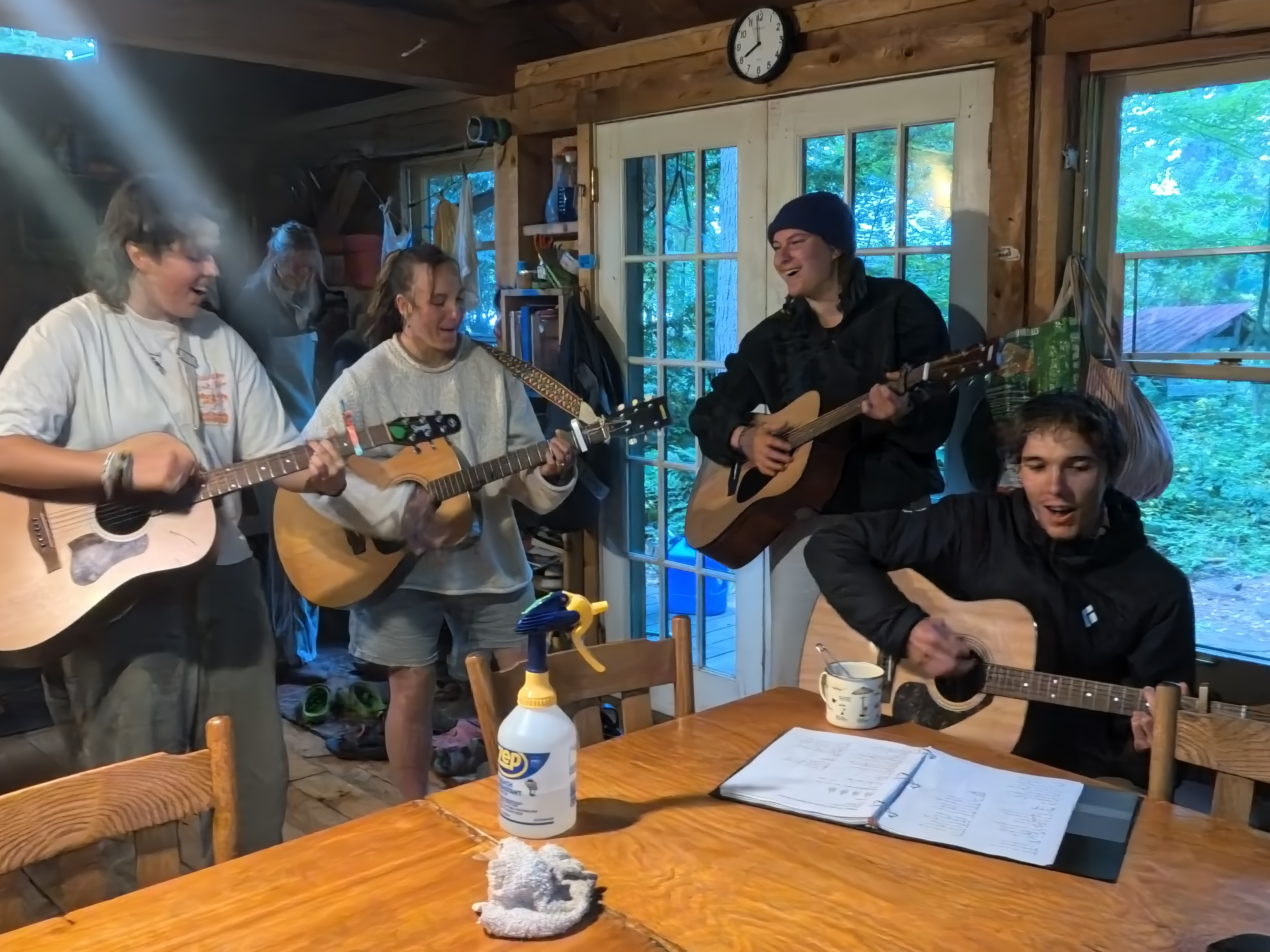
From strumming guitar and writing our own songs, to appreciating loon calls and listening to the gentle patter of rain on our yurts, music is part of our everyday lives. The sounds all around us form the backtrack and melody of our shared experiences. Here at Arcadia we find music in the simplest of things.