Growing Home
By Emily Campbell & Eva Nielsen
September 8, 2025
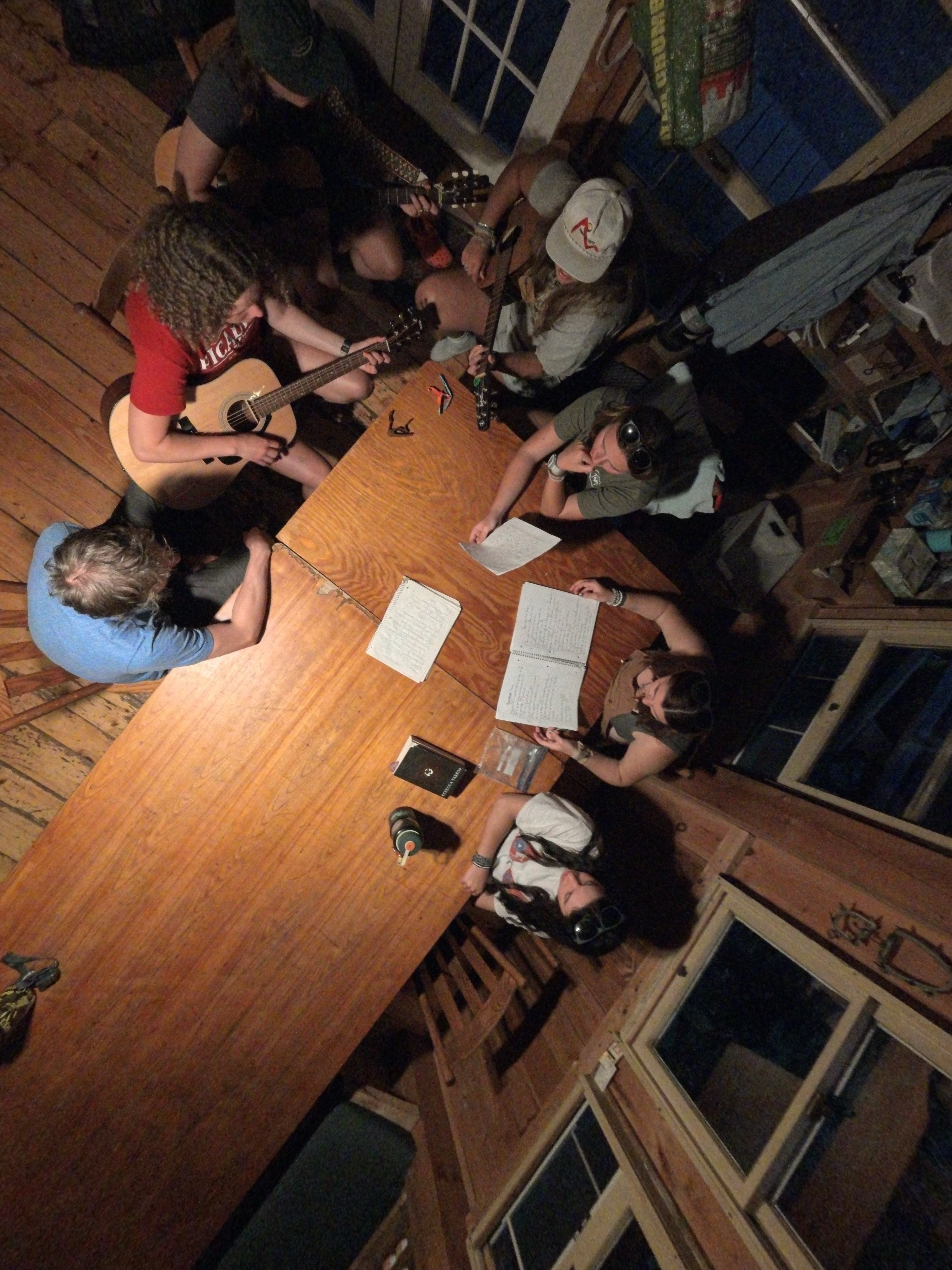
If you happen to be on Massawepie Lake as the sun sinks below the horizon, and if you listen closely, you may hear guitar and laughter drifting through the hemlocks and across the water. Listen closer, and you may hear the clanking of dishes or someone telling a good story. With sharp eyes, you might see a warm, orange glow of a kitchen light shimmering through the trees. If you look hard enough, you could find Arcadia, a yurt village that is the new home of twelve St. Lawrence University students participating in the Adirondack Semester.
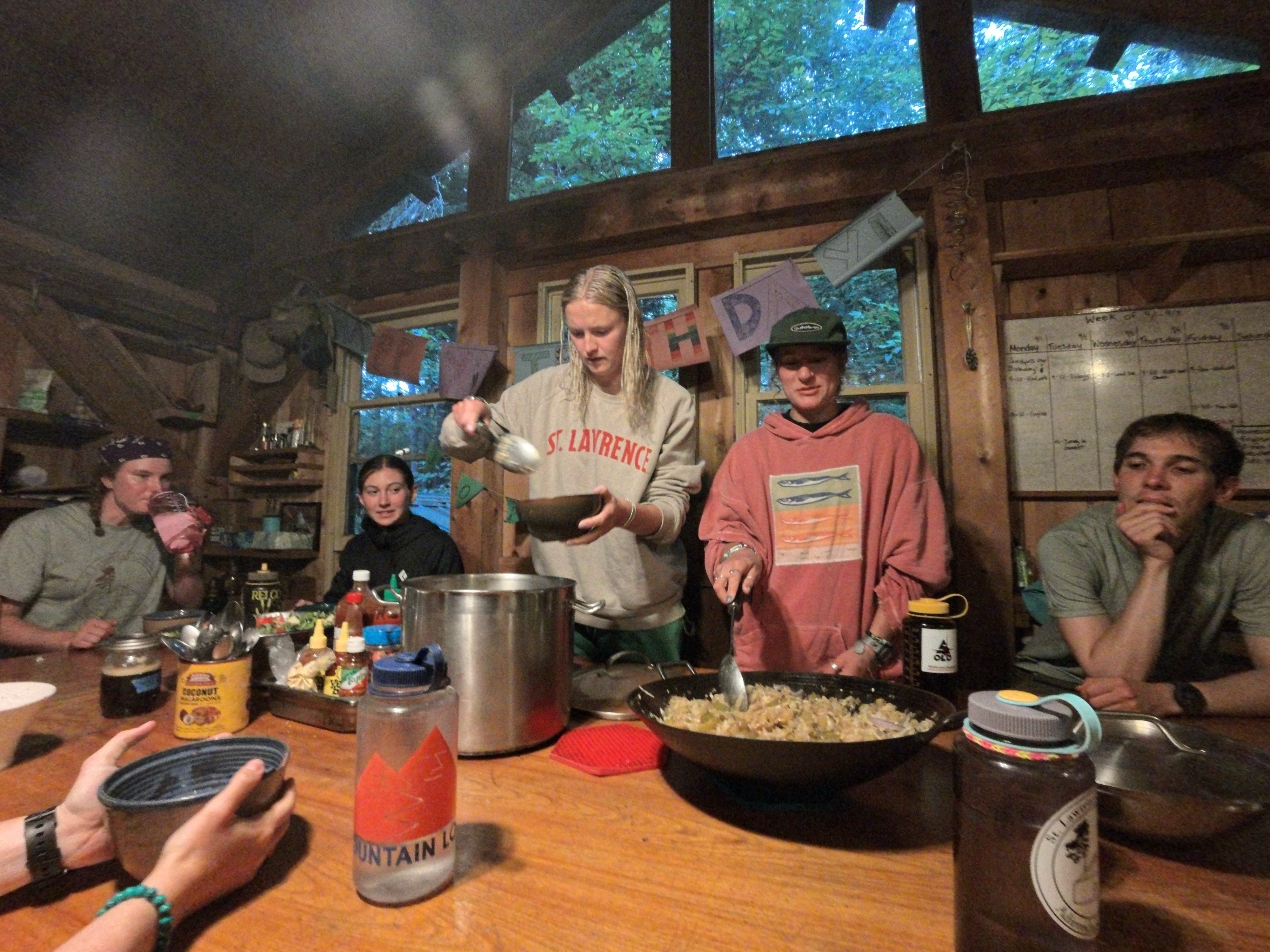
A typical post-dinner scene in the yurt village includes the cook crew washing the dishes from another nourishing meal, others putting away leftovers, someone climbing into the kitchen loft to read, and Arcadians Jacqui, Beckley, Lars, and Garen breaking out their guitars and strumming the chords to an Arcadian favorite, “By and By.” As you watch the group sing together, tell nonsensical jokes, and navigate the small kitchen, it’s difficult to believe that not long ago they were strangers and had never stepped foot in that kitchen before.
Two weeks ago, we (the Arcadians) embarked on a week-long canoe trip that would introduce us to the Adirondack landscape and take us to our new home. Over the course of the trip, we began to bond over shared stories, giggles and challenges. For many, a canoe trip was a first in and of itself. Portaging—carrying canoes and gear from one body of water to another—was a new and slightly daunting concept for some. As we arrived at our first portage, Eva Nielsen, one of the day’s leaders, offered a helpful way to frame the experience. Quoting a past Arcadian, she said, “Your first Portage is like your first kiss: you may love it, you may hate it, it could be really awkward, or it could be awesome. No matter what, you’ll always remember it.” As we arrived at Arcadia, stepping into a new home with a freshly formed community, we were about to experience a lot more “firsts.”
During our first week of school, we were introduced to how all of our classes are rooted in the concept of place-based learning. In other words, our home—both Arcadia and the Adirondacks as a whole—is our classroom. One of the clearest examples of this is Natural History and Ecology of the Adirondacks, a class taught by Eileen Visser. There was some trepidation surrounding a science class among our group. Arcadian Maddy McGlinn expressed that “this is my first science class in almost six years, but learning about the place we’re in makes it really meaningful.” During introductions with Eileen, she asked us to describe the landscapes of our homes. The home habitats of the Arcadians extended from right here in the Adirondacks to Utah, British Columbia, and even Austria. The patchwork of identities forming our community mirrors the mosaic of the Adirondacks, rich with biodiversity. As we learned from Eileen, the Adirondack mountains are domed as opposed to the linear form of other mountain ranges, and the variety of elevations offers habitats for numerous forest types, species, and biomes.
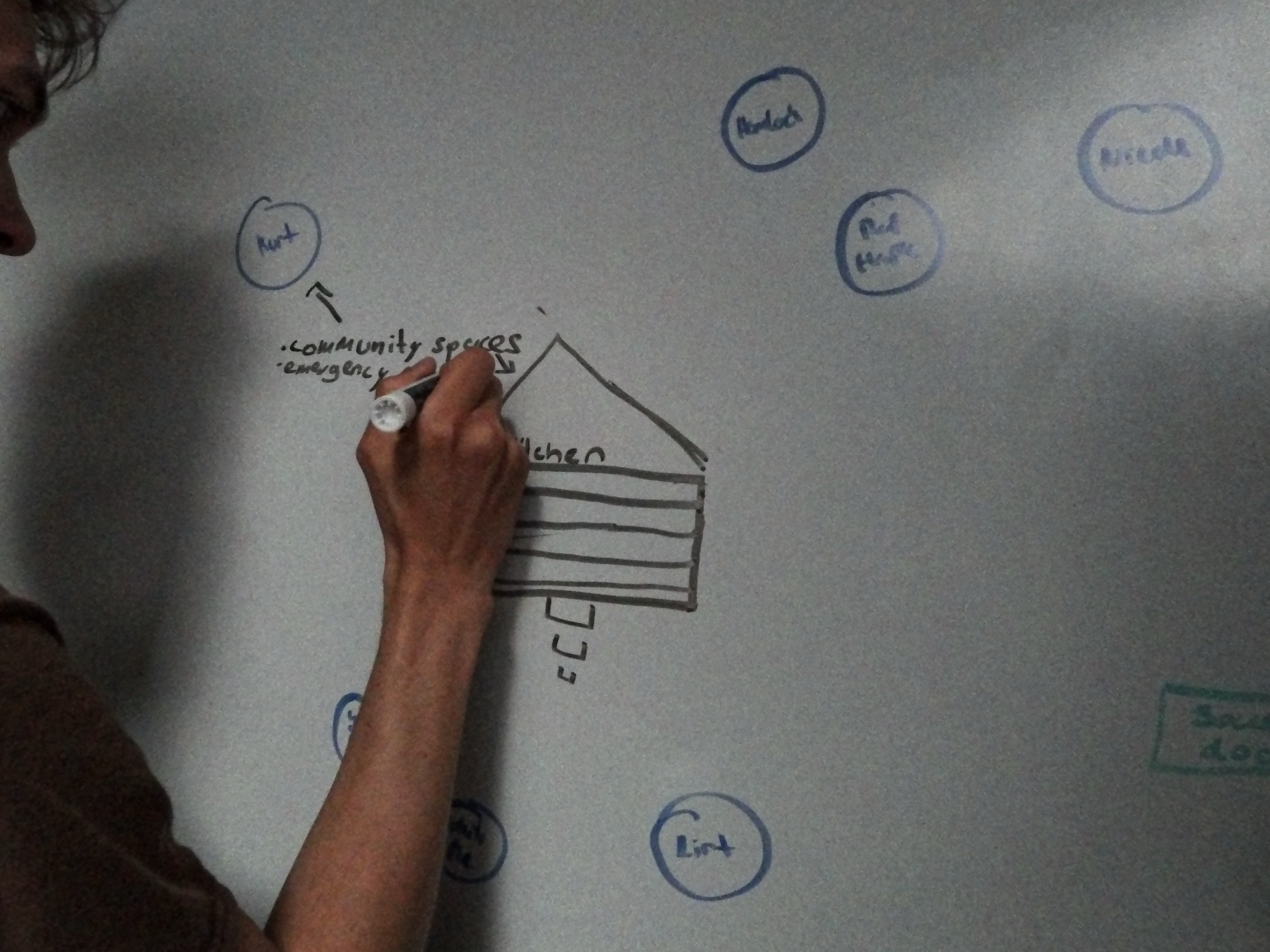
The uniqueness of the Adirondacks extends beyond the ecology of the land and into the social and governmental spheres. With six million acres of public and private land comes a smorgasbord of stakeholders and perspectives on how the land should be interacted with. Another class, Land Use Change in the Adirondacks, offers insight into the systems that make this medley of competing interests work. Sara Ashpole, our professor, introduced us to the concept of zoning and explained how breaking land into sections for different uses ideally keeps communities functioning and members happy. As a class activity, Sara asked us to “zone” our new home. The first question asked was, how far should we extend our map? Is our home strictly Arcadia or something bigger? Sara left this question to our interpretation. We started by drawing just our village and zoning the many areas within it. However, we quickly realized that our life here is impacted by much more than what goes on in our bubble of yurts.
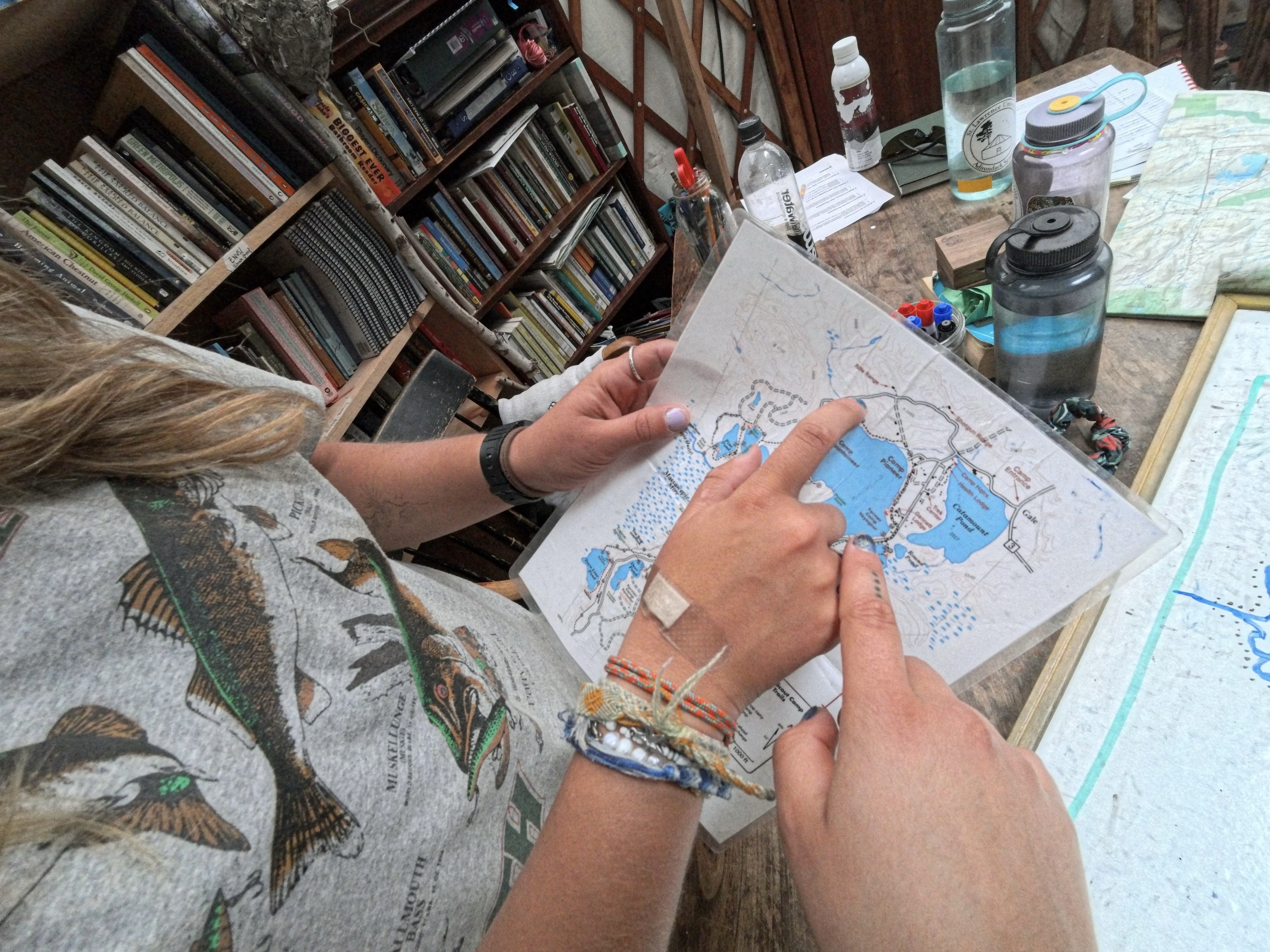
We live on the Massawepie Conservation Easement, which offers us access to explore an extensive system of trails, paddle lakes and ponds, and live in a protected wild area away from the hustle and bustle of modern-day society. With no distracting technology to keep us inside, exploration of the Massawepie property is a prime option for post-class or weekend adventures. Within only the first week, excursions out and about have been numerous, creative, and sometimes, according to Arcadian Emily Campbell, “a little crazy.” Seven brave Arcadians went in search of an abandoned Boy Scout camp, only to have a run-in with some flying fish instead. On a paddle back to the village across Massawepie Lake, Jordyn and Rachael had a hard time locating the dock but were delighted to spot the northern lights. Two go-getter Arcadians, Beckley and Emily, ran to Mt. Arab, a round-trip of twenty miles, all before Saturday morning breakfast.
Our adventures here are facilitating our bonding, bringing us closer to each other and the land around us, yet what truly allows this place to feel like home is our systems that keep our village operating and thriving.
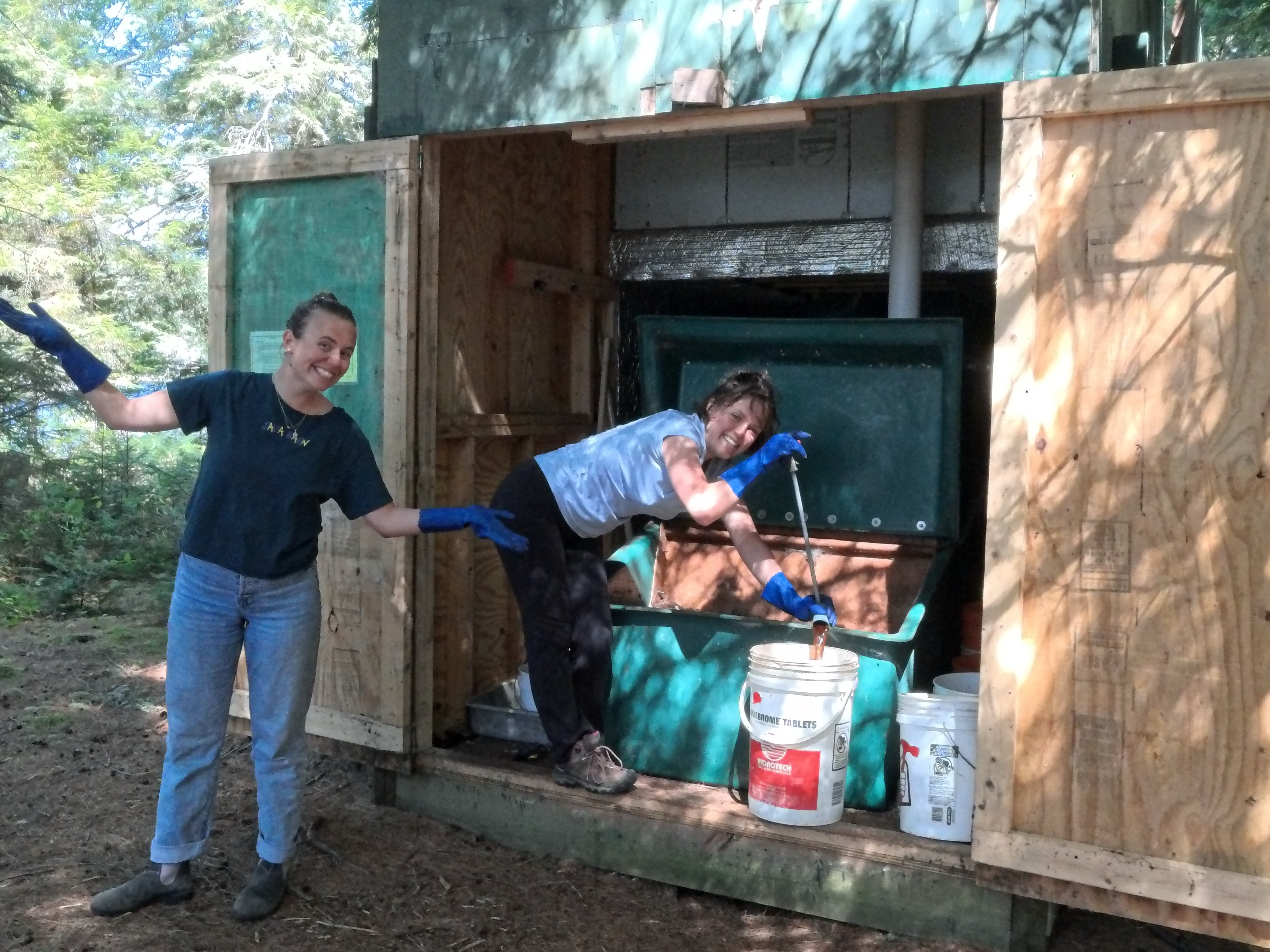
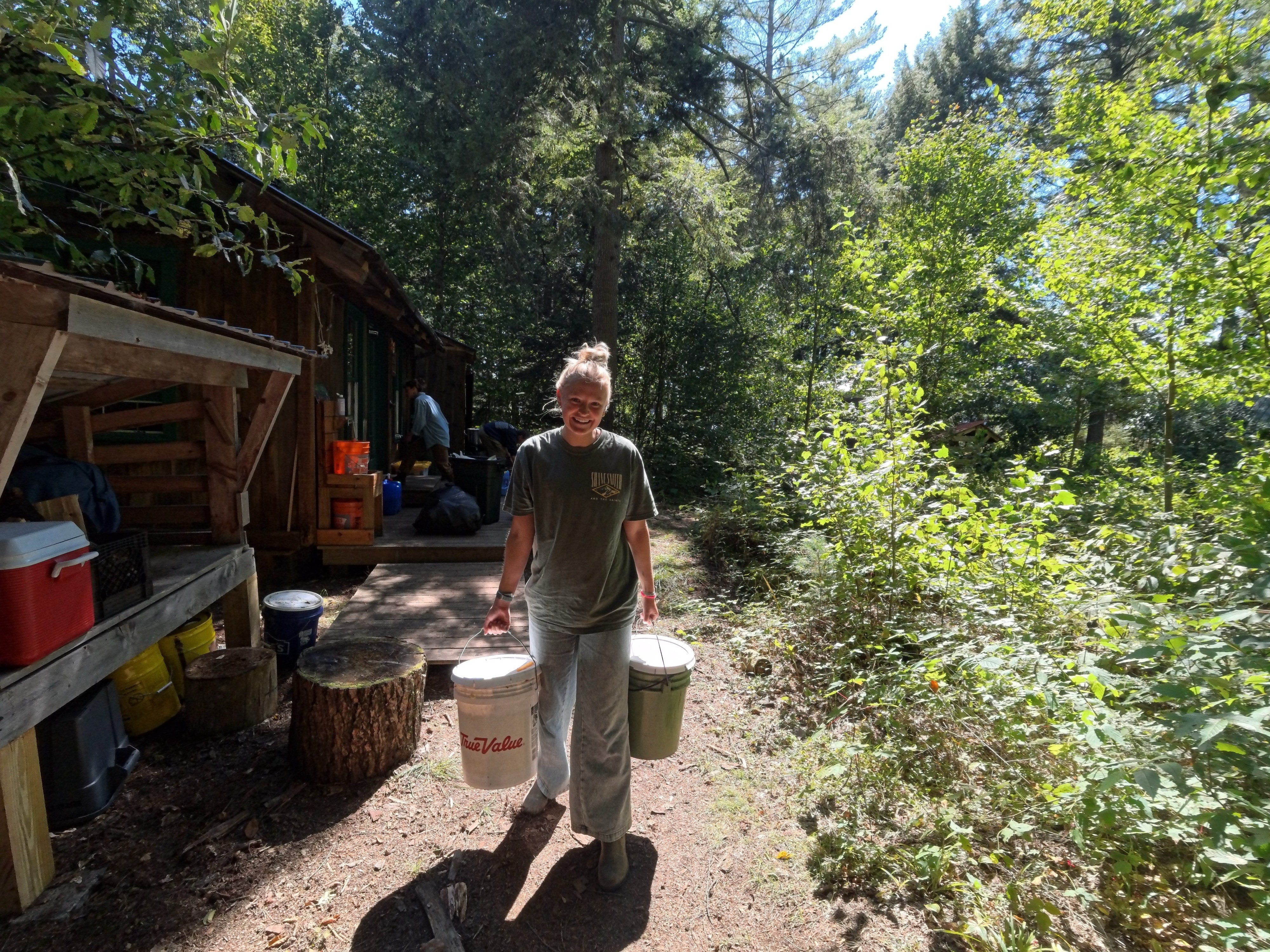
Thursday in Arcadia means chores, and this past Thursday was the first time we practiced this shared responsibility. Chores in an off-the-grid yurt village differ from those in a typical household and include, for example, raking and cleaning out our own toilet system, the Clive. The kitchen crew is responsible for making sure that water is brought up from the lake. We also have to chop wood for fires and the sauna because that is our only way to stay warm and clean. Many would argue that life is much simpler when you can just flush a toilet and never see your waste again, get a glass of water from the sink, turn up the thermostat when you’re cold, or take a shower. But when you are actively connected to these simple tasks, you become more aware of the processes that take place to achieve them. Through chores, we take nothing for granted and cultivate reciprocity and gratitude for where we live.
The meaning of home is not solely dependent on our relationship to place but also on our relationships with each other. Every person in the community has strengths and weaknesses that are vital to our group dynamic. The longer we live together, the closer we get to working as a cohesive team. For example, when there is a spider nearby, we know not to inform Lars but instead to recruit a more skilled spider handler, such as Eva, to manage the situation. Or, if you want Nutella on your wrap, it’s important to get to lunch before Emily. If you’re looking for a stylish new accessory, Rachael can whip a bracelet up real quick. Arcadian Beckley Wooster expressed the joy in growing closer as a group by saying, “My heart feels so full when we sing together.”
It’s fun and exciting to get to know each other more every day; however, given our busy schedules, the new environment, and our range of communication styles, preferences, and needs, it’s important that all voices of the group get heard and valued equally. To ensure this, we have yet another system we partake in on Wednesday nights: community meeting. Here, we have the chance to voice our opinions, concerns, or thoughts on any aspect of life at Arcadia. Last week’s meeting covered topics such as who will be in charge of clearing that table after meals, and how to make sure mugs aren’t left with hot chocolate residue, which was translated into the action item “swish yo mugz.” In addition, a stuffed animal show-and-tell took place, where we had the opportunity to meet Garen’s rotund seal, Beckley’s weighty dinosaur, and Emily’s pink, fuzzy, but notably unsettling “Lafufu” (ask her if you’re curious). Although we have had no major conflicts yet, community meetings are a space to address issues when they do arise. The systems we benefit from are thanks to years of trial and error by previous students.
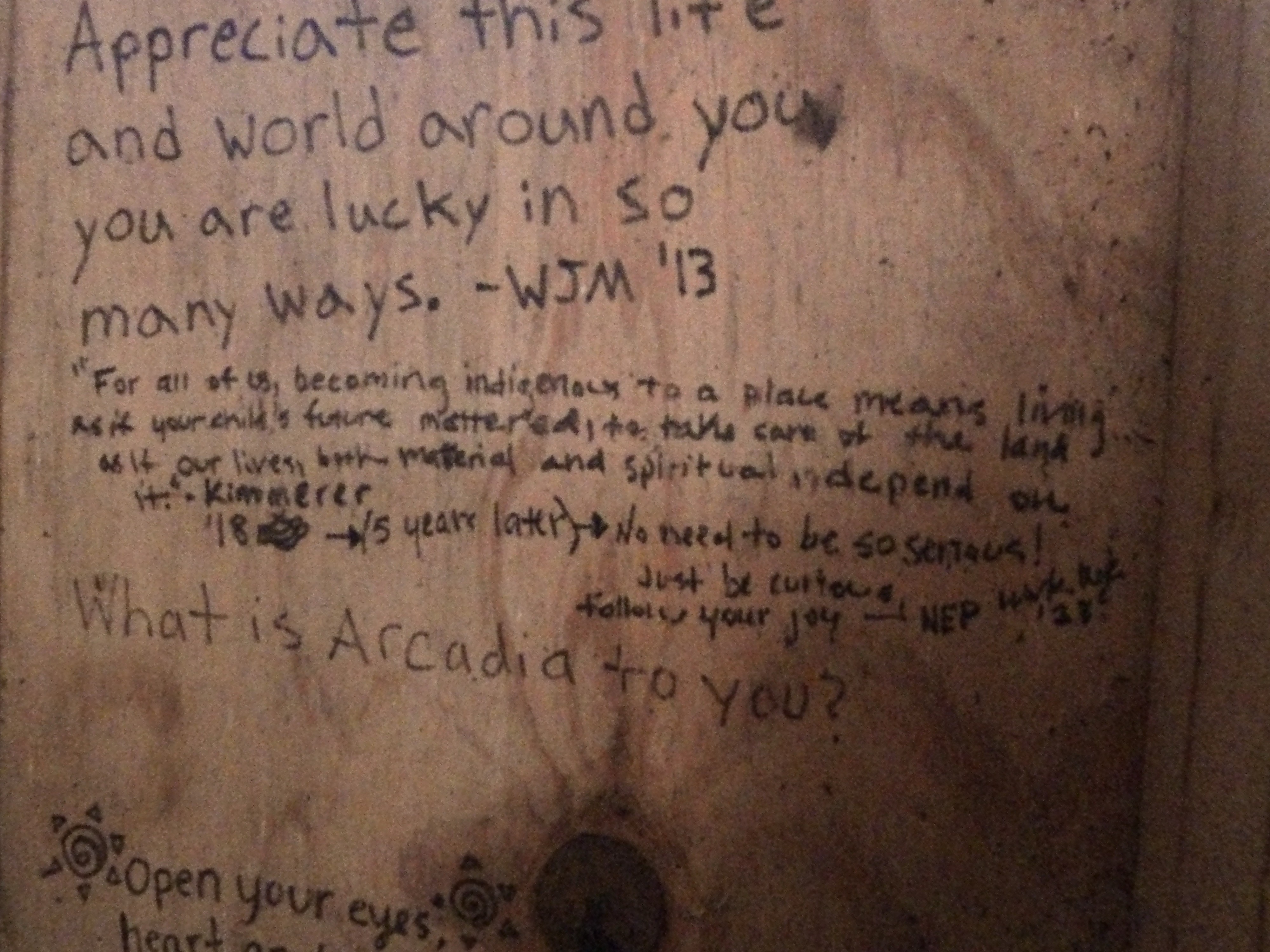
Not only did generations of Arcadians leave us systems, but they also left us wisdom in the form of quotations in the Clive. As one alum wrote, quoting Robin Wall Kimmerer’s book Braiding Sweetgrass, “For all of us, becoming indigenous to a place means living like your child’s future mattered, and to take care of the land as if our lives, both material and spiritual, depend on it.” While perhaps our children may never experience this place, many future generations of Arcadians will. The students who inhabited this cherished village filled it with love. That love is visible through the quotations in the Clive, the art in the kitchen, and the handcrafted wooden lily pads that guide our way through the village. These small details, paired with the larger systems, have been left to us to care for. As we settle into our new home, we hope to continue that legacy of love and protection for this place, leaving a true a trace of our own group and all the unique individuals that it’s comprised of, coming together to form a beautiful medley.
So, if you do happen to one day see that faint glow of the kitchen light through the trees, listen a bit closer. You may just hear muffled giggles and twelve not-long-ago strangers singing “By and By” as their new anthem. Just a week ago, they first set foot in that kitchen, not yet knowing they weren’t simply stepping into a kitchen but into a home, built for them and by them and that they will one day pass on.