Full Circle: Arcadian Time
By Jordyn Bell, Maddy McGlinn, & Lars Fattinger
September 15, 2025
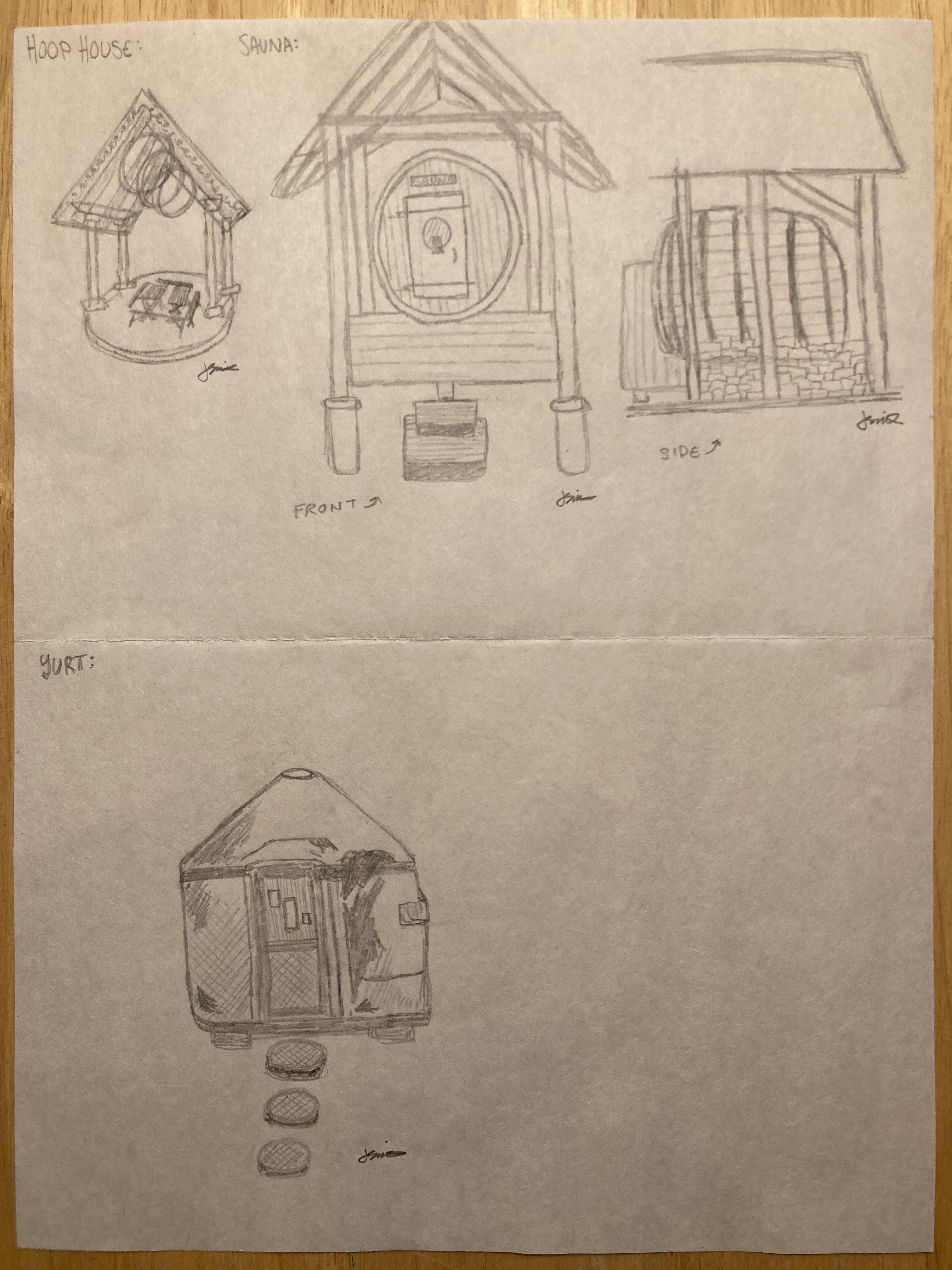
Circles are central to our lives in Arcadia. Eight circular yurts are spread around the village, with our kitchen at the center. The hoop house features three large circles in the ceiling that strengthen its structural integrity. Clive, our composting toilet system, allows us to cycle our waste back to the Earth in a sustainable, circular fashion. Our barrel sauna with its circular frame keeps us clean and builds community. Arcadia is full of circles, and while most are visible just by walking through our village, the most significant one is not physical.
Our dictionary (a very important resource when Google is out of the question) also defines a circle as 4) a complete or recurring series; cycle; (5) a group of people with common interests. Throughout the twenty-five years of the Adirondack Semester, we have created a recurring series with each new year of Arcadians that have entered the village. Every cohort begins their time at Arcadia with the completion of a seven-day canoe expedition and continues to share various common experiences with generations of Arcadians. Our community stems from shared values in which we strive to live simply, sustainably, and immersed in nature. We’ve now entered the circle of the Adirondack Semester, but the journey of getting to this point spans twenty-five years.
After a lot of anticipation, our group officially met Ben Geiger, the Superintendent of the Massawepie property, for two small group tours this week. For sixteen years, Ben has been working for the Scouts, who own the land, and describes himself as the “mayor, highway department, contractor, plumber, electrician, and everything else” of Massawepie. By sharing stories about Arcadian adventures on this land, including a rainy day twelve-mile portage up Mt. Arab in 2018 and the deep lore of supernatural occurrences among the dilapidated cabins of Camp Forester, he helped us put our experiences into the rich historical context of the property.
This land was inhabited and taken care of by people indigenous to this area for thousands of years before Euro-American settlers arrived. However, the written history of the Massawepie property begins in the late 1800s with the opening of a luxurious hotel near today’s Gannett Lodge. When the building fell into disrepair a few decades later, locals scavenged its free lumber to build their own homes, some of which are still around today. Another historical location is Vingo, a campsite across the lake from Arcadia. It is where we paddle to get to our van, but it is also the scene of a local legend. During prohibition, local residents would congregate there and brew alcohol. Ben also told us of a story involving a sunken barge full of whiskey, adding a new idea for how we could use our snorkeling equipment.
In 1951, the Scouts bought the property and started opening camps, including Camp Pioneer, which holds all the infrastructure relevant to Arcadia, as well as Camp Forester, which was abandoned in 1994 and has inspired ghost stories and Arcadian adventures for decades. Most recently, in the late 1990s the Scouts sold the property’s easement rights to New York State, establishing the Massawepie conservation easement and opening the land to the public for recreation.
The first Arcadian set foot on the property in the autumn of 1999 and lived at Gannett Lodge. In 2000, the program moved across the lake to Arcadia, whose name originates from a region in Greece that historically exemplified a harmonious relationship between humans and the natural world. Yurts were chosen for their semi-permanent design, low environmental impact, and circular shape. According to Jacob McCoola, Director of the Adirondack Semester, “Yurts are great for sitting in circles and building community.” They are also easily disassembled and leave minimal impacts on the landscape, which was important since no one knew how long the program would be around. While most current yurts are the same as those built in 2001, they now have additional structural supports and are maintained year-round. Our village today also includes a small number of permanent structures, including the kitchen and the Clive, and instead of two canoes strapped together for food and firewood transportation, we now have a real barge.
A large aspect of living in this village is taking ownership over the space. Everything in Arcadia, from the sauna to the kitchen, was built by Arcadians for Arcadians. These remnants of previous generations instill a deep appreciation for our home’s history in all of us. Ironically, this is most apparent when interacting with our good friend Clive, the composting toilet. The inside of each stall is covered in wisdom, poems, and anecdotes from past Arcadians. They guide us in our day-to-day lives and inspire us to make the most of our limited time here. When Arcadians Eva Nielsen and Lars Fattinger ran into Roy Duffy (2024) on a field trip, he told them they had the “Arcadian Glow,” exhibiting the sense of peace and contentment this experience fills you with. However, the unique living and academic conditions created by the program don’t make it easy. The phrase “it was hard, but I’m glad I did it” is a common one among past Arcadians. Similarly, every person that once called this place their home infused the yurts with their own love for Massawepie and the community we build here.
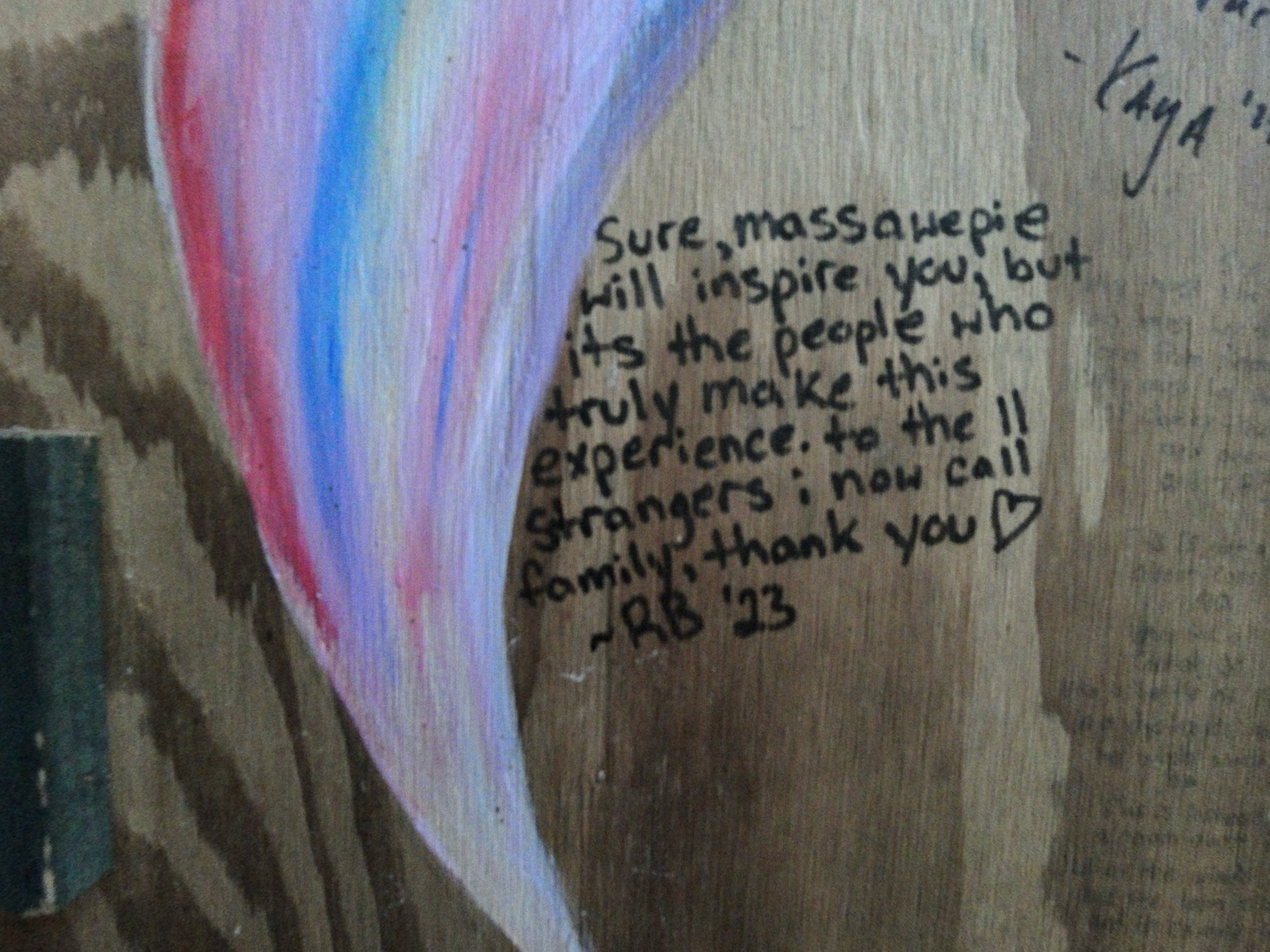
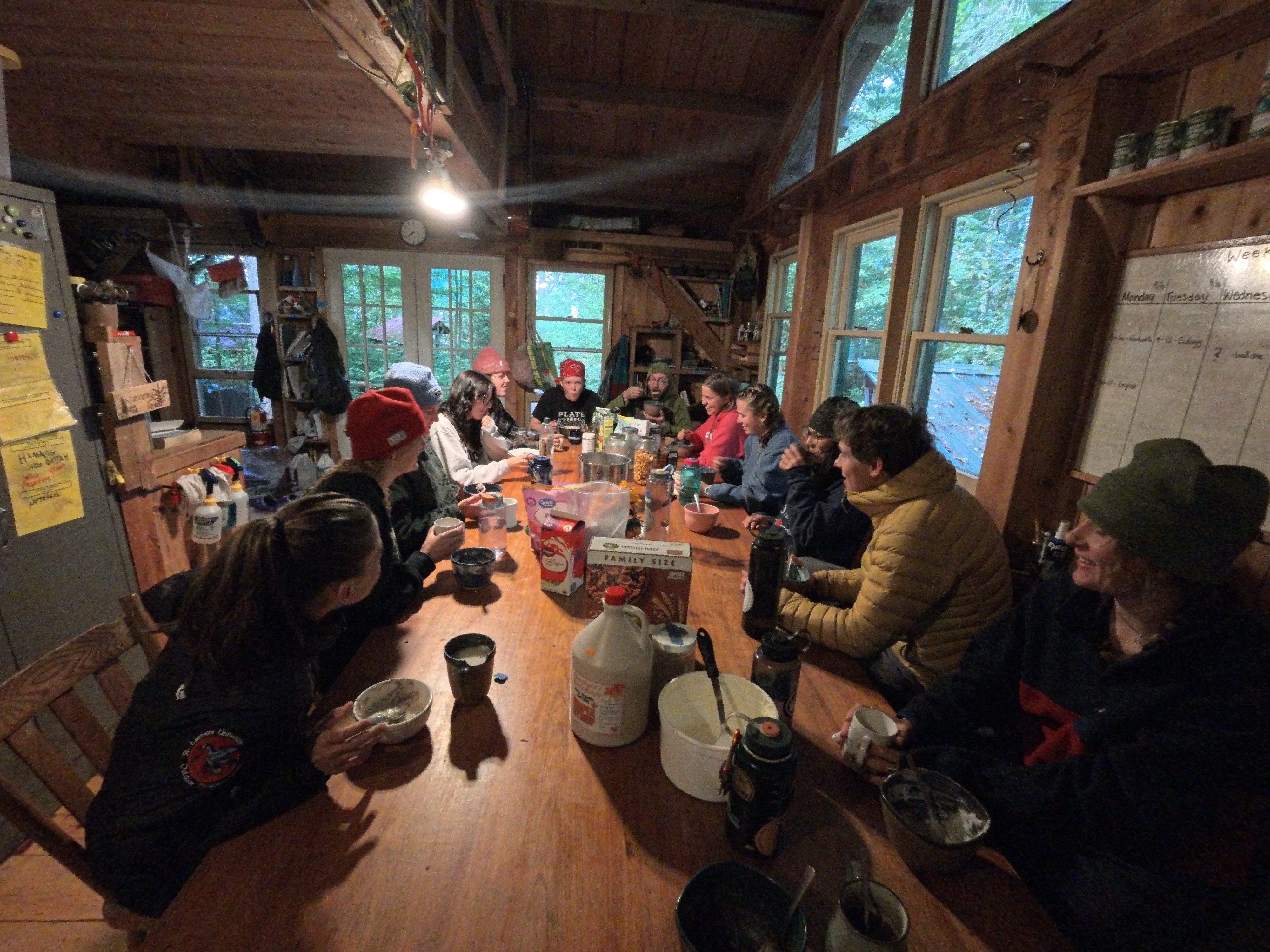
Today, the history of Arcadia is related through the various traditions that impact our everyday lives. They’re a way for new Arcadians to feel connected to past students and to the space, and they also make the village feel like our home. Our first night together as a group, we were introduced to dinner quotes. Every night the cook crew opens the meal with a quote. This could be from a book, a poem, a song, or even something your second-grade teacher told you. This is answered by everyone banging their hands on the table before throwing their arms in the air with a loud “woo!” Though this makes Jinora (the dog of Jacob McCoola, Director of the Adirondack Semester) bark, it is a fan favorite. Past Arcadian and now Assistant Director Nicole Panek informed us it was a tradition during her time on the semester to do a breakfast quote and wanted to include it this year.
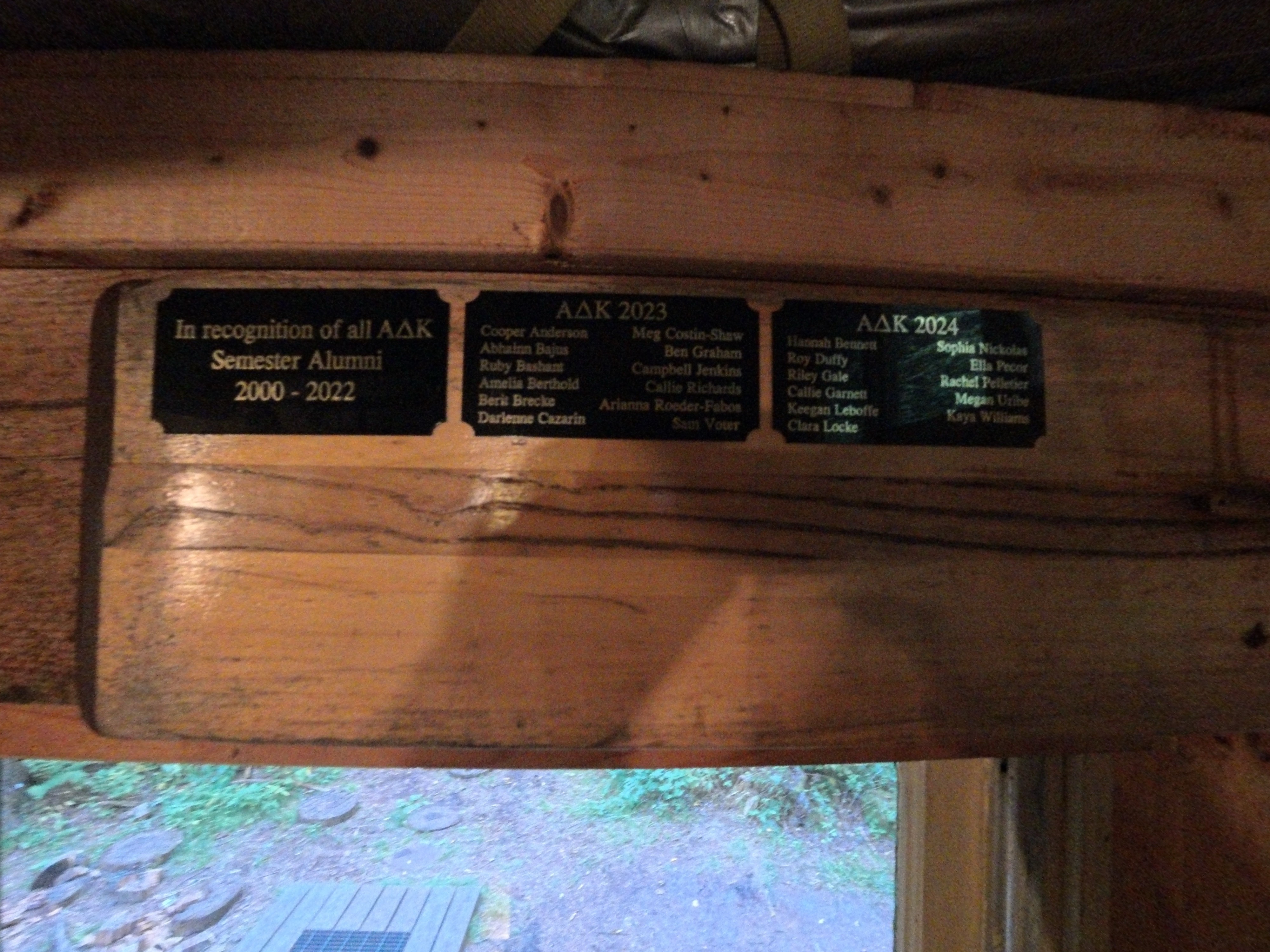
Alongside our breakfast/dinner quotes, it is a tradition for the prior year’s Arcadians to greet the incoming cohort on their first night at the yurt village. After finishing our canoe trip, several alumni were awaiting our arrival on the sun dock with an abundance of melon slices and hugs, as well as dinner. This is something that happens every year. It gives an opportunity for past students to give advice and share stories that new students will cherish throughout the semester.
The Massawepie Nine is another annual event here in Arcadia. Once a year, Arcadians embark on a mission to put a canoe in each of the nine ponds surrounding Massawepie Lake. This makes for many portages and a long, adventurous night full of memories. Another memory-rich tradition is the Dead Creek salute. Whether we are heading into town or on a field trip, we pass over Dead Creek, the last stretch of our canoe expedition through which we spent many exhausting hours paddling. This collective challenge eventually led to a tradition in which every time we pass over the creek, we have to salute, resulting in giggles and sighs as we all remember paddling through those waters. These traditions are part of what makes our home a home. It doesn’t matter who passes through Arcadia or when, these silly little traditions will be passed down, giving new Arcadians the chance to cherish the old ones or add new customs based on the culture they create.
In the North Country, you are bound to hear about, watch, or participate in an annual event called the 90-miler. This event is a three-day canoe race from Old Forge to Saranac Lake that requires participants to paddle a total of ninety miles. Canoes from colleges across the state partake in the 90-miler, including Syracuse and Utica. This past weekend we ventured off to Saranac Lake to watch the finish line. The entire experience was full of excitement and pride. Fellow Arcadian and Saranac Lake local Jordanna Samburgh said, “It was very vibrant and fun, with such a nice and supportive community.”
Although it is not an easy race, it is a fulfilling one, which is why we decided to make the journey to cheer on all of the accomplished paddlers. As we walked over to the finish line, we saw our Natural History and Ecology professor, Eileen Visser, kayaking with her dog, Mika. We gave a roaring cheer and applause for her as she crossed the finish line and were excited to hear about her journey. As more boats finished, Arcadians continued to “woo” and holler to congratulate them on their huge success. Farther down the course we bumped into past Arcadian Ryann Murray (2021). Ryan is the Outdoor Program’s graduate assistant this year and has been able to visit the village a couple of times this semester. She was waiting for three other Arcadian alumni to cross the finish line. There was talk about how the first full week of the yurt village had been when all of a sudden someone spotted the Arcadian boat, and cheers exploded from our group at shore. Roy Duffy (2024), Keegan LeBoffe (2024), Sam Voter (2023), and Regan McCarthy (who is not a past Arcadian but definitely has the spirit of one) were cruising through the last push of their ninety miles.
Cheers continued until the Arcadians made it to shore. Whether we knew these alumni or it was our first time meeting them, there was a shared feeling of joy and understanding. Emily Campbell, who had only known of Roy, Keegan, and Sam from bumping into them on our first town run, states, “I had a lot of pride as I saw them paddle because we [current Arcadians] had experienced similar hardships as them, such as Dead Creek. It was also fun to think that maybe next year we could follow in their footsteps and complete the 90-miler as well.” Even when we don’t know past Arcadians, there will always be those shared experiences to bind us together. Although we will leave Arcadia after four months, Arcadia will never leave us. Our traditions keep Arcadian spirit alive and connected to this place. Bringing back alumni to prepare a meal and welcome new years of Arcadians allows us to be one big family. The love that goes into the community creates a bond that brings people back to this very place.
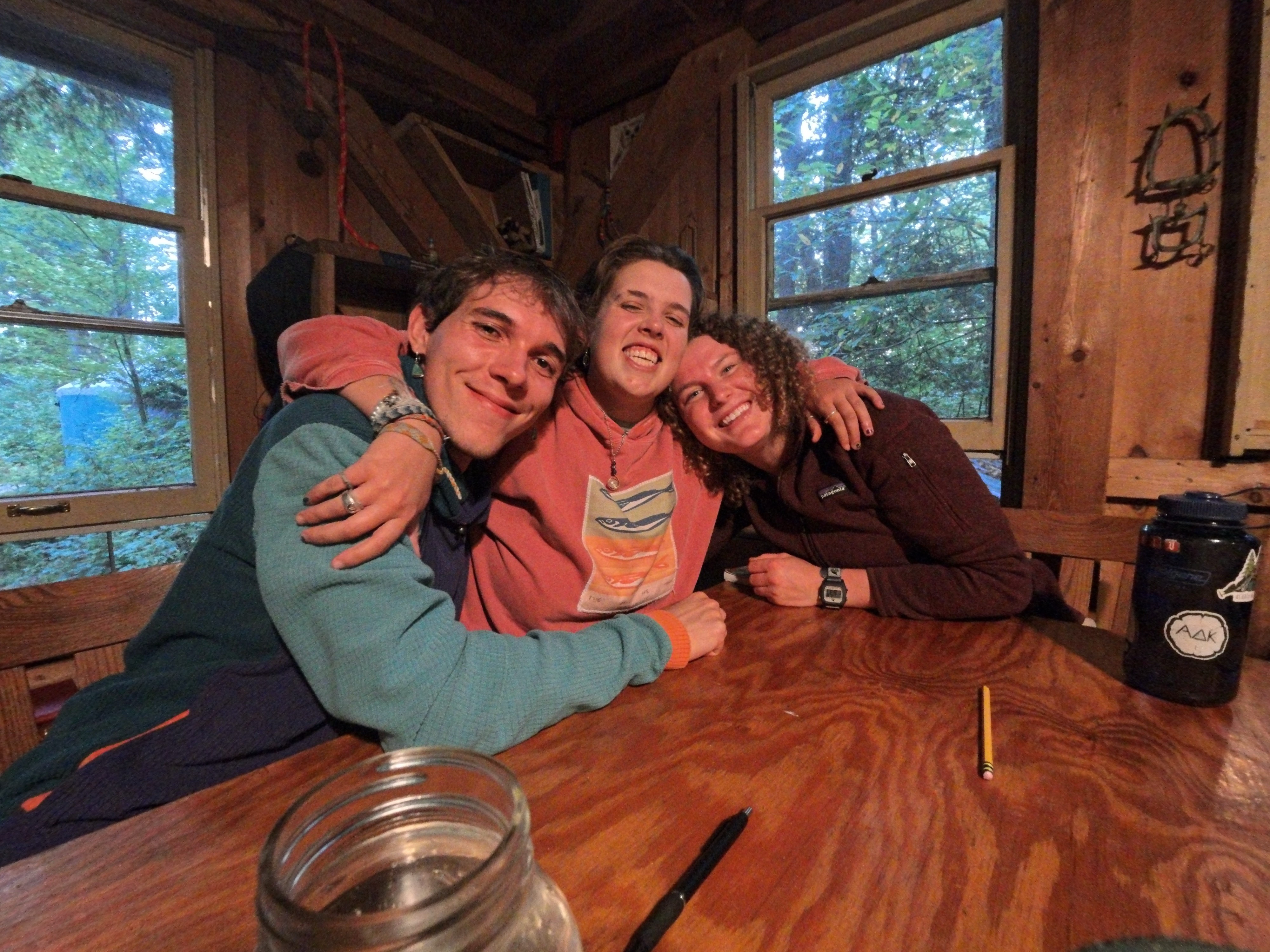
This year marks the Adirondack Semester’s twenty-fifth year as a program. No matter who steps foot into Arcadia, this place will leave a mark on them. It has the ability to make people feel safe and comforted, and the village has been doing just that since 2001. Throughout the program’s time, it has met many students, provided many saunas and swims, heard lots of laughter, and held us while we sleep. Though it has changed in many ways, the yurt village has given people a home and a place to be their true selves for twenty-five years. It is a place where community, simplicity, and living intentionally is valued and honored. Nicole Panek, who went to the twentieth-year anniversary celebration, said, “It has a common thread of experience that connects everyone” and “You can see how much this place shapes people.”
This year we are lucky to have Nicole (2018) join the director team. While she was a student, the Adirondack Semester shaped and solidified her ideas and values of community and communication. When seeking post-graduation employment. Nicole looked for jobs that valued these ideals. She was notified by her host family from her capstone internship that the Adirondack Semester was hiring. Nicole states, “Working here is like a dream, and I’m happy I can help the new generation.” During Nicole’s time as a student, her two assistant directors, Will and Kimm were also past Arcadians, thus adding to the circles of shared and loved experiences.
While the past of Arcadia is important, the yurt village is still standing and will likely continue to do so for years to come. The director team of the program has some ideas on how to improve the village but also keep the simplicity that is valued in Arcadian culture. Jacob McCoola says, “We have what we need.” To better the village and community, we must remember material and resource simplicity as well as efficiency. One of the biggest projects in the future is updating buildings. Many of the structures in the village have started to deteriorate from standing for so many years, so there are plans to slowly renovate them. One of the yurts was updated last year and placed on cinder blocks instead of wood to act as a foundation, and the wood was pressure-treated for more integrity. Outside of physical updates, the program will soon be opened to students from other colleges because St. Lawrence University recently joined the Eco-League. This will allow the program to share the stories built from this village to people in other places and increase our diversity. For twenty-five years, the circle of Arcadia has been growing and touching the hearts of many. No matter if you have walked the paths of the village or looked into the future, Arcadia will provide you with a sense of belonging and warmth. As current Assistant Director Nate Trachte says, “I hope it stays forever.”