Alone?
By Marina Garlick, Eva Nielsen, and Rachael Welch
November 3, 2025
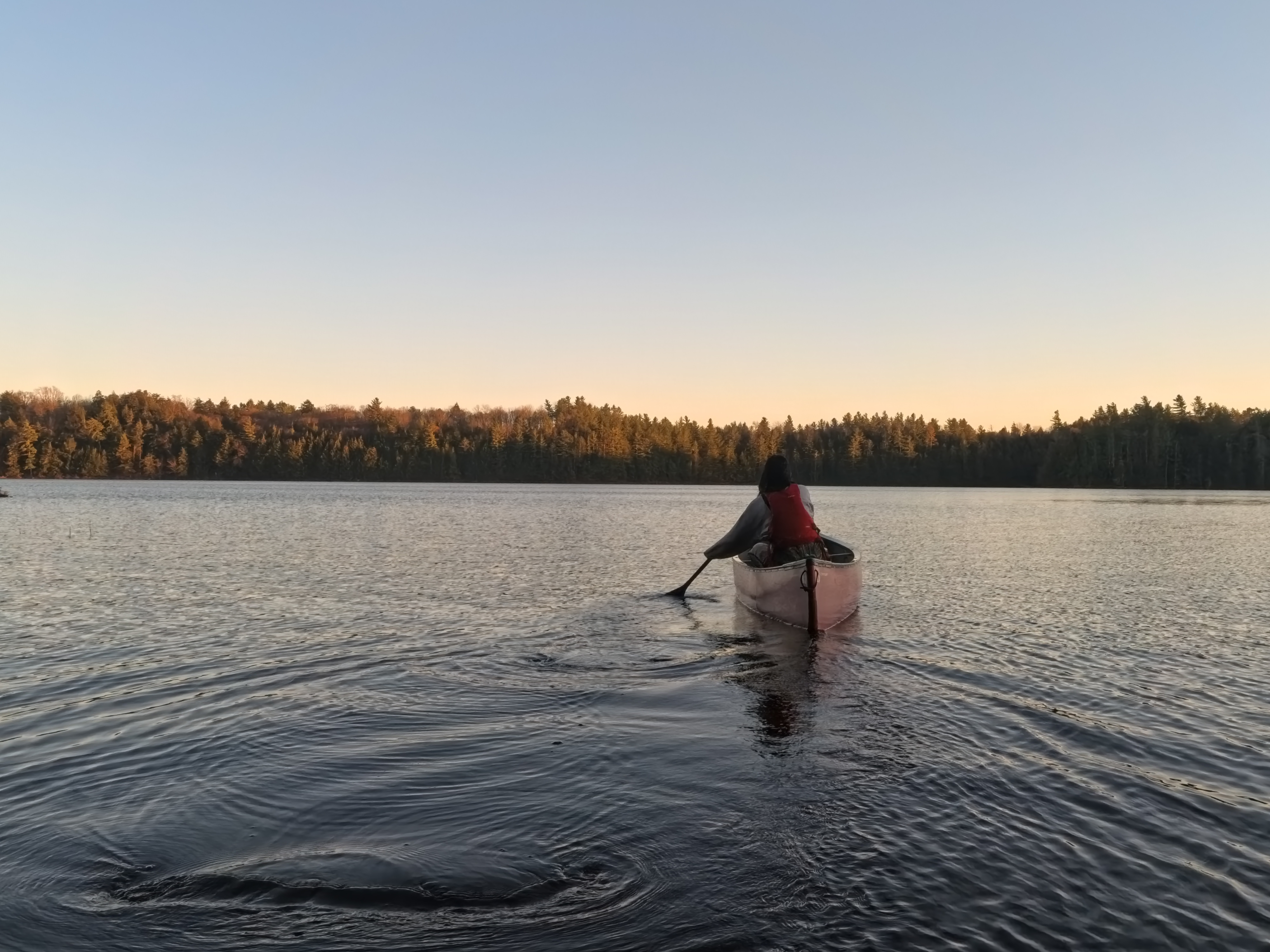
Morning sun shone down on Arcadia one October Sunday. 7:15 came and went, and no breakfast bell was rung. Slowly, the kitchen began to come to life. The propane stove clicked to light, cutlery rattled, and eggs were beaten. Director Jacob McCoola and Arcadian Eva-Jo Nielsen were orchestrating the symphony of brunch preparations. One by one, other Arcadians arrived. Emerging from fog-cloaked Massawepie, they paddled their canoes up to South Dock, welcoming each other with warm hugs and “I missed yous.” Slowly, the village was filled with the habitual buzz of laughter and conversation. The door creaked open to the bustling kitchen as the final Arcadian, Marina Garlick, joined the hubbub. With a chorus of chairs scraping across wood floors and mugs being filled with coffee and tea, the Arcadian settled into an aromatic mid-morning feast. The cooks presented brunch: Dutch babies, crispy roasted potatoes, spicy sausage, and fluffy scrambled eggs. Ravenous Arcadians dug in, filling plates and passing toppings. Once everyone was situated with a full plate and a steaming mug, they eyed each other, waiting to hear the tales and takeaways of their respective solos.
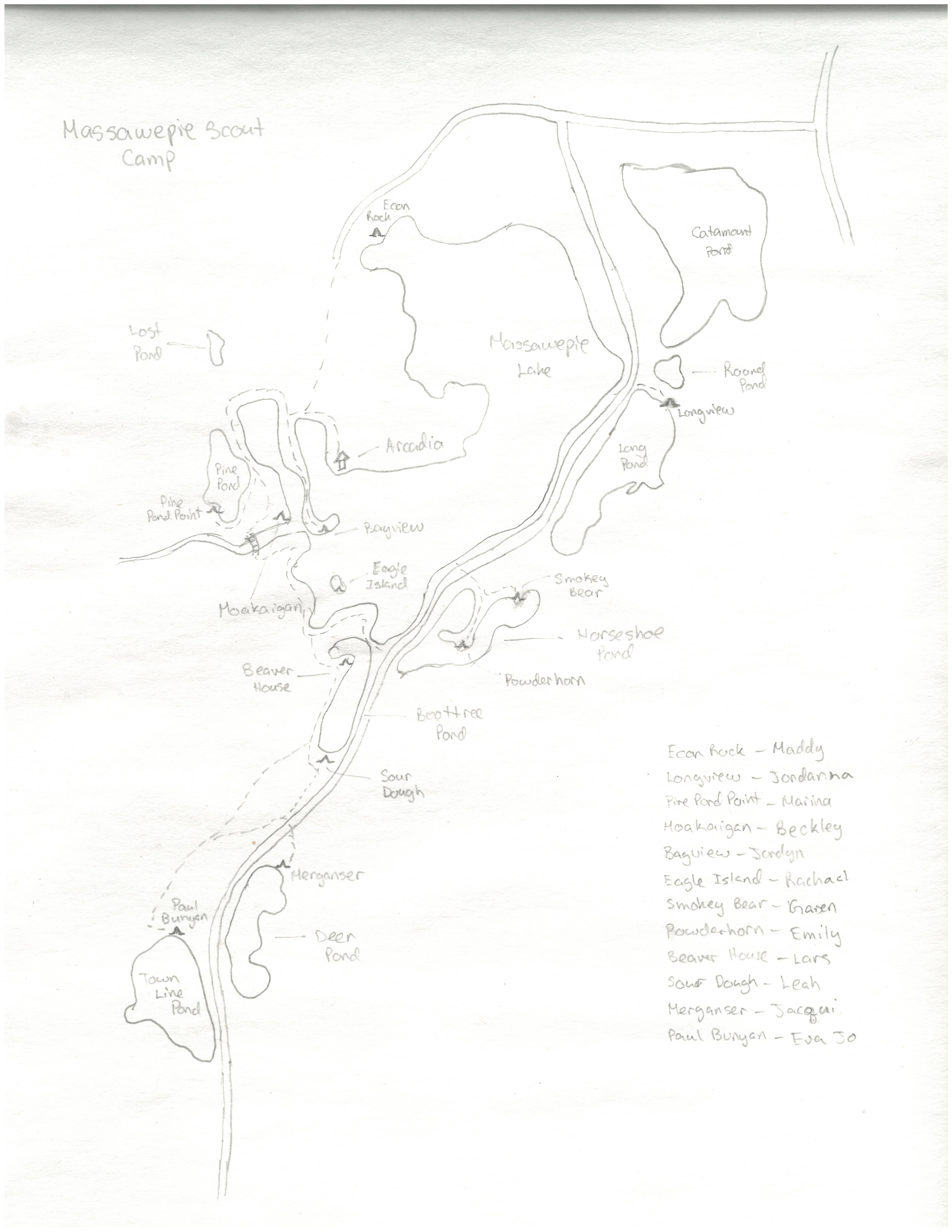
Every year Arcadians embark on individual overnight expeditions dispersed at camp sites on the Massawepie property. The goal of the trip is multifaceted: to reinforce outdoor technical skills, challenge self-reliance, and participate in an extended sit spot. This experience looked different for each Arcadian, so we were all eager to hear each other’s stories. Coffee poured and plates full, we looked to each other. Who would start?
Jacqui Smith piped up, excited to share. She started by recounting how she challenged herself to be silent for the full thirty-six hours. That personal discomfort led to being able to “embrace the sounds” around her rather than “make [her] own noise.” As a result, she had many interactions with her non-human neighbors, notably the otters. She giddily painted a picture of a family of otters that frolicked for hours in the pond next to her campsite. By connecting with the otters and her own thoughts, Jacqui had an epiphany: “If I want to make a change in the world, then I need to become more introspective to how I could improve myself.” This note of reflection on the teachings of listening prompted Marina Garlick to share next. She also experienced a sense of awe in the absence of humans and presence of nature’s many beings. She shared how she also dealt with the discomfort of being alone and silent in the woods, but her face lit up as she shared her perplexed surprise at an encounter with some brook trout. She had sat with them for hours, soaking in all she could learn from their dynamic life. It seemed that both Jacqui and Marina felt inspired and grounded to the place through listening and connecting to the non-humans all around them.
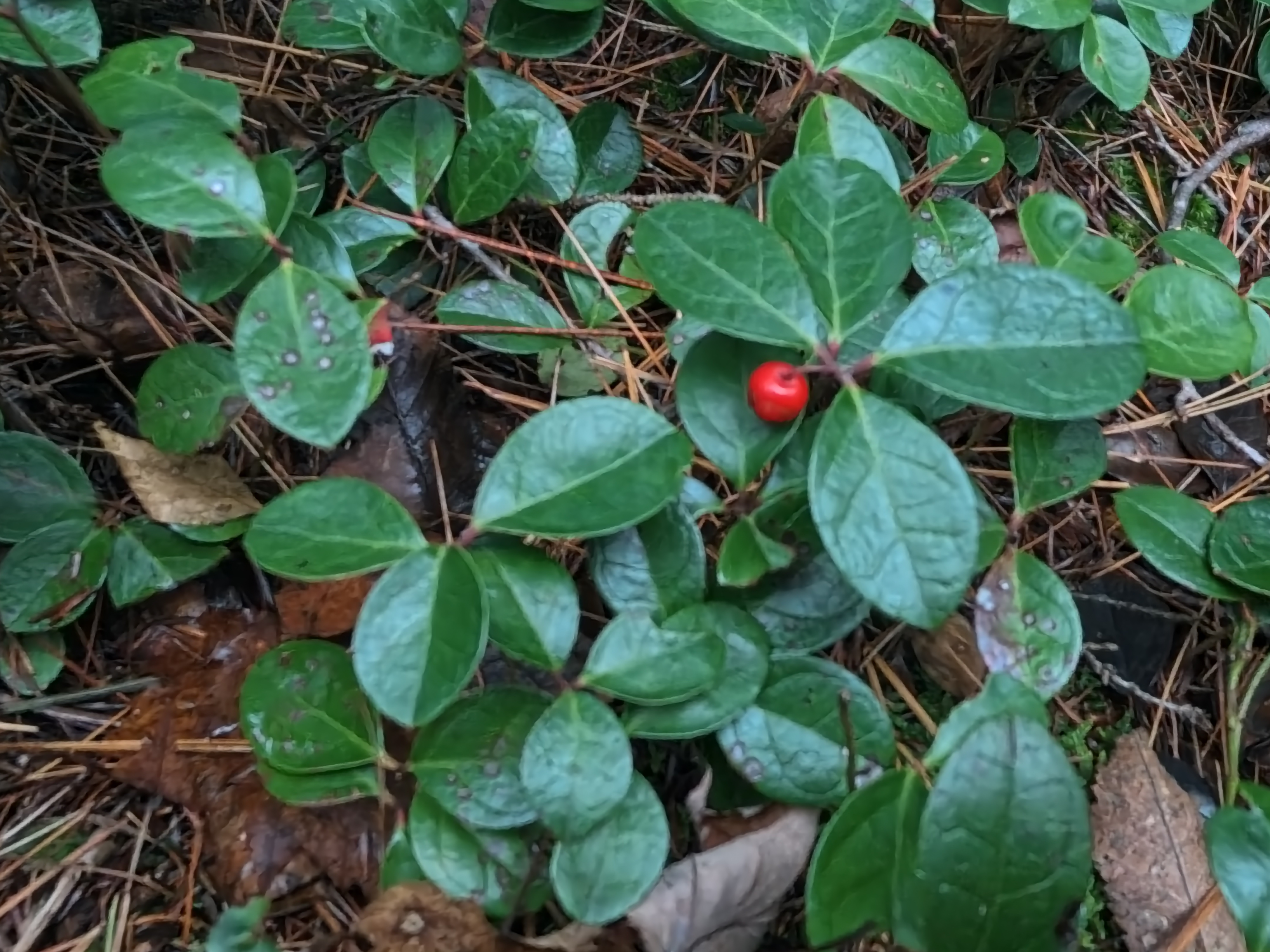
Next, Beckley Wooster was keen to share her thoughts on her experience. She noted that there was plenty of discomfort on her solo; however, she also found beauty and growth in many moments. She blissfully told us about a walk back to her camp where she saw some plants along the trail that she recognized from a lesson she had taught. Almost instinctively, she said, “It’s all my friends.” She giggled and shrugged as she told us how they really were her friends, she knew them that well. Beckley smiled, turned to Garen Steiner, and, still buzzing, quieted to hear Garen’s story.
Garen animatedly recounted her many interactions with beavers, noting that she seemed to be camped on a “beaver highway” of sorts. Garen reflected that she struggled not to feel overwhelmed with all the time to think, but her thoughts turned philosophical as she shared her reflections on love for a place and how that kind of love is akin to the love she holds for people. She continued, saying how reciprocity is needed in love, and how she had begun to reflect on the reciprocity present between us, the Arcadians, and this land. This reflection sank in across the brunch table: that we were never alone on our solos, always in the company of an interconnected web of non-human neighbors.
Inspired by the theme of love, Emily Campbell sat up in her seat, grinning, and began the tale of her solo. She discussed the anxiety she felt in the days leading up and how the solo itself wasn’t nearly as stressful. Being without her usual support system showed her that she could, in fact, take care of herself. This discovery increased her confidence in her new skills, among them fire building acquired from fellow Arcadian Jackie Smith. Emily sat by her fire, she also realized that “You’re never truly alone when you carry people that love you in your heart.”
When Emily mentioned her self-reliance, the observation struck a chord with others at the table. Arcadians Leah Rice, Rachael Welch, and Jordyn Bell recounted their own tales of independence and responsibility. Leah shared how she struggled to find her campsite—because it didn’t exist!—and decided to camp at a junction adjacent to her destination. She then spent the weekend tending to her own needs, a welcome change from her summer job of leading middle-school kids through the Adirondacks. She recounted how she “never had to completely rely on myself.” Without the pressure of others relying on her, she realized that her own needs aren’t that hard to meet; in fact, it was second nature.
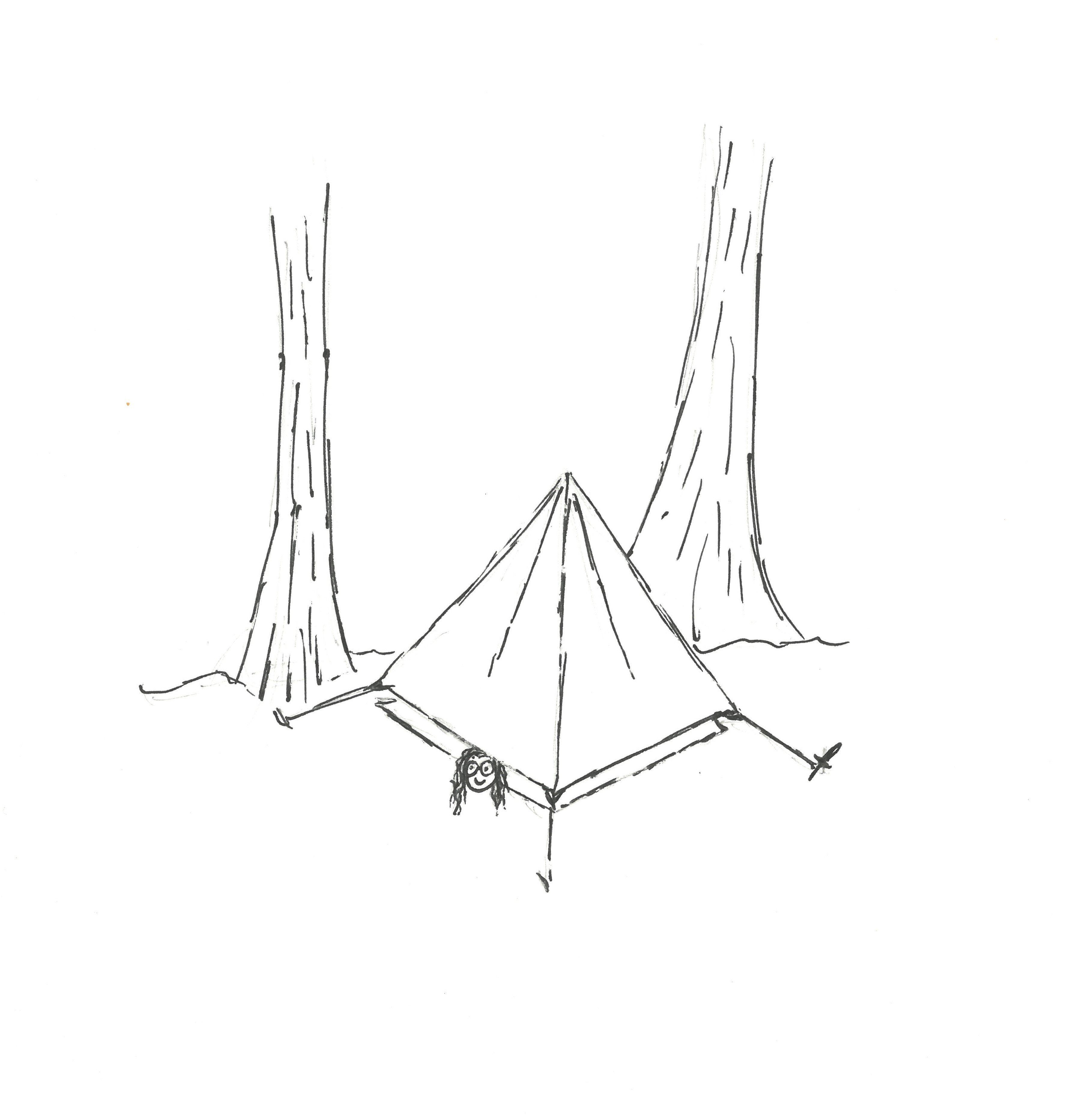
Rachael mentioned a similar experience, noting that her time was spent taking care of herself, reading, and familiarizing herself with her site. This solo was “a good reminder that my needs aren’t a burden to meet.” Being in the woods without human companions encourages more self-reliance and resilience. Rachael reinforced her own resilience when setting up her tent and realizing that she had a ground tarp, a tent fly, and…no tent body. She accepted her fate and went the two nights with the supplies she packed.
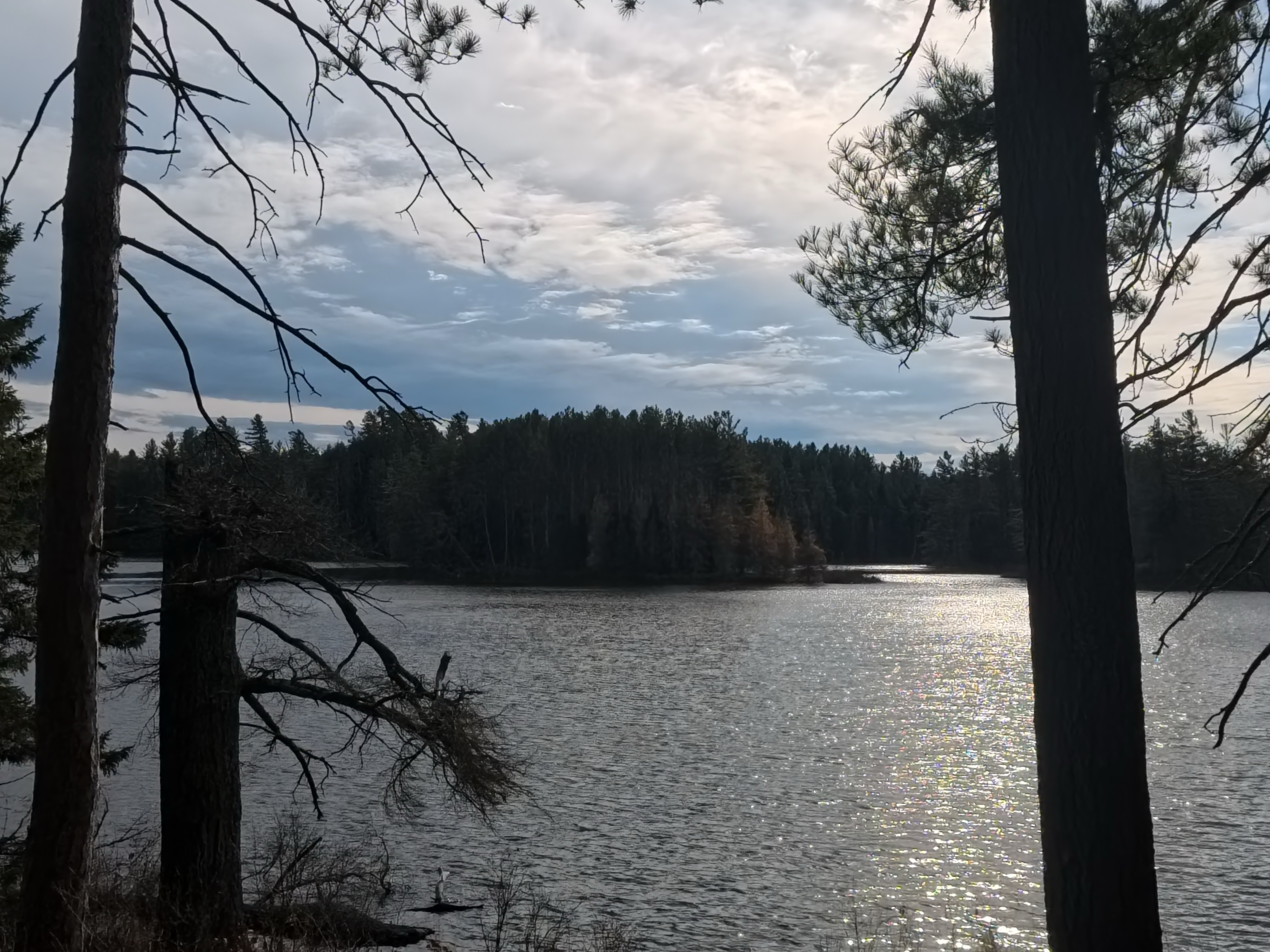
Across the lake, Jordyn was facing adversity of her own. After paddling up to her site, she started setting up her hammock. Her thumb hooked on a foreign object in the tree, a nail, and she had to pivot to stop the bleeding. With limited supplies and her own knowledge, Jordyn staunched the bleeding and patched herself up. Brandishing her prized Paw Patrol Band-Aid, she faced the rest of her solo. She eventually realized that she packed food, and a pot, but no utensils. Naturally, her take away was: “Check and double-check your gear.” But that didn’t stop her from enjoying the experience. She noted, “It was really nice to just be by myself, engulfed in the sounds of nature, and wake up to the lake.” Many Arcadians took comfort in the baseline sounds of their environment, letting it lull them to sleep and wake them up.
Jordanna Samburgh, an Arcadian comfortable by herself out in the world, was the next to speak. Her solo was relatively uneventful; however, a notable aspect was the appearance of a “blurry figure” while she was in her hammock reading. “I didn’t have my glasses, so I couldn’t really see what it was, but I wasn’t too worried,” she laughed. We were astounded by her calmness in that situation of uncertainty, but not too surprised. It is Jordanna after all! She went on to recount that the figure was a woman with her dog who walked into Jordanna’s camp and then left without a word. This description was met with a chorus of “Ghost!” from the table. This experience was just one of many that demonstrated how comfortable she was being solo, even in an encounter with the supernatural.
In contrast, Lars Fattinger was challenged by feelings of fear and discomfort on their solo, which was unexpected considering previous experience. “I had myself to process that discomfort,” they said, echoing the sentiments of mental strength expressed by many other Arcadians. At brunch, Lars shared a challenge they faced—a lack of a pot to cook their dinner. We visualized Lars as they painstakingly boiled dip cups of water over a camp stove. Hilarity broke out over the table. “You can always improvise,” Lars laughed. Maddy McGlinn, who was not distracted by any cooking improvisations or ghosts, described her thoughts during her solo: fire. Her solo was relaxing, she said, and her mind was occupied with the song “Woods” by Bon Iver and attention to her fire, which was stoked for many hours. Knowing Maddy, the other Arcadians around the breakfast table did not mistake the lack of deep philosophical thought on her solo for a lack of them at all. During the High Peaks backpacking trip in early October, as the Fluffy Unicorns huddled under a cooking tarp to eat dinner, they discussed what femininity and masculinity meant to them. “Feminism is anything you want it to be,” Maddy had proclaimed. She later expressed that our cohort of Arcadians owning their femininity in different ways gave her a sense of pride, especially on solos—we were all out there, capable, and “doing the thing,” as director Jake McCoola would say.
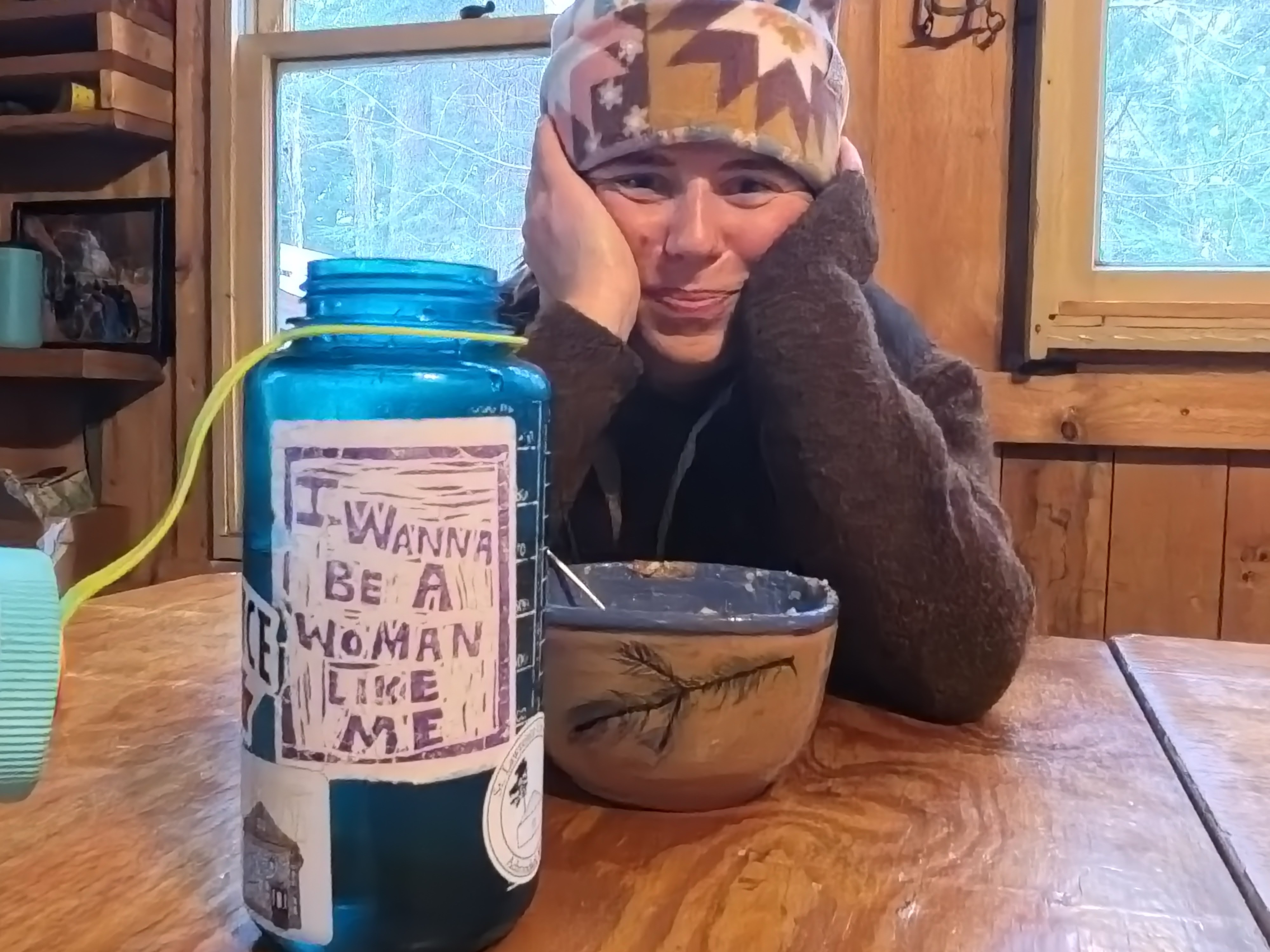
Eva-Jo Nielsen, who was there as all the Arcadians arrived, cooking brunch with Jake, paused before saying, “I was on my solo for zero nights.” All were attentive, eager to hear why. Eva-Jo described the events of her solo: a long walk to her campsite, a two-hour sit spot by the water, a man shouting at her from the private property across the pond, and gunshots from the neighboring hunting club, among other uncomfortable reminders that we share this space with other unpredictable humans. “I just had a gut feeling that I should leave, so I did,” she said. It was apparent that her decision weighed on her, but she went on to explain that the solo, although not what she wanted, was valuable and empowering in its own way: “While I sat with my discomfort, I realized that what was happening in my mind, without me realizing it, was risk management. In that moment, I realized how much I have grown in my decision making.”
Eva-Jo had a long walk home from Paul Bunyan, the farthest campsite away from Arcadia. It grew dark, obscuring the trail ahead in shadows and making the unknowns more intimidating, but the light from her headlamp was not the only in the darkness. Fires of other Arcadians glowed at distant campsites, reassuring reminders of chosen family who were not physically together, but united by their experience. Although separated, we were far from solo. We had our own strength, fortitude, comfort, and thoughts. We had our neighbors: beavers, otters, trees, trout, and humans. Most importantly, we had each other. We thought of the jokes Maddy always makes, Jacqui’s lessons in fire building, and the songs we’ve written and sung together. And from across the water, we saw the lights of headlamps from neighboring campsites. We knew a little distance could separate but not in the ways that matter. As forks scraped empty plates and we drank the last sips of coffee, we sat back, thinking of each other’s adventures and how much we had grown just in the last thirty-six hours. Our residual laughter subsided, and we realized that the importance of our experience resides in being connected and resilient, not in being solo.