
Backcountry Roads
By Roy Duffy, Riley Gale, & Callie Garnett
October 22, 2024
Laughter rings out from our group of seven, bouncing off towering white pines and disappearing into the mountains. As the night creeps in, the darkness makes it difficult to make out the people sprawled in a haphazard circle on the forest floor. Above the canopy, the stars twinkle as if they are laughing along with us. Another peal of laughter echoes through the woods, and we fall back into contented silence, listening as the wind speaks. A headlamp is turned on, and the bright white light illuminates our faces as we prepare for evening meeting.
It is night one of our seven day backpacking trip through the High Peaks Wilderness Area. The last few weeks were endless as the excitement grew, creating an electric buzz throughout Arcadia. Everything we had don in our Ethical Leadership and Recreation in the Adirondacks class (also known as ELRA) was in preparation for this day. The Adirondacks High Peaks Wilderness receives lots of traffic, from tourists in the summer to leaf peepers in the fall, and in order to protect the ecosystem, the Department of Environmental Conservation (DEC) enforces many strict regulations in the area. Although some might find them excessive, when we asked Justin Perry of the DEC is he believed the regulations to be effective, he said he thinks they are necessary because “we want these spaces to be open to as many people as possible,” and it would be unfortunate if some people abused the area and made it unavailable to others.
In our efforts to plan a fun trip, while also abiding by DEC regulations, we devoted many hours to planning. We pored over maps, tracing routes with our fingers as ideas flew around the room. We originally aspired to hike the Great Range, a 22-mile stretch that traverses nine High Peaks, before discovering that it would not be realistic due to a lack of campsites along the trail. In order to ensure that our final plan was sound, we have to create a RAD plan, outlining the route, destination, mileage, and elevation for each day of the trip. After our route was set, it was on to food packing. High Peaks regulations require hikers to carry food in bear canisters, which meant playing Jenga with our food to pack it into our six bear cans. After all the packing and planning came the hardest part: saying goodbye to our fellow Arcadians.
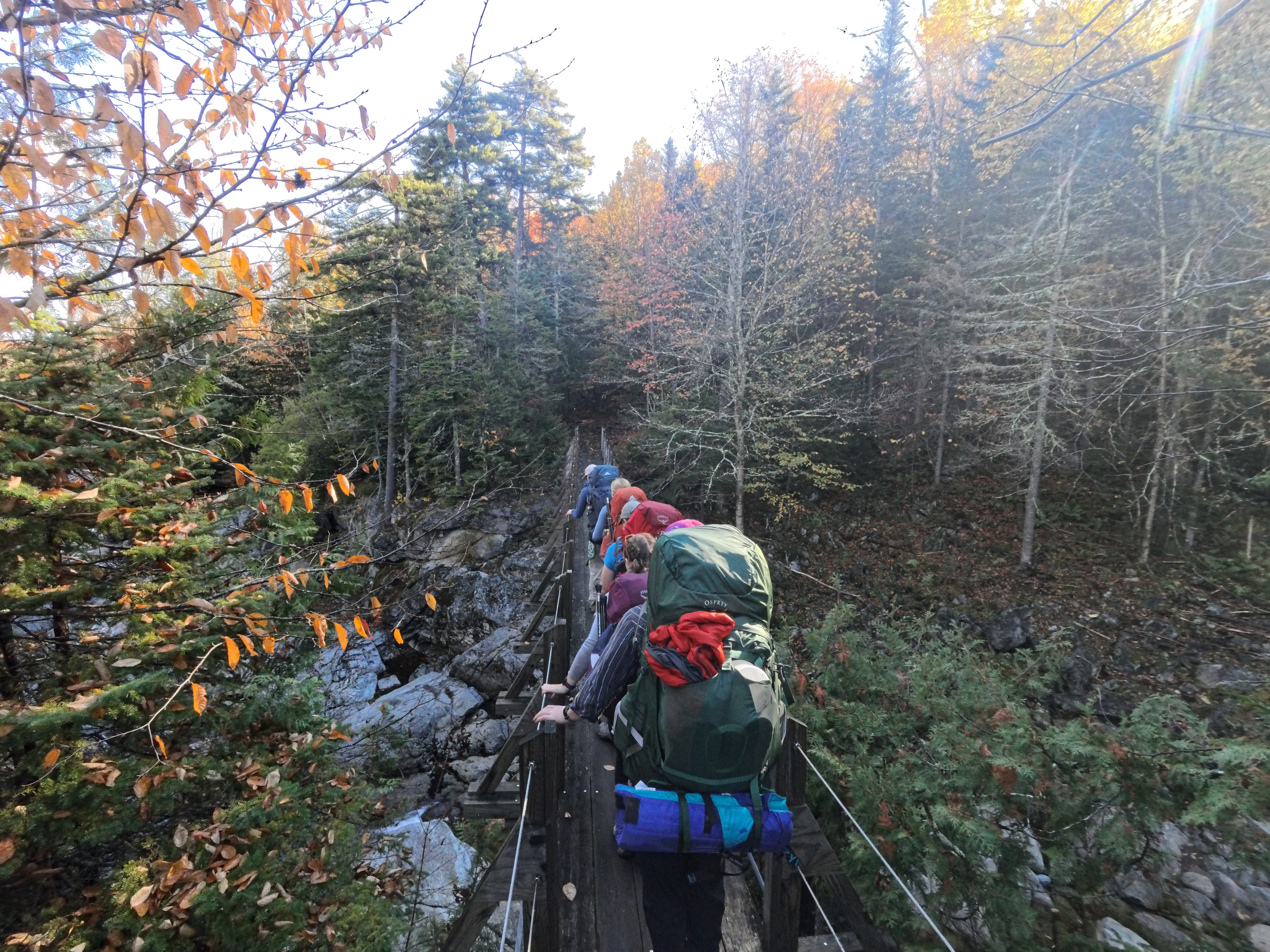
Per High Peaks regulations, groups cannot exceed eight people, so we were forced to split into two groups. Kaya, Megan, Clara, Sophia, and Rachel formed one group, along with assistant director Eva, while our group consisted of Roy, Ella, Riley, Hannah, Keegan, Callie, and assistant director Nate. Prior to our departure, the kitchen was filled by Arcadians hugging goodbye, and lots of “have funs” and “we’ll miss you guys” followed as we piled into the van and set off for the trailhead. Parking at the Garden trailhead, we hiked a little over a mile to our first campsite, where we ended the night, sitting in a loose circle on the ground for evening meeting.
Waking up the next morning, we pulled everything out of brimming bear cans in search of the oats for breakfast. Starting our hike, we had heavy packs but high spirits, and we moved with a purpose on the way to the next campsite, a lean-to by Orebed Brook. Halfway there, we stopped for a brief snack and realized that we were on track to arrive before noon, so we started brainstorming what to do with our free afternoon. By the time we reached camp, it had been decided: we were going to hike Saddleback Mountain. Dropping our heavy packs at the lean-to, we started up the steep slope with light day packs, until we came upon a section of trail that consisted of stairs so steep they almost resembled a ladder. By the time we made it to the top, we had started referring to the staircase as “the stairmaster,” and our legs were burning. We continued on, maintaining our high spirits by telling stories and playing games until we reached the summit.
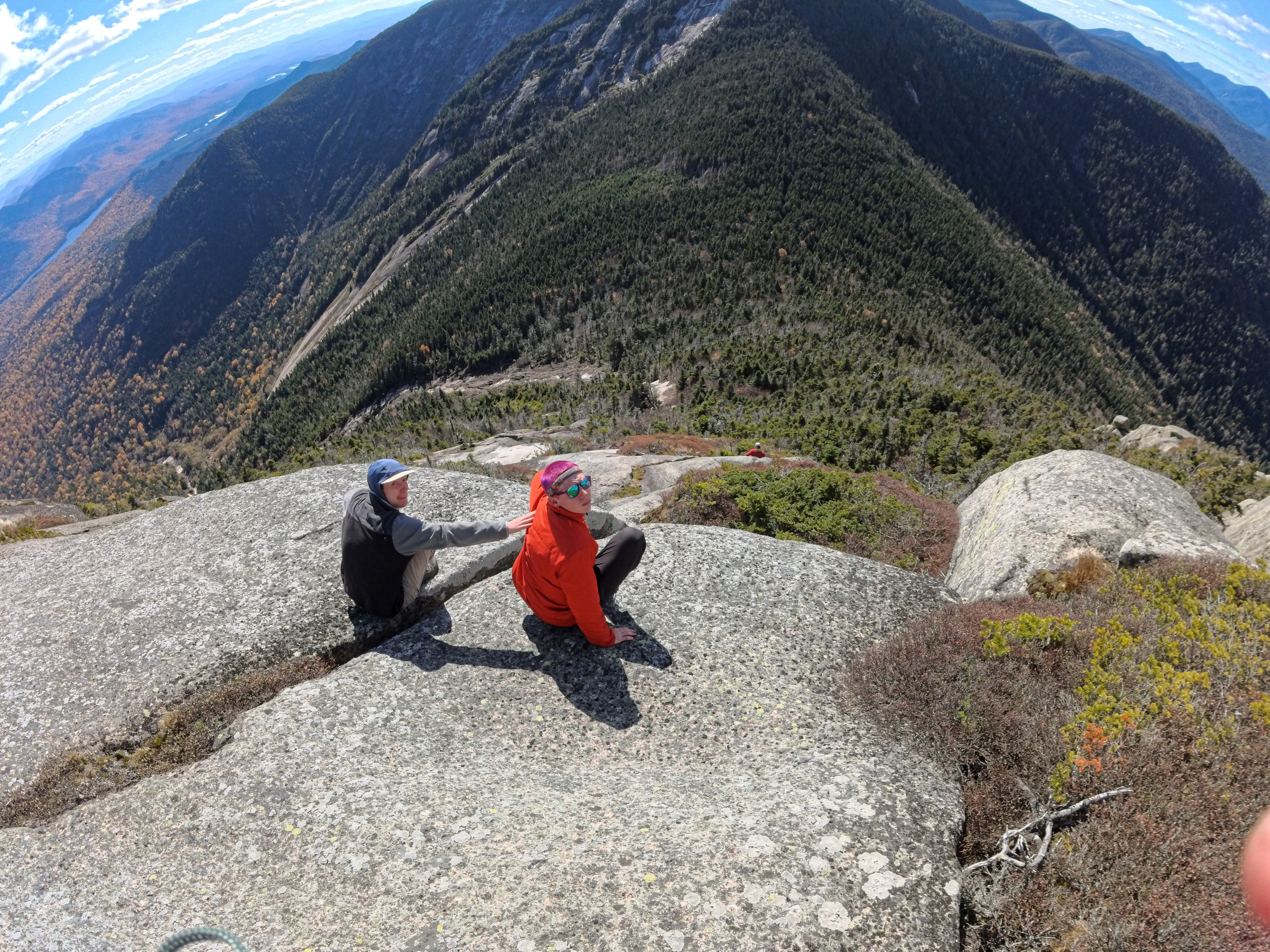
Atop Saddleback, we were greeted by expansive views of the Adirondack Park, with mountains stretching beyond the horizon that seemed to go on forever. We enjoyed the view as we snacked on trail mix and listened to Nate’s harmonic rendition of “Country Roads.” A few rounds of mountaintop hackysack were played before the hackysack almost flew off the mountain, launched by a pass gone wrong.
We remained in good spirits as we worked our way down the mountain, elated about our first peak of the trip and psyched for the mac’n cheese dinner that awaited us at camp. When we were almost in sight of the lean-to, tragedy struck: Arcadian Roy Duffy rolled his ankle on a root hidden by the leaf litter. Luckily, he was able to walk, and an icy mountain stream flowed next to our campsite where he could soak his foot. After a long day and a delicious dinner, we were all grateful to pile into the lean-to, turn off our headlamps, and fall asleep under the stars.
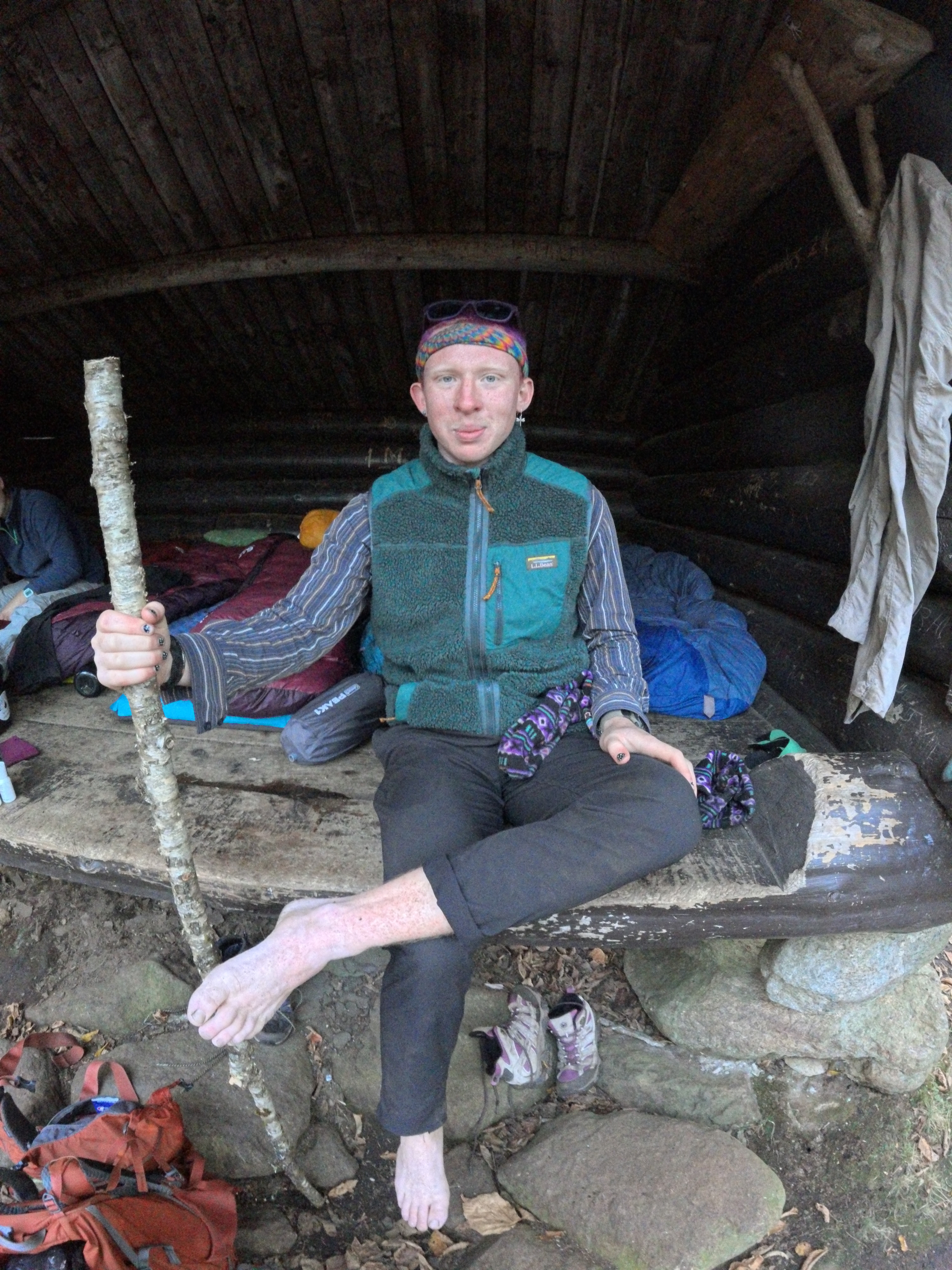
The next day, the predawn silence was broken by a chorus of watch alarms, followed by the groggy rustling of sleeping bags. A fumbling hand illuminated a headlamp, and a lean-to containing six half-awake bodies was brought into view. Additionally, it illuminated the face of Arcadian Callie Garnett, peaking out from beneath the lean-to where she spent the night atop a deflated sleeping bad and several Crazy Creeks. As we began to awaken and start the morning tasks of boiling water and packing bags, the air had a feeling of both trepidation and excitement.
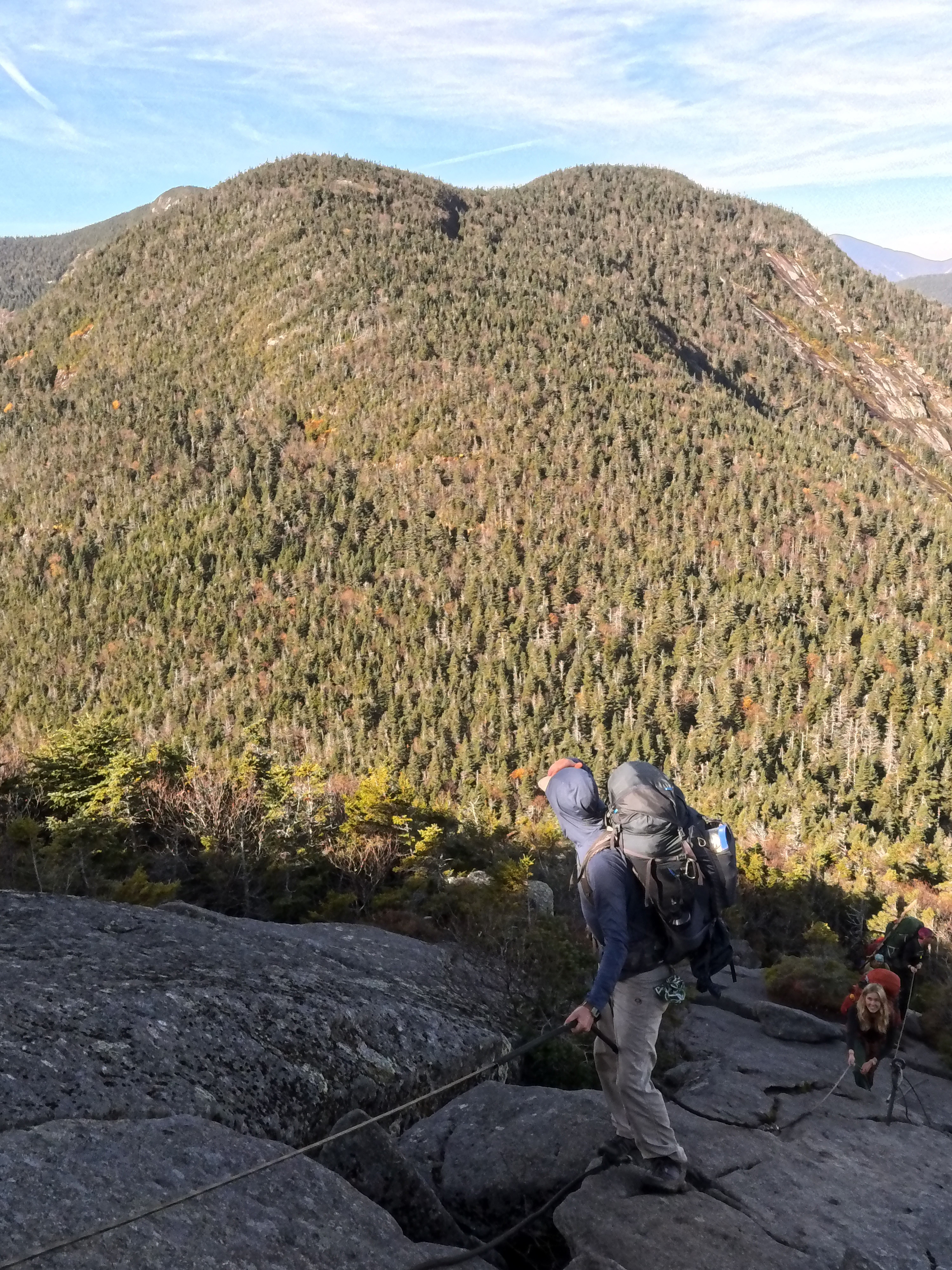
Ahead of us lay what we had begun to nickname “the big day.” Rising from sleep in the wee hours of the morning, we would retrace our steps from the previous day’s hike, up the “stairmaster” and to the saddle. From there, we would turn left away from Saddleback and Gothic mountains, a measly half mile from the junction. We had hiked much of this route yesterday and felt confident that we could complete a summit in two hours, even with our heavy packs. Three hours after leaving camp, a scene more akin to a Mission Impossible movie than a backpacking trip was unfolding. Gripping tightly to cables fastened into the sheer granite, seven Arcadians could be seen hauling themselves up the steep angles of stone, and where cables did not exist, they scrambled on all fours and employed rock-climbing techniques. All of this, mind you, with large and weighty packs in tow, or, in Roy Duffy’s case, a large pack and an absurdly heavy walking stick.
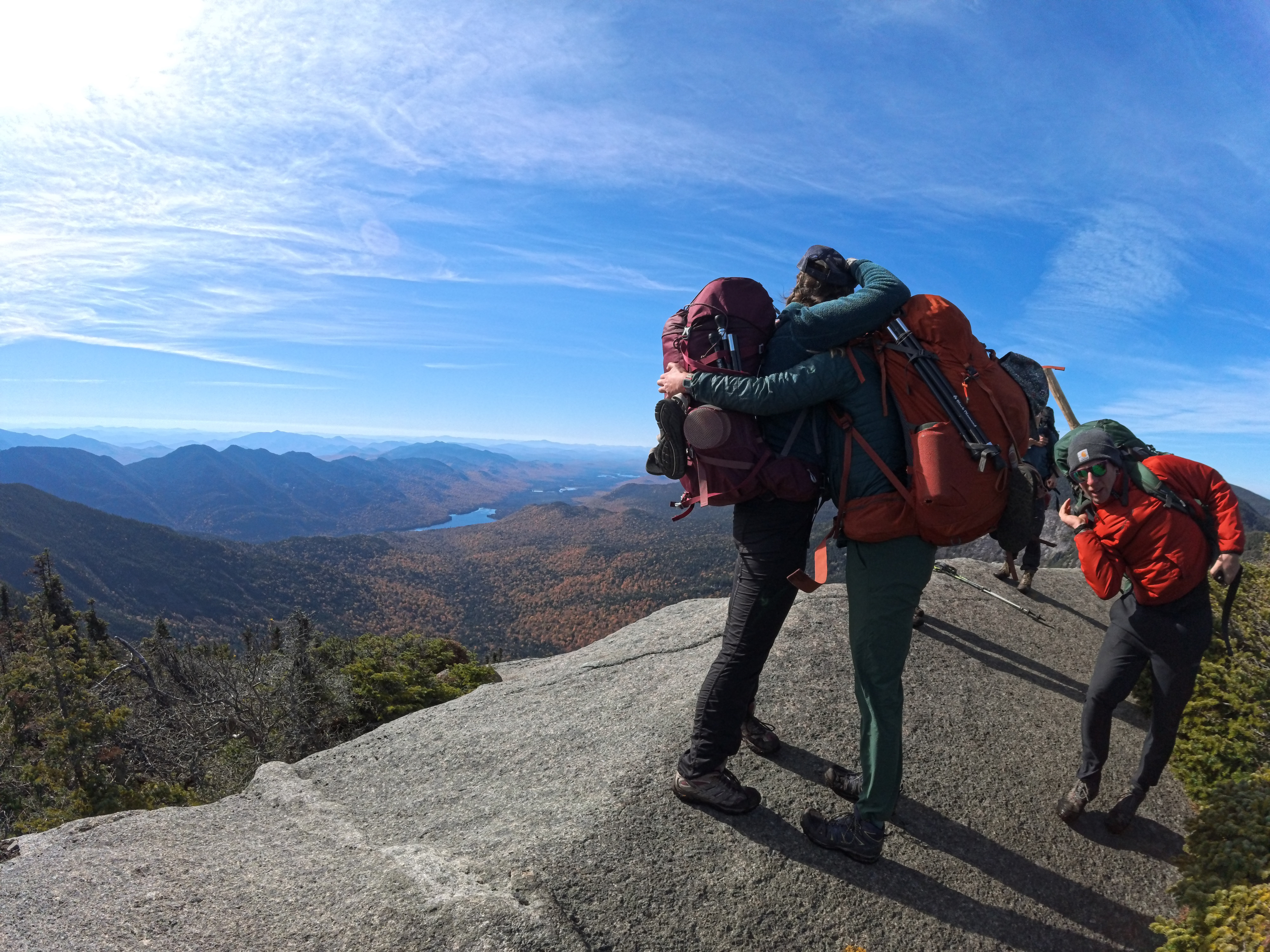
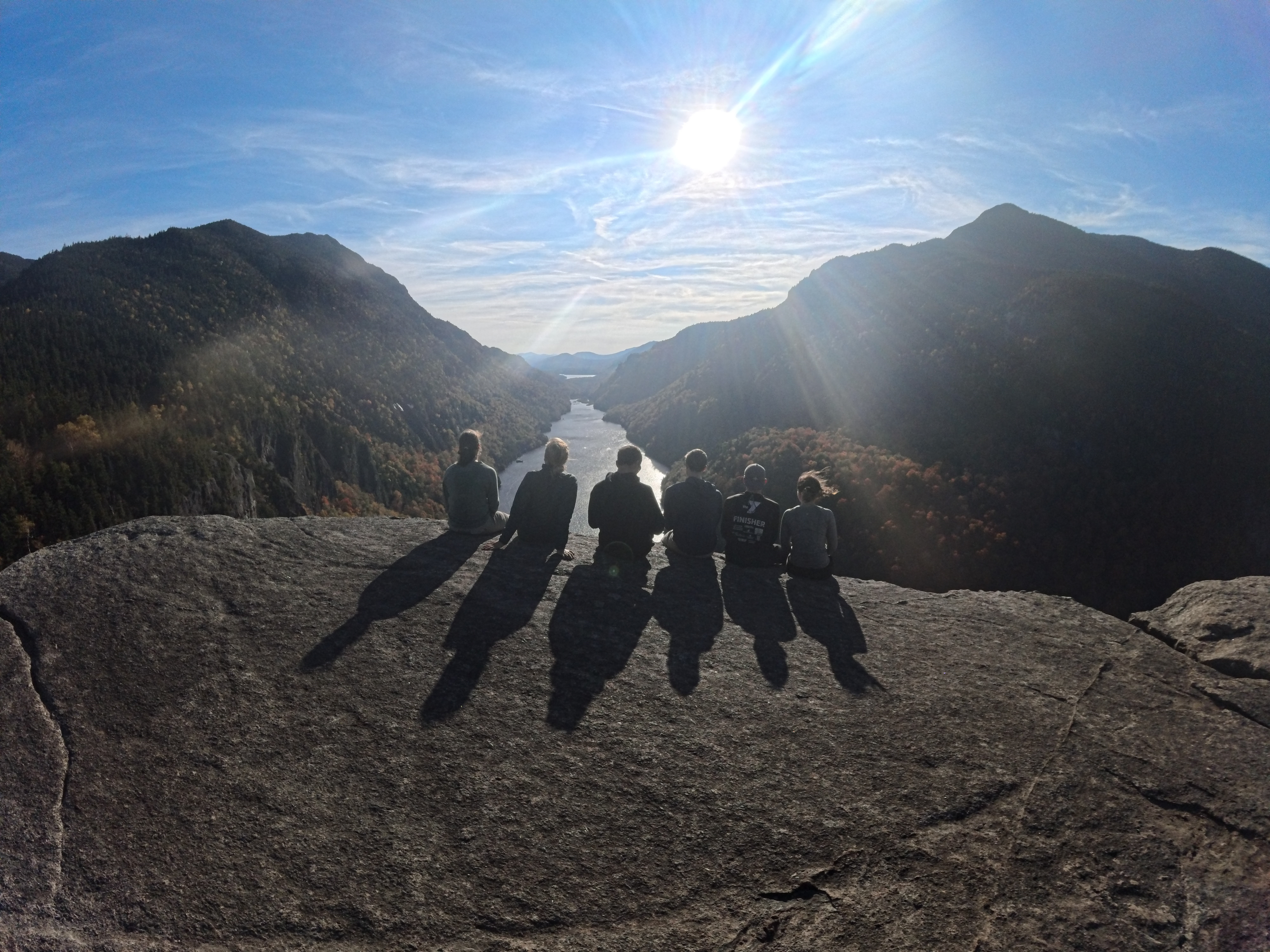
All of this was quickly forgotten upon arrival on Gothic’s summit, offering wraparound views of the Great Range, Mt. Marcy, and even the ski jumps from the 1980 Lake Placid Winter Olympics. Buoyed by our accomplishment, we began the long descent down the opposite side. Thankfully, a more forgiving trail led us down, down, down to upper Ausable Lake, followed by a crushing uphill to Indian Head, a lookout nicknamed “the most Instagrammable spot in the High Peaks.” Nothing could be further from our thoughts as we sat shoulder to shoulder, taking in the view. Our thoughts instead circulated around feelings of accomplishment, wonder, and most overpoweringly, hunger.
We arose the next morning at a more reasonable hour, greeted by a misty chilly morning. While lentil curry had been tasty the previous night, there was a collective agreement that double the lentils would have been better, and while three days of oatmeal breakfast is not very exciting, our plan for the day was.
One of our goals when planning a route had been to hit as many peaks as possible. There are 46 High Peaks in the Adirondacks that were initially believed to be above 4,000 feet when Bob Marshall and the Adirondack Mountain Club inaugurated the tradition of hiking them all, and climbing all of them remains a feat that many aspire to accomplish. For this day, we had grand plans of leaving our camp with day packs and ascending Nippletop Mountain, then Colton. There would be up-and-back hikes, meaning much retracing of steps. But with both mountains exceeding 4,000 feet, the allure was irresistible.
Standing atop Nippletop later that day, we were greeted with a breathtaking side view of the entire Great Range and Ausable Lakes, as wind whipped at our faces and layers of clothing. Tearing into tuna packets and passing around pepper and spices, we gazed across at Colton. While it can only be a couple miles as the crow flies, Lower Ausable lies several thousand feet below and between. With bodies sore from yesterday’s odyssey, the idea of going all the way down, up, and down again is not very appealing. However, the idea of cutting a 46er out of the itinerary holds little appeal as well. As we muse over this predicament, Ella Pecor, who had been studying not just the view but a map, asks, “What if we hike Dial instead?”
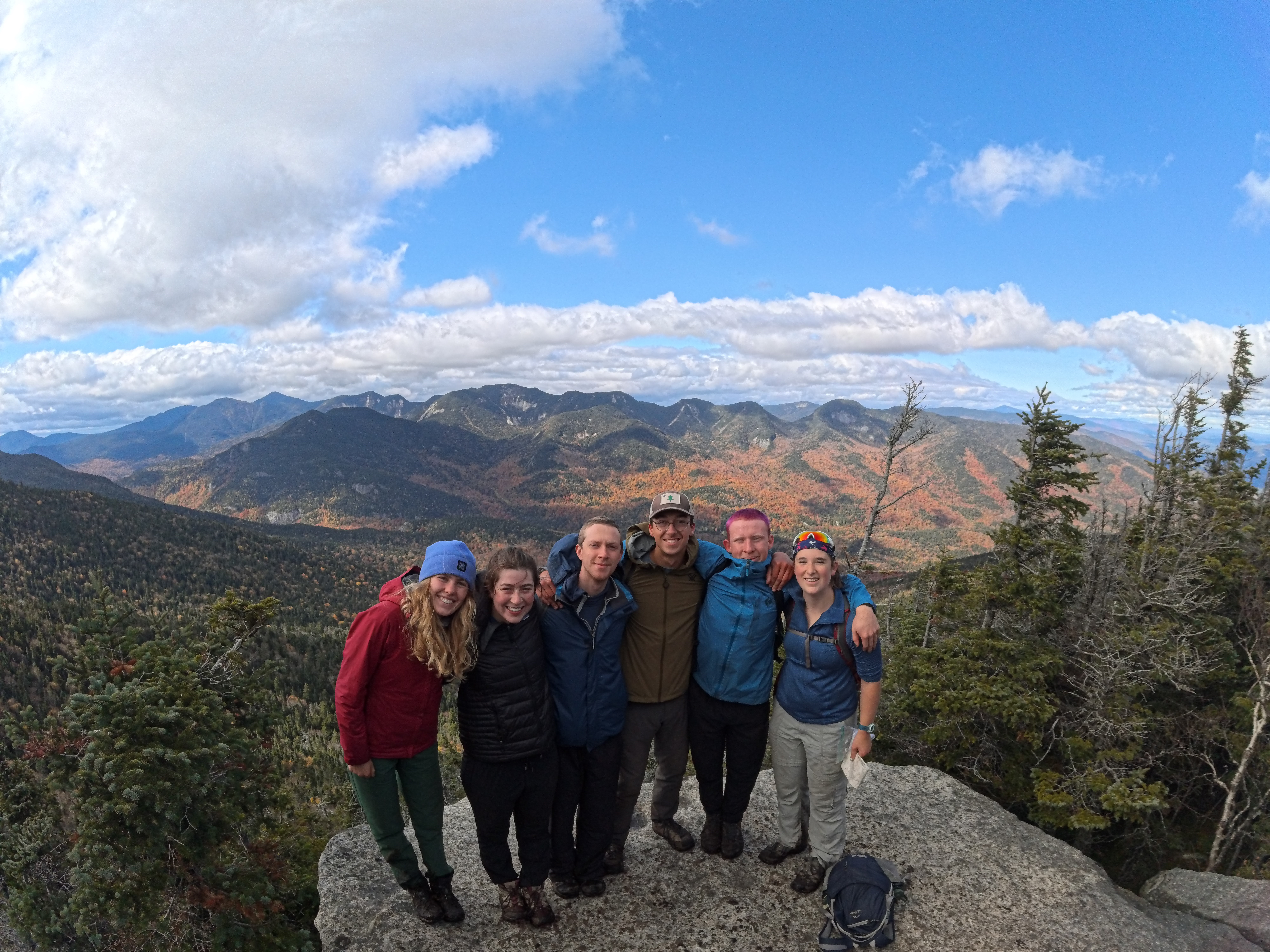
Dial, a peak well over 4,000 feet, lay to our north along a sloping ridge. This route would take us in a large loop, and while the added mileage was daunting, the promise of less elevation and no retraced steps was too good to pass up. From Nippletop, we got back on the trail and began our long descent. As we followed the ridge downwards, we watched the forest around us change. The spruce and fir trees that dominate high elevations grew taller and stronger as we left the summit. As we passed the 3,000-foot mark, hardwoods like sugar maple and paper birch began to appear. We continued to descend, hardly aware of the transition until we were hit with a wall of brilliant yellow. Ahead of us lay a vast swath of quaking yellow leaves, creating a thick blanket of uniform color. Compared to the previous gradual transitions of tree density, this beautiful sight was surprising, but not unexplainable.
Natural History and Ecology in the Adirondacks, one of the classes we all take back at Arcadia, gave us an explanation. Throughout the semester, one of the many things we learned was how to identify different species of trees, and the unique characteristics of each species. With these newfound skills, we could identify the swath of trees as quaking aspen. Furthermore, we remembered quaking aspen to be one of the most pioneering species of tree, the first to appear when a disturbance occurs. With no need for a ranger or a phone, we determined that a fire must have raged throughout the area, leveling it and allowing the aspen to take over. We returned to camp, proud of our accomplishments and our ability to understand the aspen. However, one question remained unanswered: If we were to have pesto pasta tonight and burrito bowls the next, what had we planned for dinner on our final night?
In our ELRA class several weeks earlier, we learned about meal planning for backpacking trips. Our group then began food planning. First, we counted the number of dinners we would need, then breakfasts and lunches. Next was the menu. Meal ideas were suggested, debated, and eventually decided upon. Our menu was then translated into a shopping list with precise quantities to feed us for just the right number of nights. But that was two weeks ago, and the finer details of our menu, namely the sixth dinner, had slipped our minds. After surveying our remaining ingredients, we decided that the missing dinner must have been quesadillas. We just had to be sure that we had enough cheese and tortillas left when the time came. That night, as we cozied up in our tents, our bellies, though full of pasta, felt a slight unease about our food supply.
We awoke the next morning feeling excited about the prospect of a lighter day of hiking. We planned to hike back toward our trailhead and camp below the saddle that lies between Upper and Lower Wolfjaw mountains. From our campsite we would have an optional hike to the summit of Lower Wolfjaw. The beginning of our hike to camp paralleled Gill Brook. “Gill must have had friends in high places,” we joked as we marveled at the many waterfalls and crystal-clear swimming holes. By 11:00am, we had begun our steep ascent to our campsite. Nate, our assistant director who accompanied our group, remarked about the beauty of the steep forest and marked it as a place to return to on skis in the winter.
Nate grew up in the Adirondacks and is now an environmental educator here. He has spent many days recreating in the park. When we asked him about his recreation in the Adirondacks and how it affects his relationship to the landscape, he shared that as he became more active in the outdoors, he was able to have an intimate knowledge of the land and its features. As he visited places year after year, they started to feel like a home. This is a connection to the land that Nate feels he wouldn’t be able to have without time spent recreating in the park. He also believes this connection translates to relationships and interactions with all other beings.
By noon, we had arrived at our site and pitched our tents. We sat in a circle around our bear cans, their contents strewn across the ground with the autumn leaf litter. Food anxieties had peaked as we pulled lunch ingredients out and prompted a full inventory. After every tortilla, granola bar, and salami stick had been counted and split six ways, we discussed our course of action for the afternoon. After several days of around-the-clock hiking, cooking, packing, unpacking, and repacking, some of us were feeling more inclined to stay at camp for some chillaxing and decompressing rather than hike another peak. Arcadians Riley, Callie, and Roy, however, were reluctant to scratch a peak from the trip, so the trio packed their day bags and hiked on to another steep climb and jaw-dropping view. By 4:00pm, the whole group was back together at camp, laughing and kicking around the hackysack.
The next morning was crisp. The ground was coated in frost and the Arcadians in puffy jackets. We went about our familiar pack-up routine and began our trek up the Wolfjaw saddle, where we dropped our packs to complete the final part of our trip, Upper Wolfjaw Mountain. At the summit we witnessed some of the season’s first snow flurries dust white caps on distant mountains. Nate pulled out his harmonica for another rendition of “Country Roads,” this one polished by the trip’s many campfire and snack break practice sessions. As Nate’s sweet tune lofted over the frosty peaks, the hackysack was pulled from a pocket and quickly sent tumbling off the edge of another 46er. Keegan was its rescuer this time.
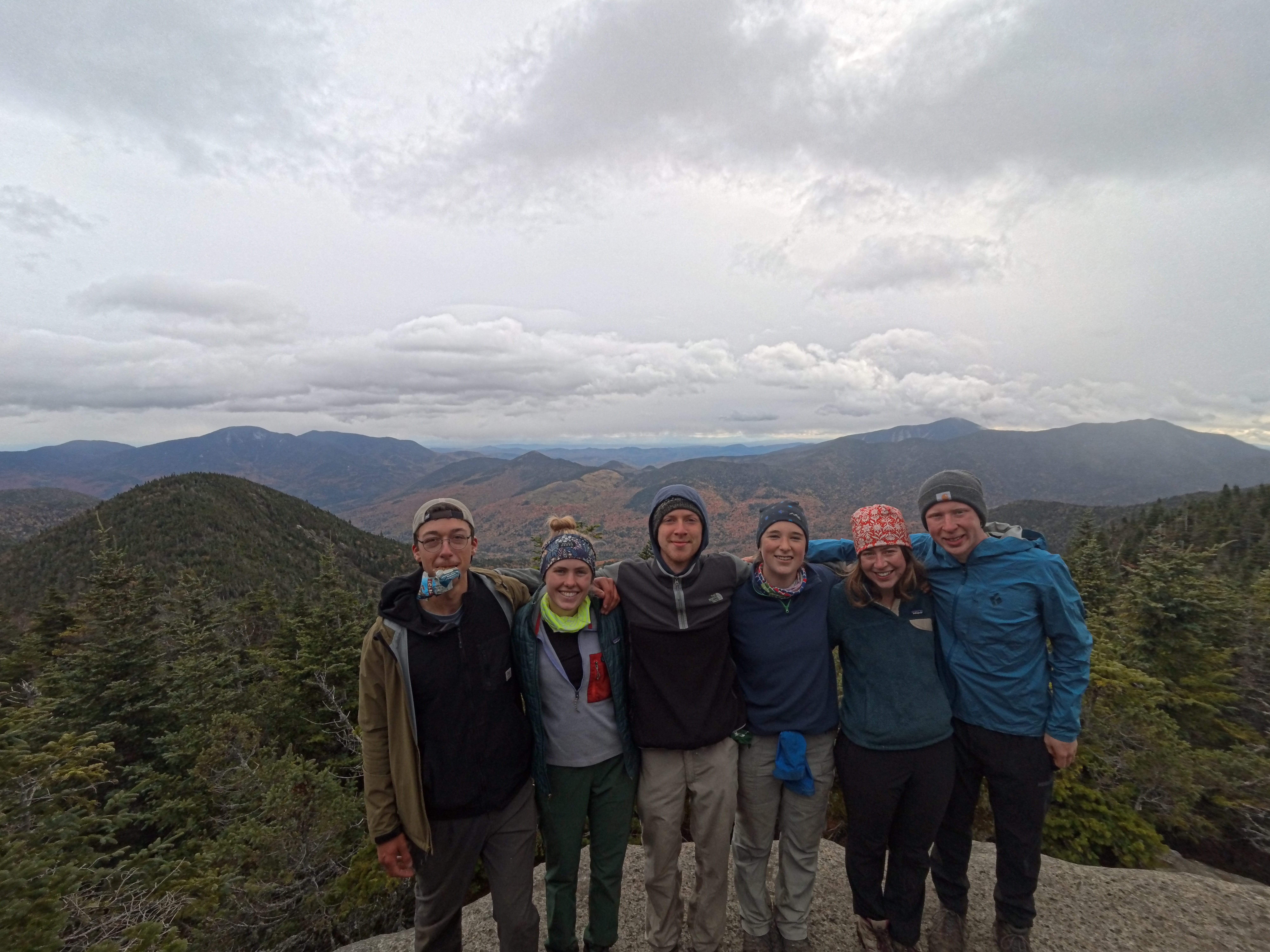
Our last snack rations were polished off as we descended to retrieve our packs and continue down the other side of the range toward our last campsite. That night we enjoyed quesadillas just a mile from the trailhead where we would be picked up the next morning. We fell asleep packed like sardines in a lean-to, listening to the gentle pitter patter of rain falling on the world around us.
We stayed in the lean-to far later on the last morning than any other. We giggled, reminisced, and pined over the possibility of a shower in the near future. We packed our bags a final time and did our best to get down our breakfast of dry granola. Our hike out was quiet and slow as we reflected on our trip. We got off the trail around 10:30am that morning. We loaded our van and headed back to Arcadia with one extra handful of granola, seven heavy backpacks, seven stinky people, and seven full hearts.