
William O'Brien First-Year Research Prizes
Will O’Brien was a member of the Class of 2006 who was tragically killed in the summer after his first year here at St. Lawrence. Will loved his year at SLU, and thanks to the generosity of his family and their friends, we are able to fund a series of prizes for research done in spring First-Year Seminar courses.
Each year, we select three students whose research in their FYS best reflects exemplary achievement of the goals of the FYS. Those three students will receive cash awards and typically will have the opportunity to present their research to the campus community at the Honors Reception during Laurentian Weekend in the fall of their sophomore year. View this year's schedule. This year, we have also selected an honorable mentions.
Congratulations to the William O'Brien FYS Research Prize winners from the Class of 2029:
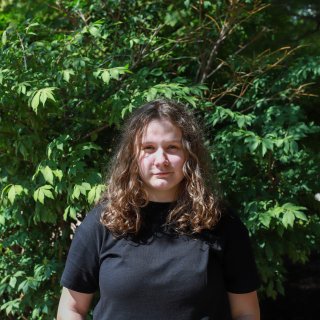
First Place: Emma Kavanagh's "Slaughterhouse-Five: Satire, Sci-Fi, and the Senselessness of War"
In my FYS, Lessons From Dystopia with Professor Jewell, we examined dystopian satires across various forms of media and explored their social commentary and criticism. Through our study of short stories, novels, and films, we analyzed their dystopian and satirical elements, identified the social and political issues they addressed, and considered the broader lessons these works offered about society. For my research paper, “Slaughterhouse-Five: Satire, Sci-Fi, and the Senselessness of War,” I focused on Kurt Vonnegut’s Slaughterhouse-Five, a satirical novel published in 1969 that follows Billy Pilgrim through his experiences before, during, and after World War II. My research examined how Vonnegut used satire (e.g., irony, humor, parody, and repetition) and science fiction (e.g., time travel and aliens) to challenge conventional understandings of war and critique both the institution of war itself and its lasting psychological effects on soldiers. To better understand Vonnegut’s argument, I considered the historical and cultural context surrounding the novel, including the circumstances of World War II, the limited understanding of mental health at the time, and Vonnegut’s own experiences as a soldier. I also examined the novel’s reception following its publication and considered why its critique of war remains relevant today. Overall, I concluded that Vonnegut used satire and science fiction to challenge traditional narratives of war. Rather than portraying war as heroic or meaningful, he stripped away these ideas and presented war for what it is: dehumanizing and destructive.
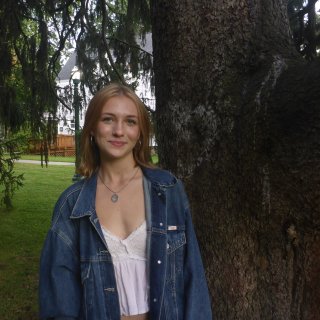
Second Place: Annie Lee's "The Politics of Spanish Memory: National Identity, Democracy Consolidation, and Franco’s Exhumation"
In my First Year Seminar, “Encountering Spain: The Politics of Museums and Public Spaces,” we explored countless museums throughout Madrid to more deeply understand how art, architecture, and symbols of the past contribute to the politics and memory of today. My research paper, “The Politics of Spanish Memory: National Identity, Democracy Consolidation and Franco’s Exhumation,” delves into Spain’s storied past and highlights how its consolidation of democracy and formation of national identity relied on an active confrontation of its dictatorial past, specifically through the exhumation of Francisco Franco's bones. Throughout our museum visits during my semester abroad, I was fascinated at the idea of historical memory and how nations use symbols, events, and material remains to formulate their own identity. Given Spain’s fascistic and oppressive past under Franco, the idea of one, unified national identity was a contested notion for many years. I strove to articulate, through my research, that the final straw through which Spain chose to condemn its past and move forward towards democracy was the exhumation of Franco’s remains from the Valley of the Fallen to the small, relatively insignificant cemetery of El Pardo. My research was supported by a variety of historical memory laws passed to further bring about transparency about Franco’s regime, which exemplified how Spain’s cumulative identity is built upon their drive for democratic consolidation.
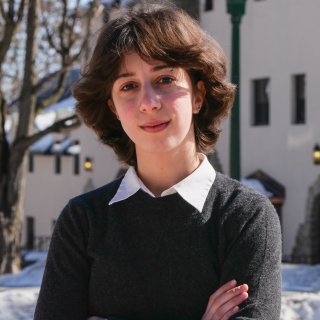
Third Place: Stella Bouroutzoglou's "Women as Political Cleaners in International Politics"
My First Year Seminar was a great opportunity to explore topics I was interested in since we were given complete creative freedom when it came to our topic for our research paper. I have always been intrigued by the conversations around gender and politics, since more often than not, I would hear people make connections to gender that felt highly subjective and very anecdotal. Even my own opinion on the subject felt more personal rather than informed and factual, so I focused my research on uncovering the extent to which gender truly matters in corruption reforms in government. The argument that women act as “Political Cleaners” and battle state corruption felt incomplete, and my research helped me uncover the differences between perceived corruption and actual political reforms, the importance of female participation, and the role of institutional organization in this otherwise heavily-constructivist argument.The tools and help provided by my professor and the structure of the class made me feel more confident in undertaking a research project I was unsure would prove fruitful. I am grateful for the opportunity to explore my personal questions through such a rigid structure.
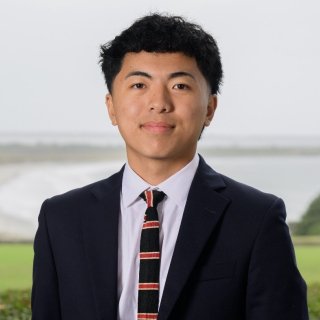
Third Place: Choerab Tsultrim's "More Than Just Fun: How the North Country Children's Museum Builds Developmental Foundations for Rural Children"
In my First-Year Seminar, I spent my community-based learning shifts at the North Country Children's Museum in Potsdam, running activity tables and chaperoning children through the exhibit floor. I wanted to understand whether what looked like simple play was actually doing developmental work, especially for children in a rural region with few other cultural institutions nearby. Drawing on research into children's museums, exhibit design, and the psychology of play, I argue that the NCCM's hands-on exhibits, volunteer facilitation, and intentional programming bridge cognitive, social, and emotional developmental gaps that neither family engagement nor formal schooling can replicate alone. I found that the museum's open-ended exhibits, like its ramp-and-ball puzzles and magnetic toy stations, prompt exactly the kind of scaffolded, adult-guided exploration that research identifies as the strongest predictor of real learning, turning what critics might dismiss as mere entertainment into genuine cognitive and social growth. This project deepened my appreciation for the NCCM as a piece of developmental infrastructure for the North Country, and for how much intention sits behind a space that looks, on the surface, like simple fun.

Honorable Mention: Cam Moyer's "Hidden Medicine: Dogs and the Mental Health of American Children"
In my FYS, Woof: Dogs & Their People, taught by Professor Eissenstat, we studied dogs through many different lenses. We asked questions such as: Why do dogs have the deepest connection to humans of any animal? In what ways does their biology allow them to connect with us so well? Can historical context explain any of this? After building a general understanding of these questions, we had the freedom to research any perspective on the topic that interested us. I was drawn to the psychological side of human relationships with dogs, which led me to reflect on my childhood dog, Bo, and how I could research the impact of a dog on a child. My research focused on the many benefits dogs can have on childhood development- including mental health, emotional development, and their impact on children with social limitations.